

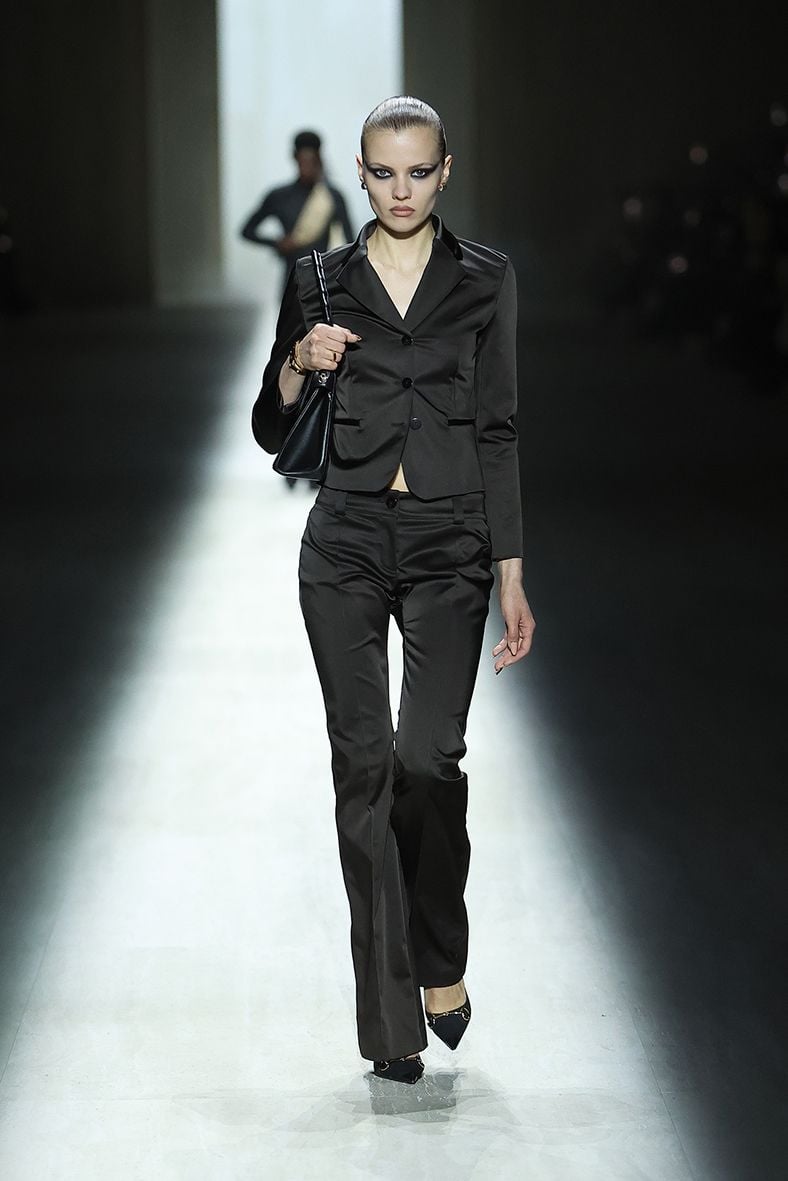
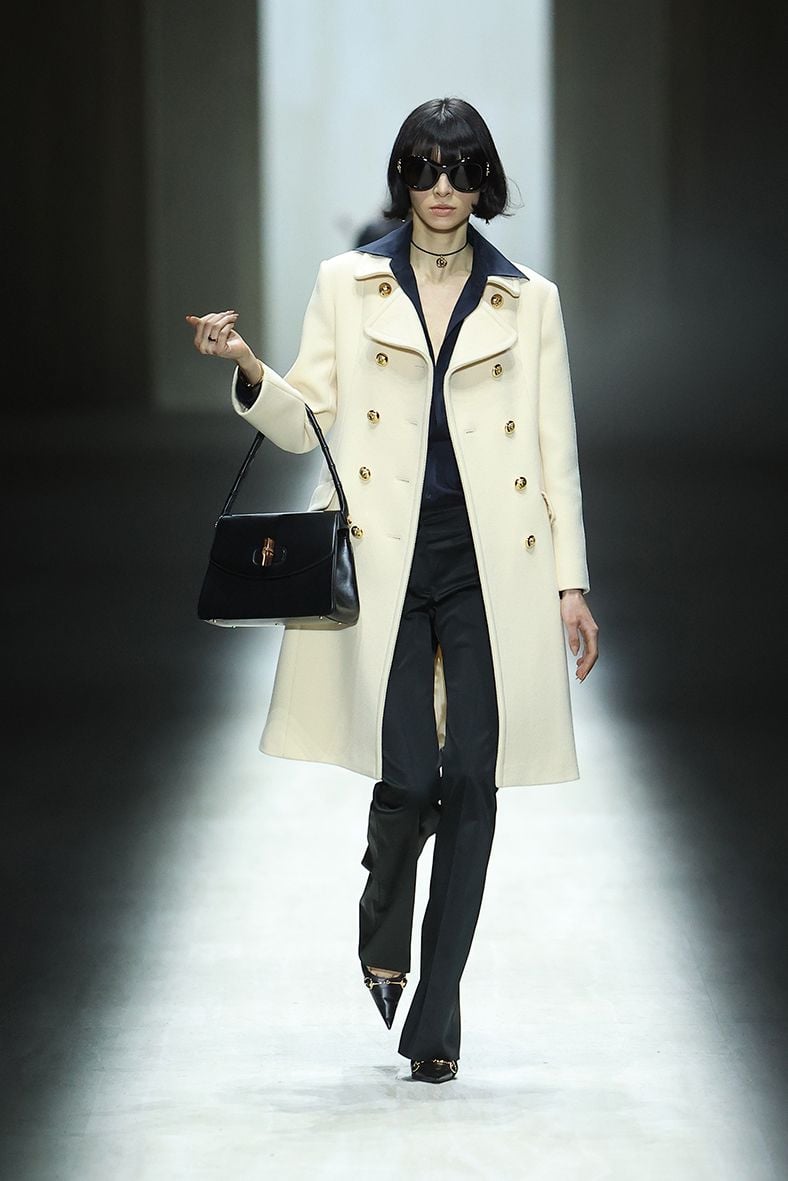
Last Thursday, Gucci debuted its 2026 Primavera show – the first under Demna. It was a sparse set. The models slinked down the runway inside the Palazzo delle Scintille, looked on by muscular statues and thousands of panning iPhones. It was a stark contrast from Sabato de Sarno's last collection.
To understand why Primavera looks the way it does, you have to start with the numbers. Gucci’s revenue fell 23% year-on-year in 2024, with recurring income dropping 51% from 2023. Kering’s overall value had been in free fall, shedding roughly 80% of its value since its 2021 peak.
Sabato de Sarno’s sensual, quiet details weren’t hitting with a maximalist-primed Gucci consumer shaped by the Michele era. The brand needed virality, so Kering turned to Demna.
RELATED: Enter A World Of Elegance & Originality With Gucci High Watchmaking
The appointment did not go down well. Kering’s valuation dropped €3 billion in a single day. Formerly the creative director of Balenciaga and the co-founder of Vetements, Demna is known colloquially for oversized hoodies, diamond-encrusted Lay’s handbags, and black morph suits, which is why he seemed a bizarre choice for a baroque brand lugging a hundred years of Italian heritage.
Yet analysts underestimated the power of the humble Depop Girly. While new Gucci sales collapsed, the brand's archive flourished – leading the way on Vestiaire's SS 2025 sales. “Tom Ford Gucci” had become a term that reverberated across every corner of social media, with prices on Grailed, TheRealReal, Depop and eBay inflating with every double tap.
These pieces weren’t just vintage – their flattering, unambiguous sexiness and attachment to the controversial designer had rendered them collector’s items for those increasingly in the know. The internet had spent years telling anyone who would listen exactly the kind of Gucci it wanted to buy.
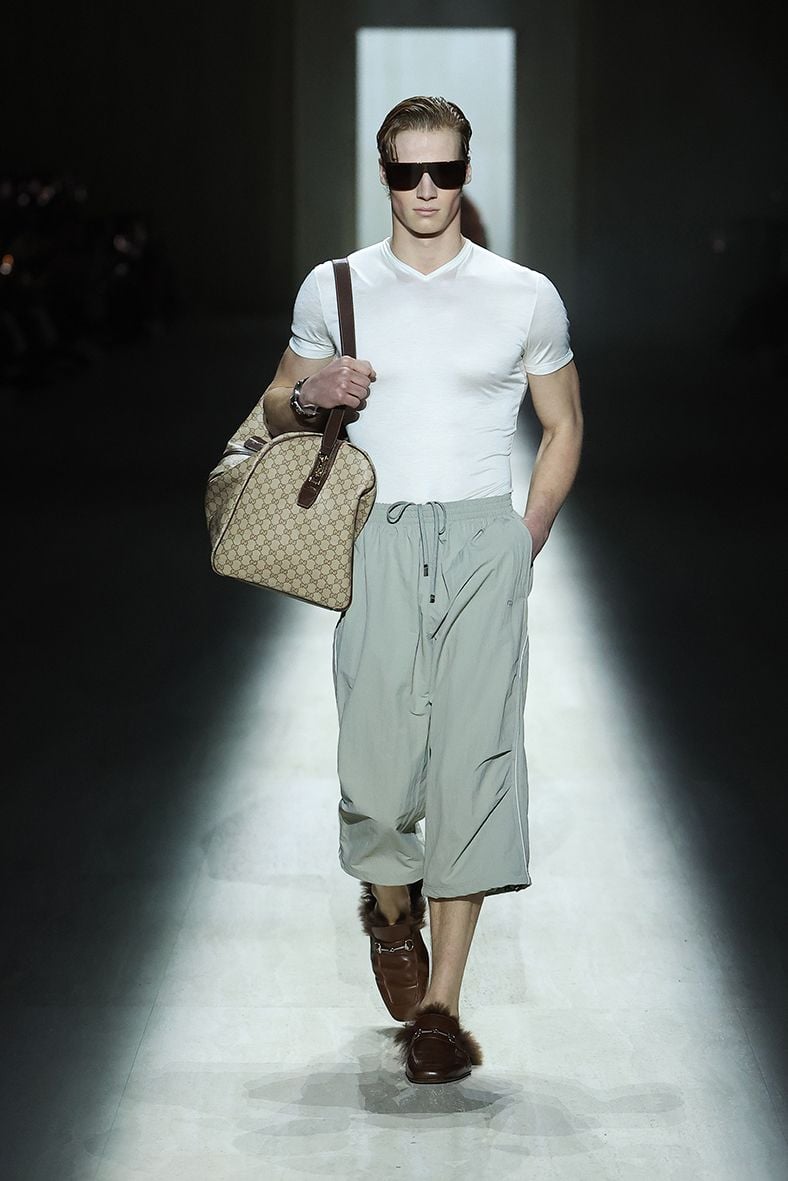
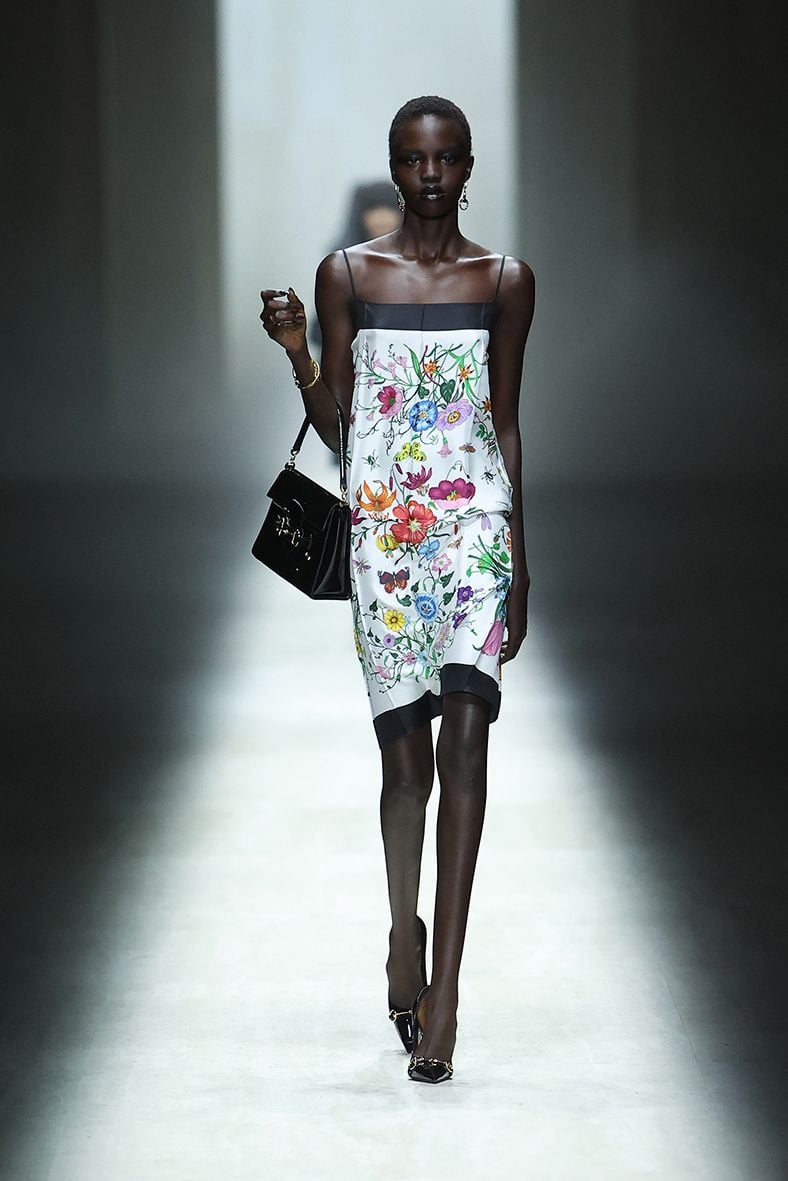
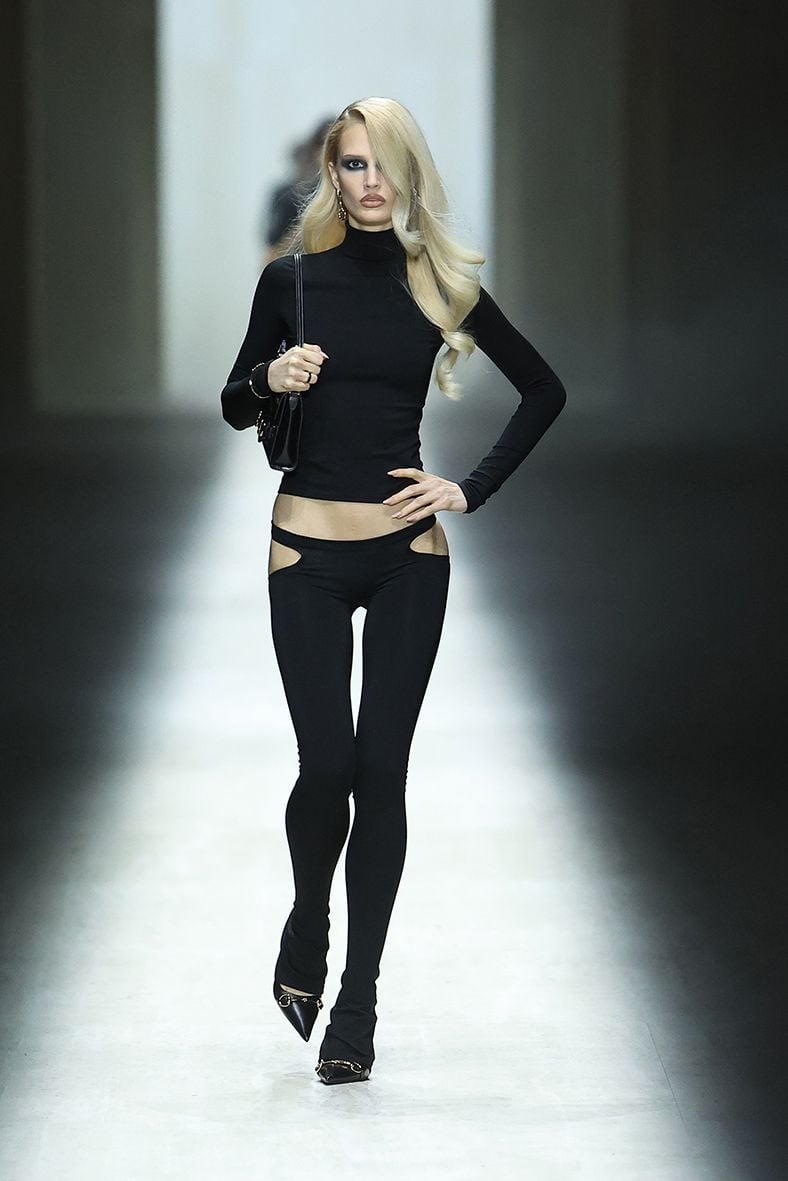
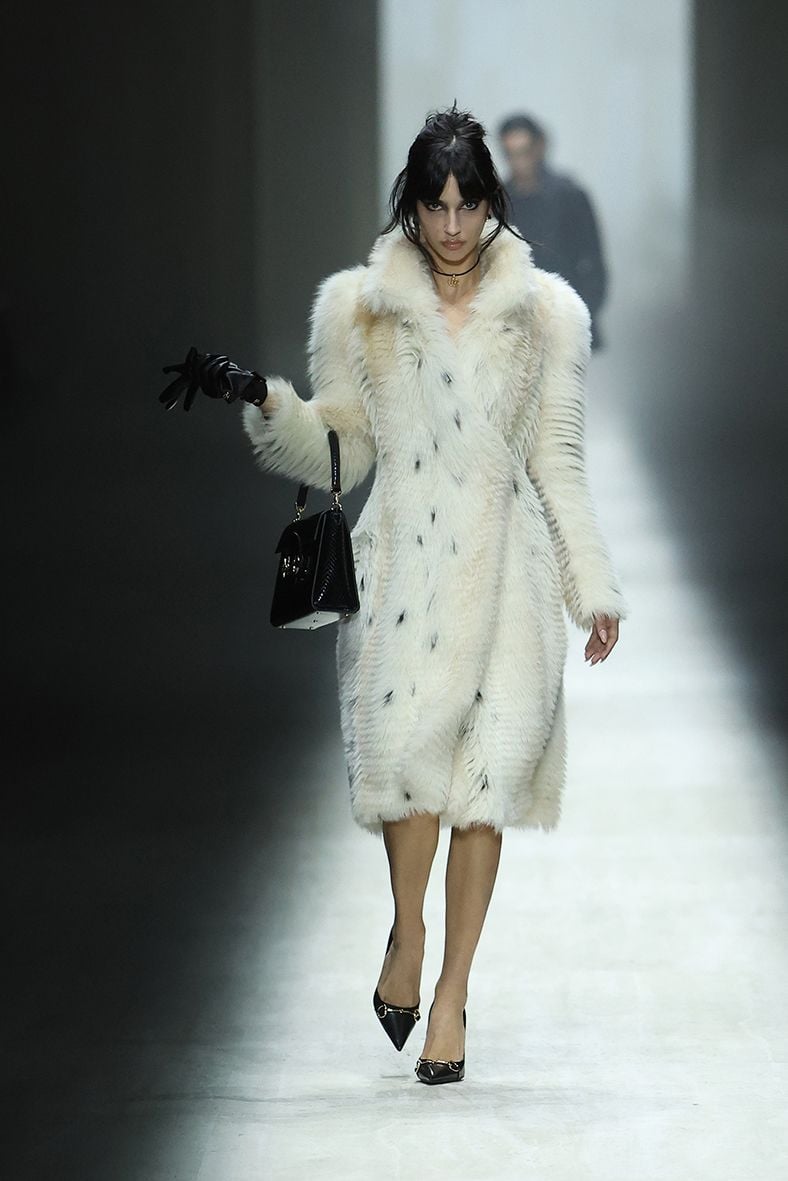
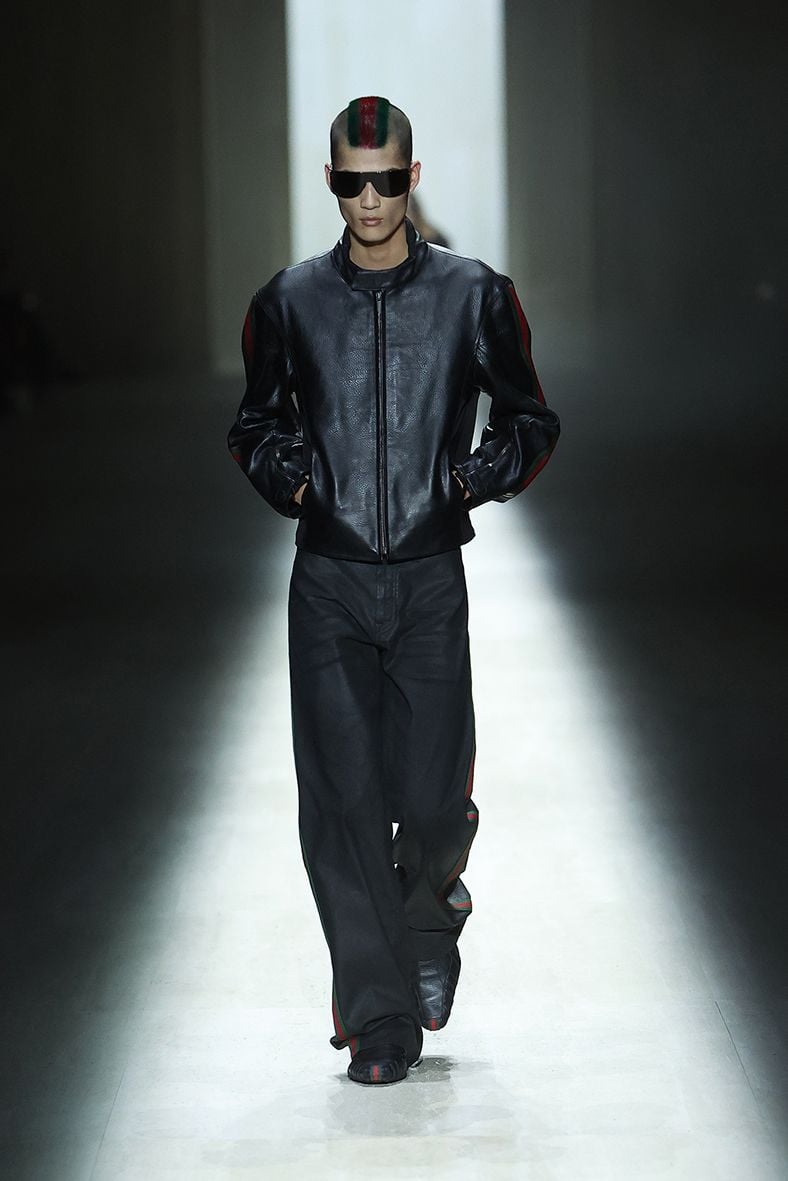
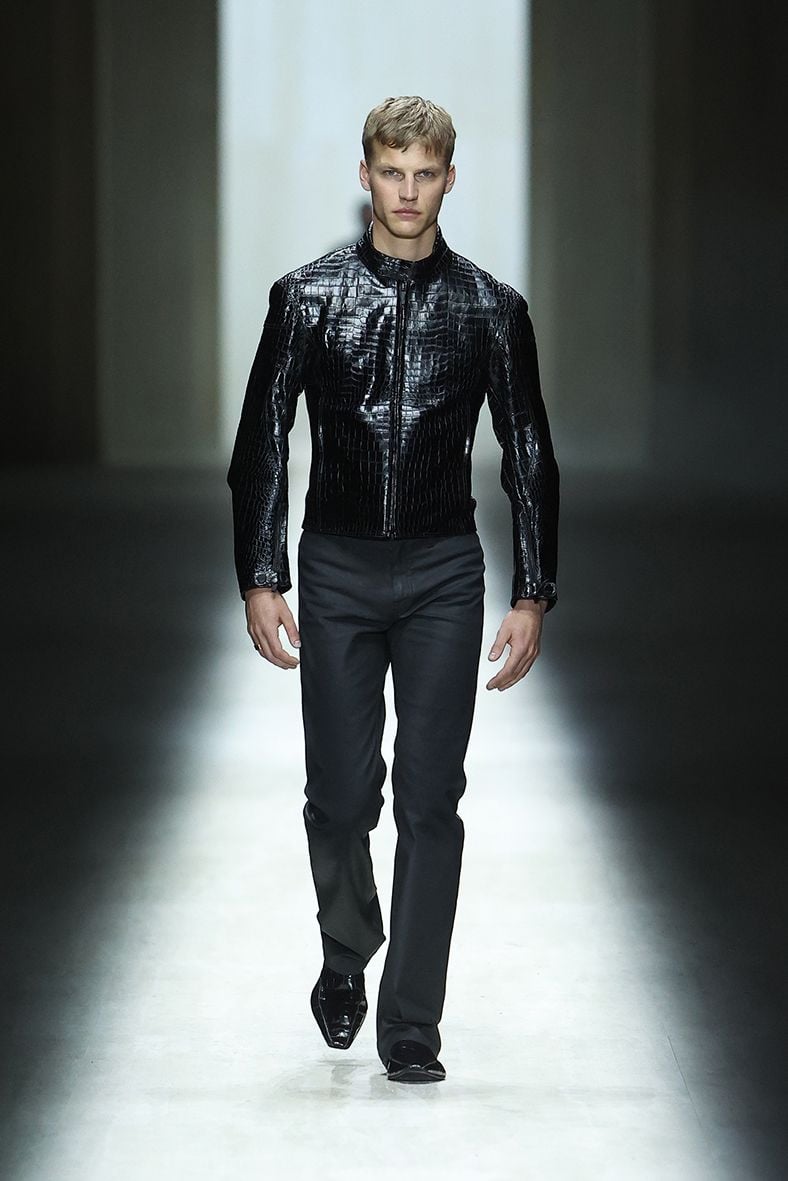
Kering listened. The Tom Ford associations in Primavera were an easy reach – and in some cases, deliberate recreation. Black moto jackets in croc and lambskin may well have been dug out from Beckham's Chelsea Harbour storage unit.
The GG-thong slung on show-finishing Kate Moss, bedazzled with ten carats of diamonds, was a direct callback to Ford’s '98 piece. Moss herself hasn’t walked for Gucci since the Ford era, making her presence that much more intentional.
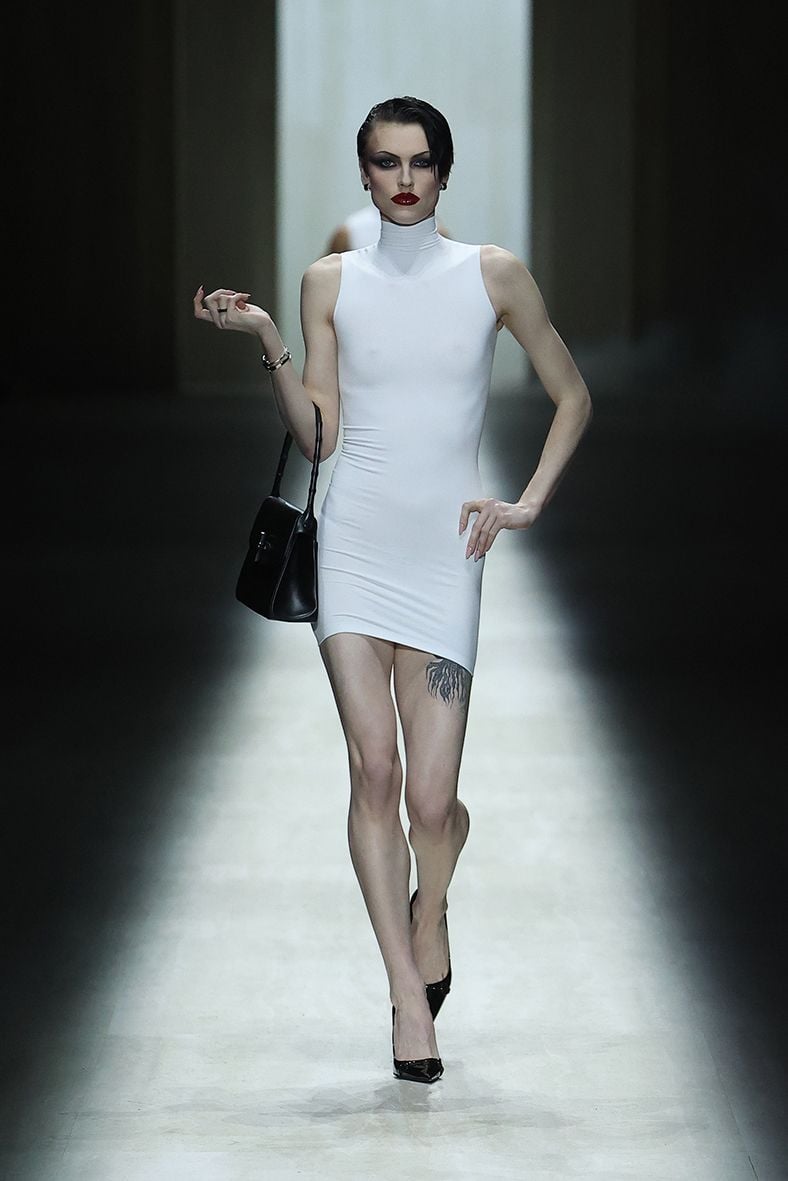
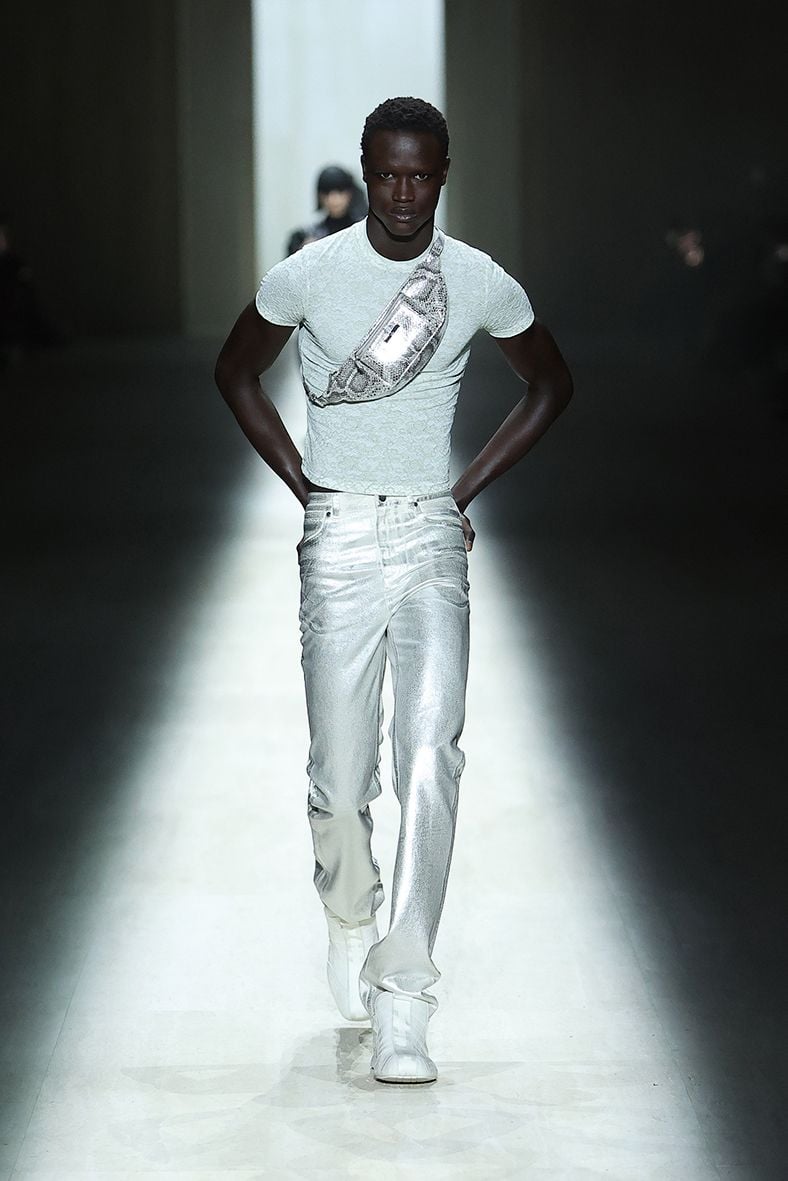
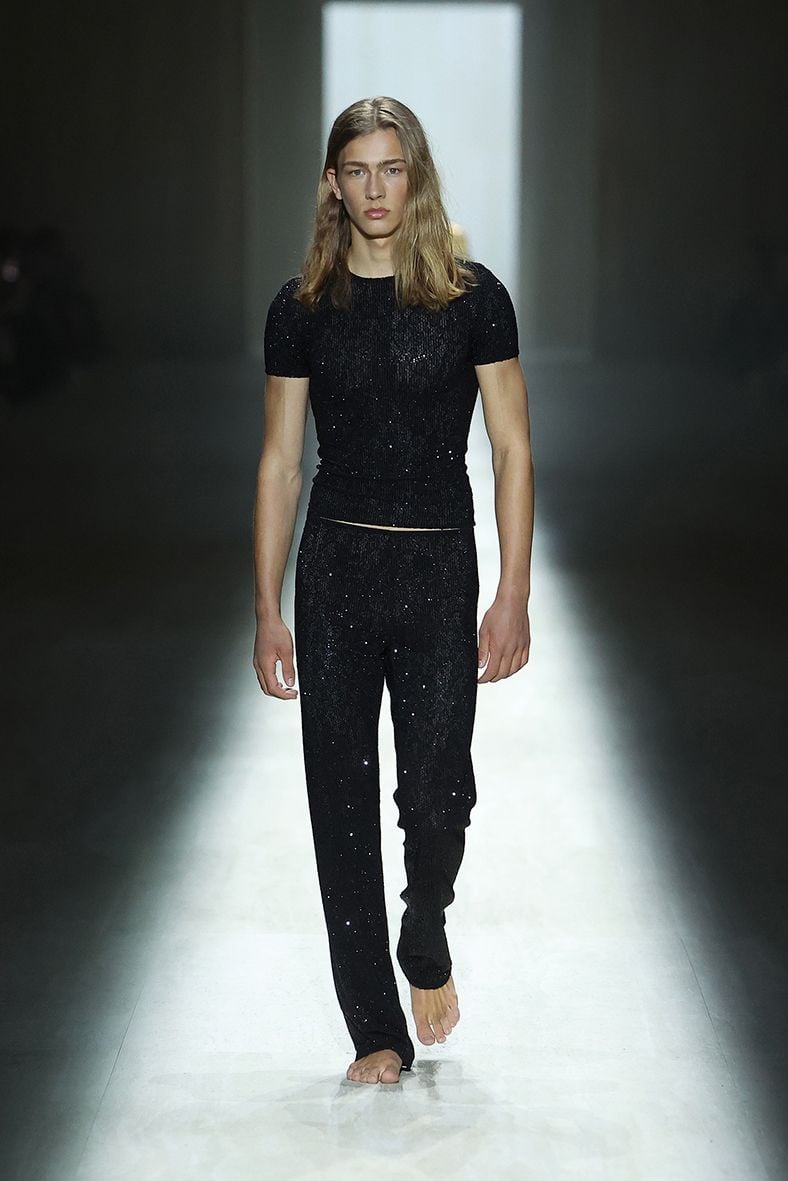
Other choices carried more of Ford's philosophy, mixed with obvious cachet. Painted-on jeans clung to barefoot male models. Cocktail dresses rode up on cool girls like Gabbriette, Alex Consani, Emily Ratajkowski, Amelia Gray and Karlie Kloss. References were made to films like Basic Instinct, pirated straight from the Pinterest archives.
Demna, as the brand’s first non-Italian creative director since Ford left in 2004, wasn’t channelling Ford so much as the internet’s idea of Ford – a mood board assembled from an explore page carousel.
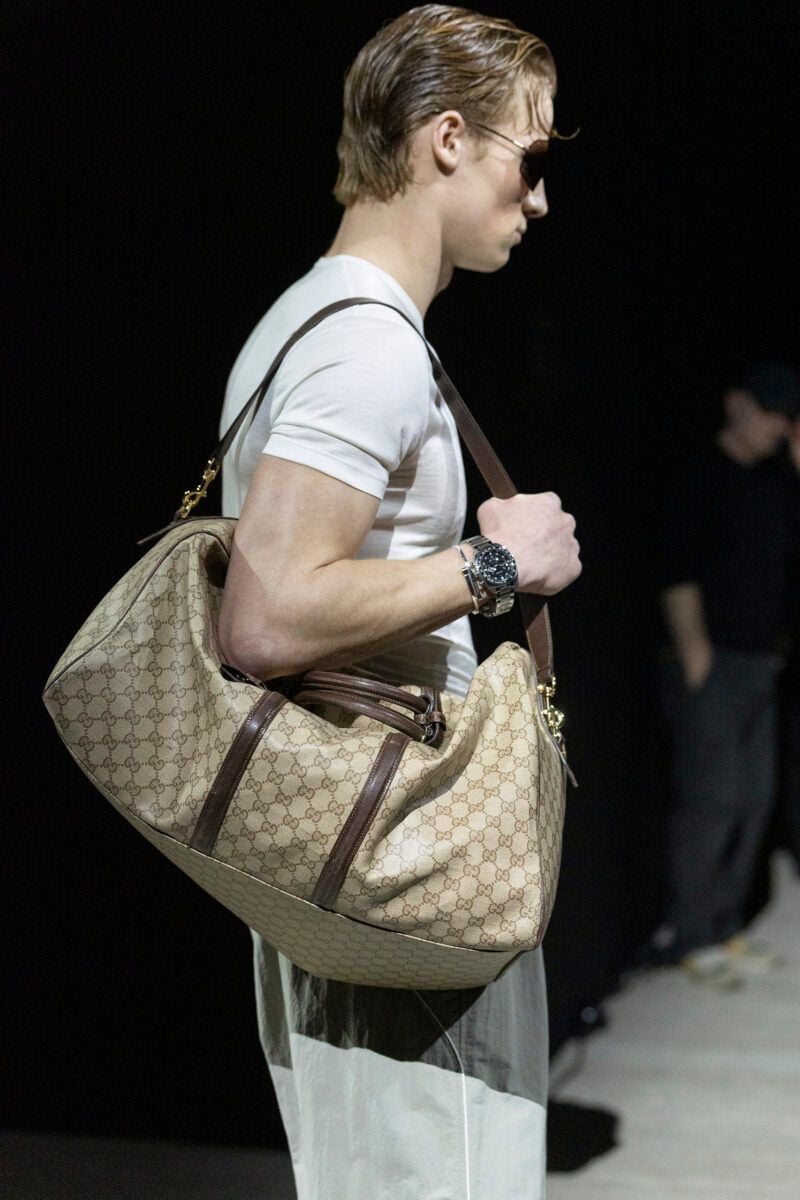
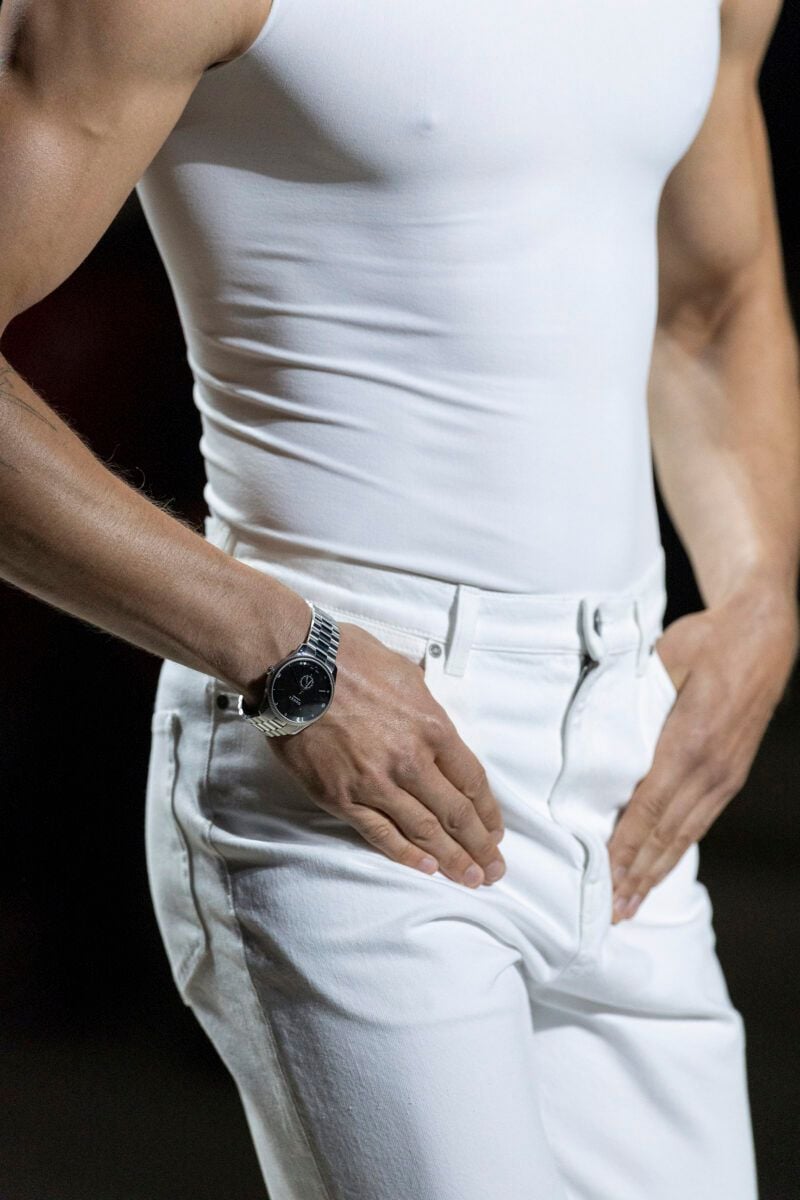
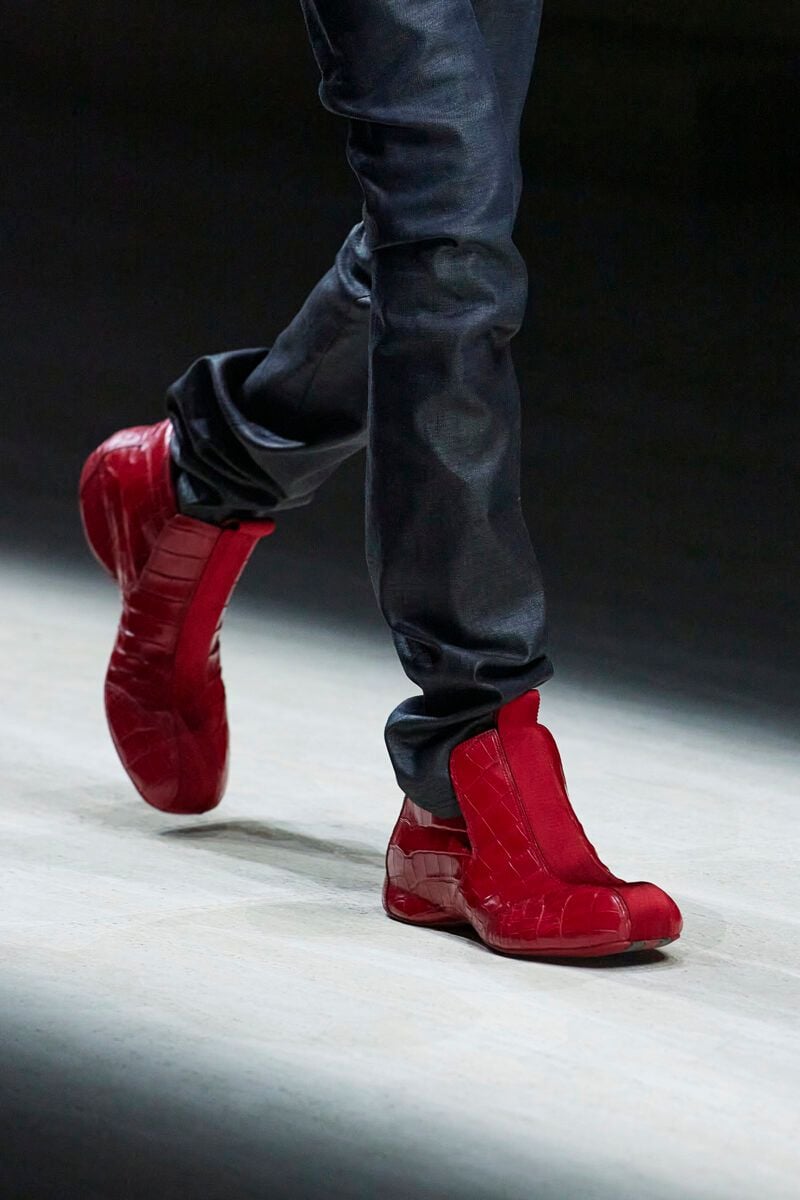
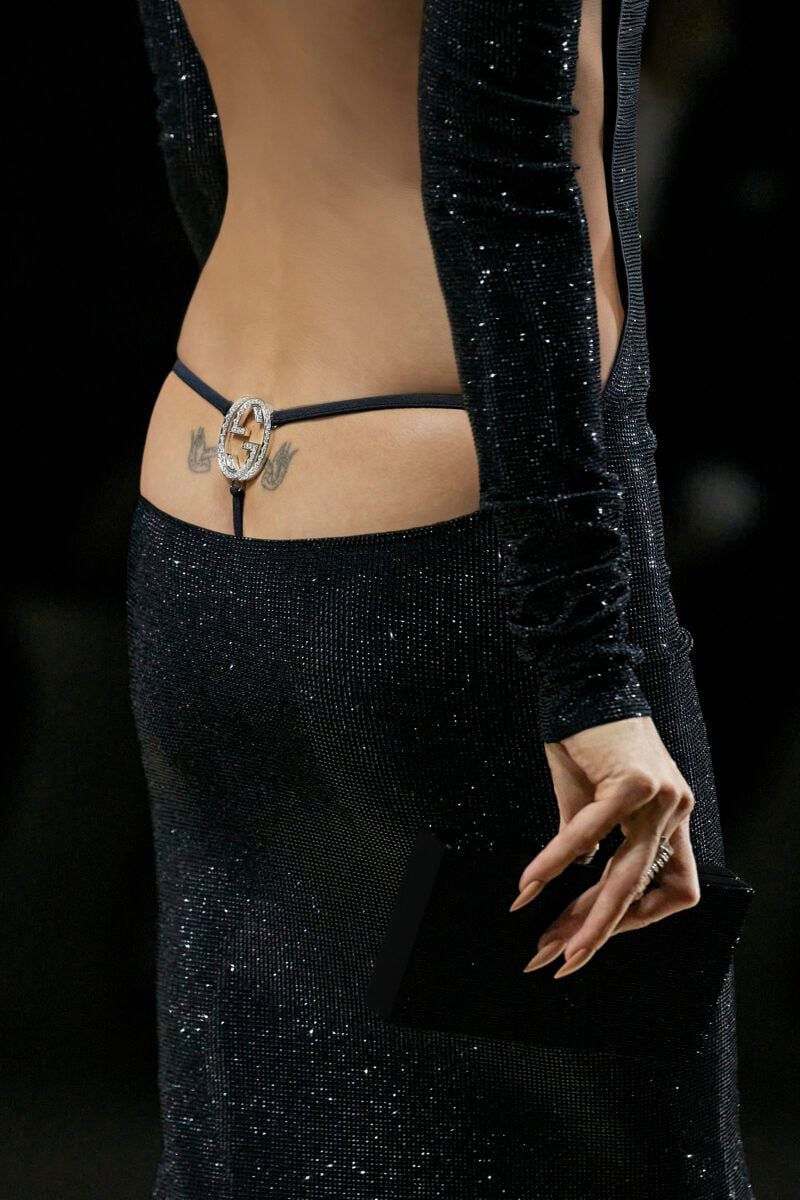
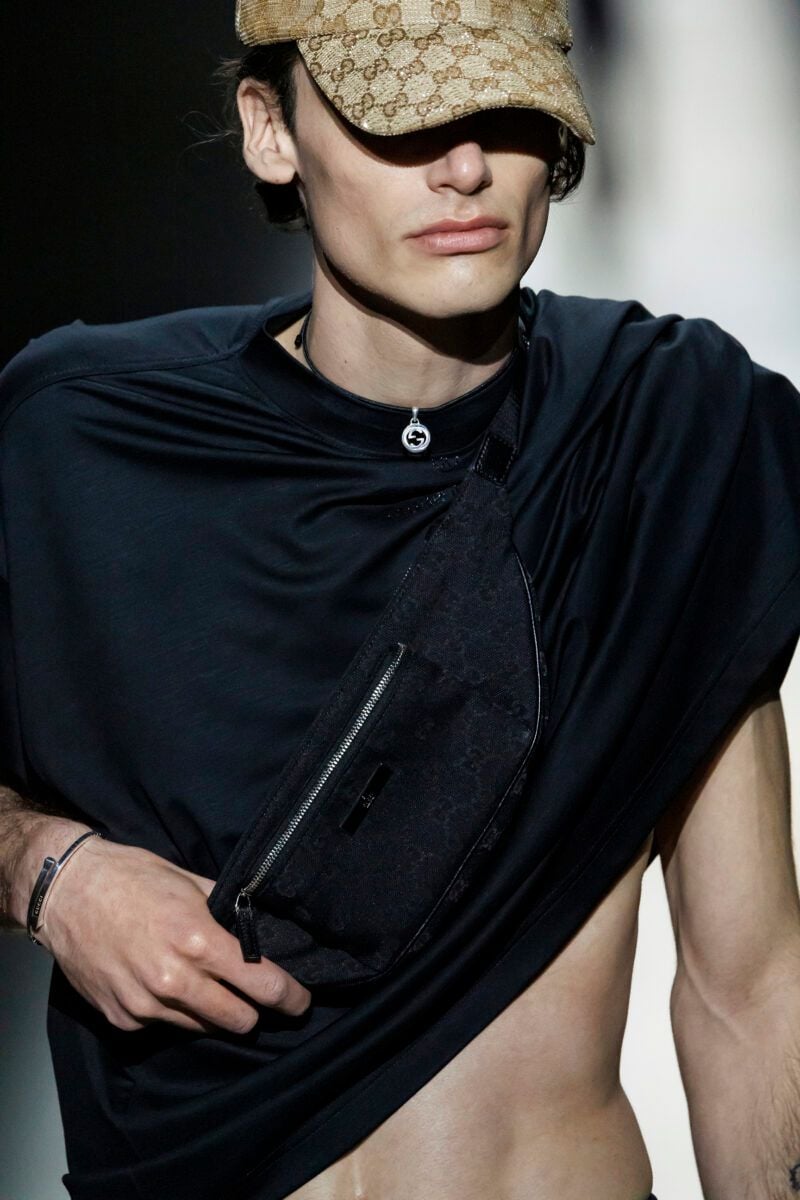
This is Demna’s actual trick, and it’s a good one. He gave the internet a monkey's paw of what it wanted. Rapper Fakemink pulled his phone out of a cross-body bumbag mid-walk. Tees were half pulled on, hems tugged down, and walks were awkward. Sexy clothes were made unsettling.
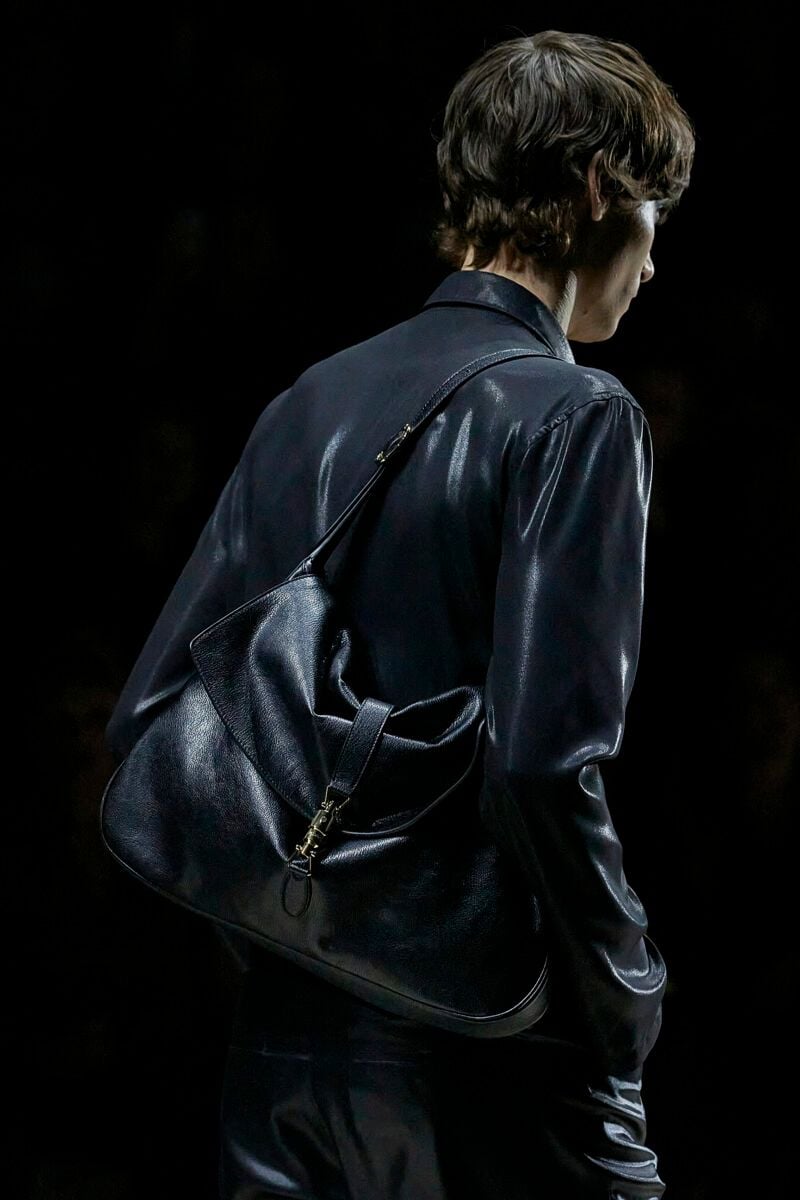
Despite this, the imitations were tasteful. Archival nods were incorporated into pieces that still felt modern, if a little outrageous. Horsebits appeared on knee-high boots, bamboo handles made leather, the Gucci red and green motif streaked over a shaved mohawk, the Giannini flora print resurfaced on a slip dress, the piston-locking Jackie bags now as men's messenger bags.
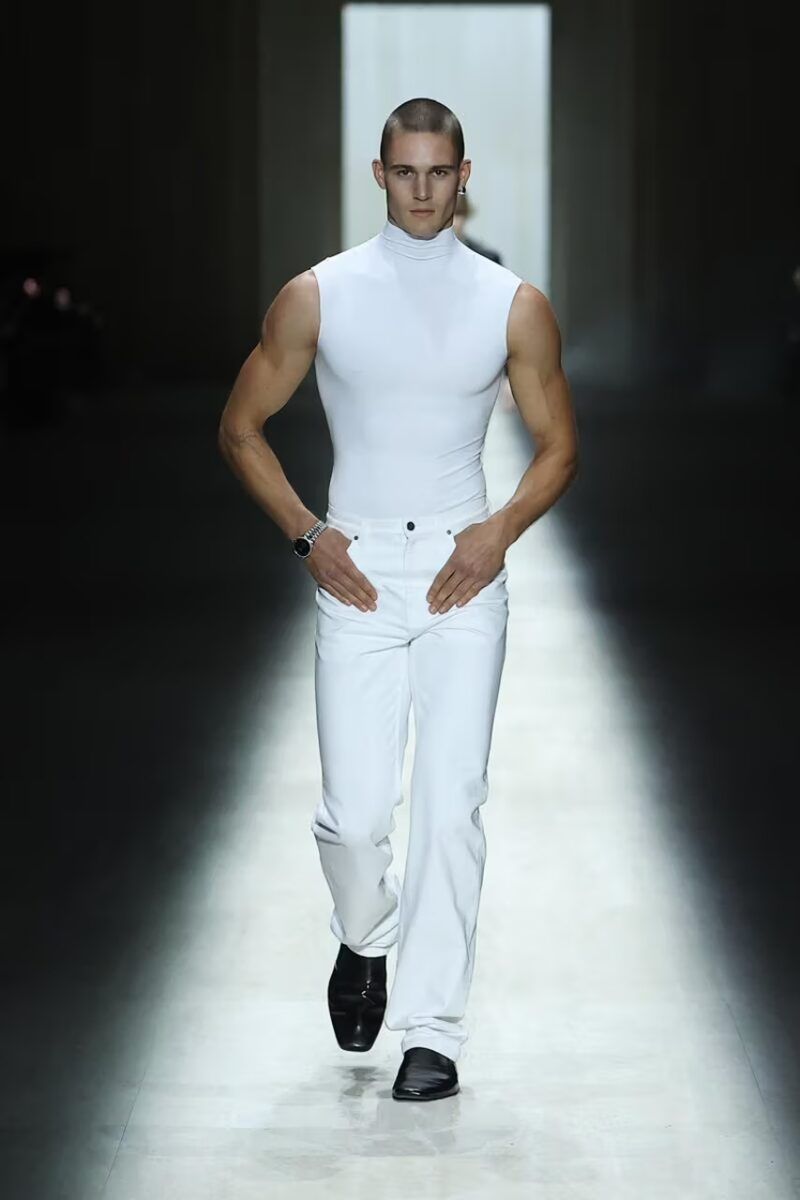
Like Demna's Balenciaga, it's wearable to a certain clientele (catch me in Sam Watson's white tank after a few more hammer curls). Again, no accident: the collection’s “See Now, Buy Now” scheme means pieces shown on the runway last Thursday are available today – collapsing the distance between runway hype and delayed sales. In the weeks surrounding the show, Kering stock climbed – whether on the strength of reported earnings, the collection, or both, the market was paying attention.
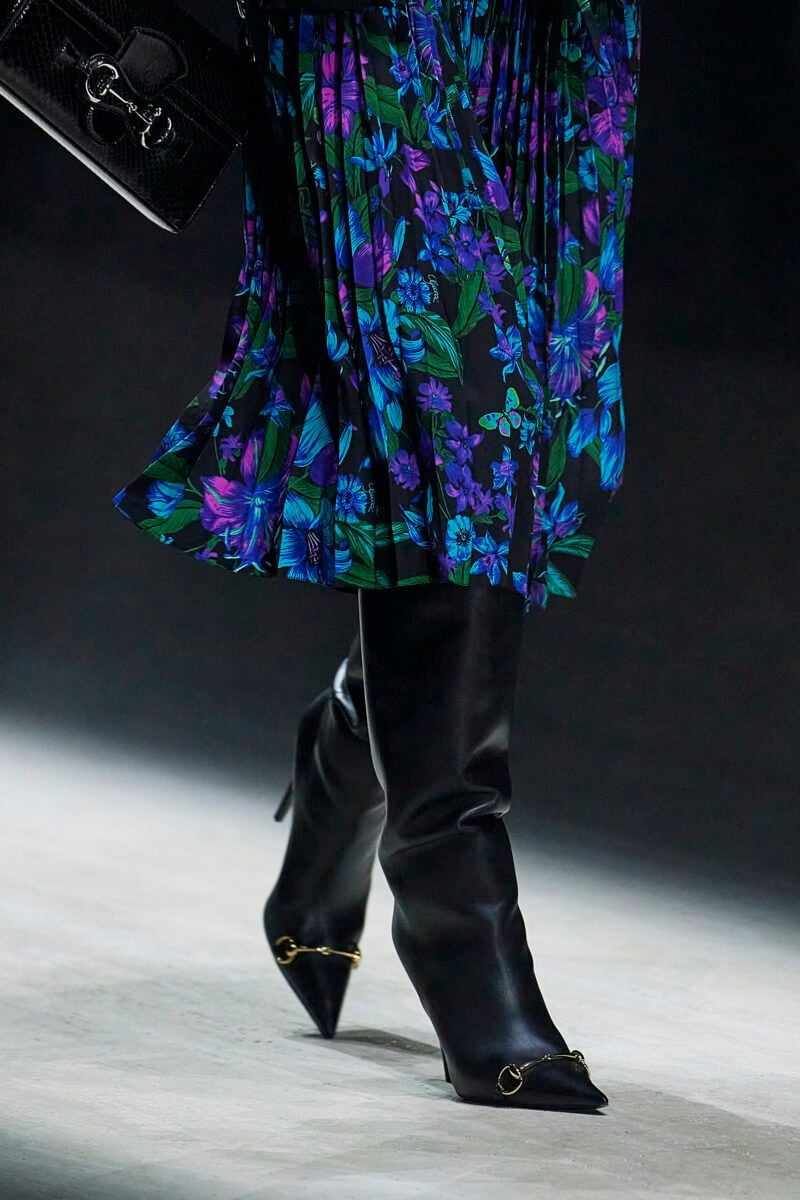
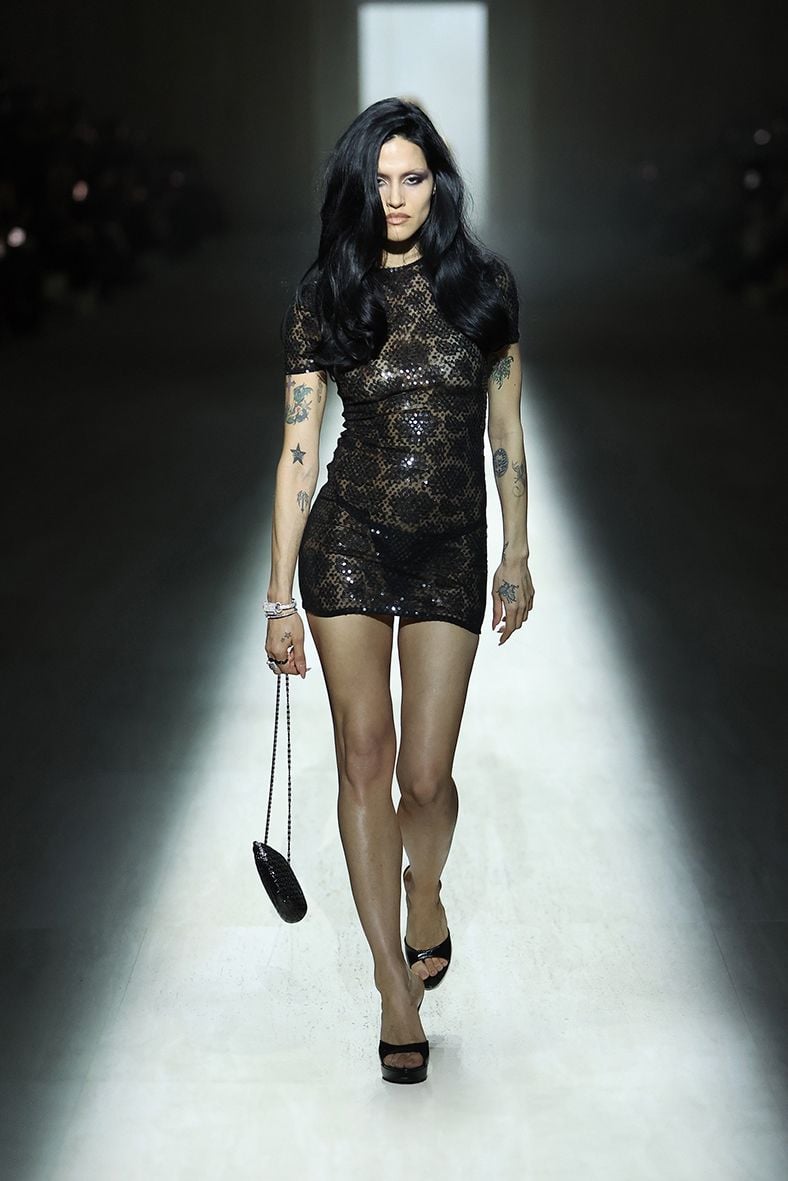
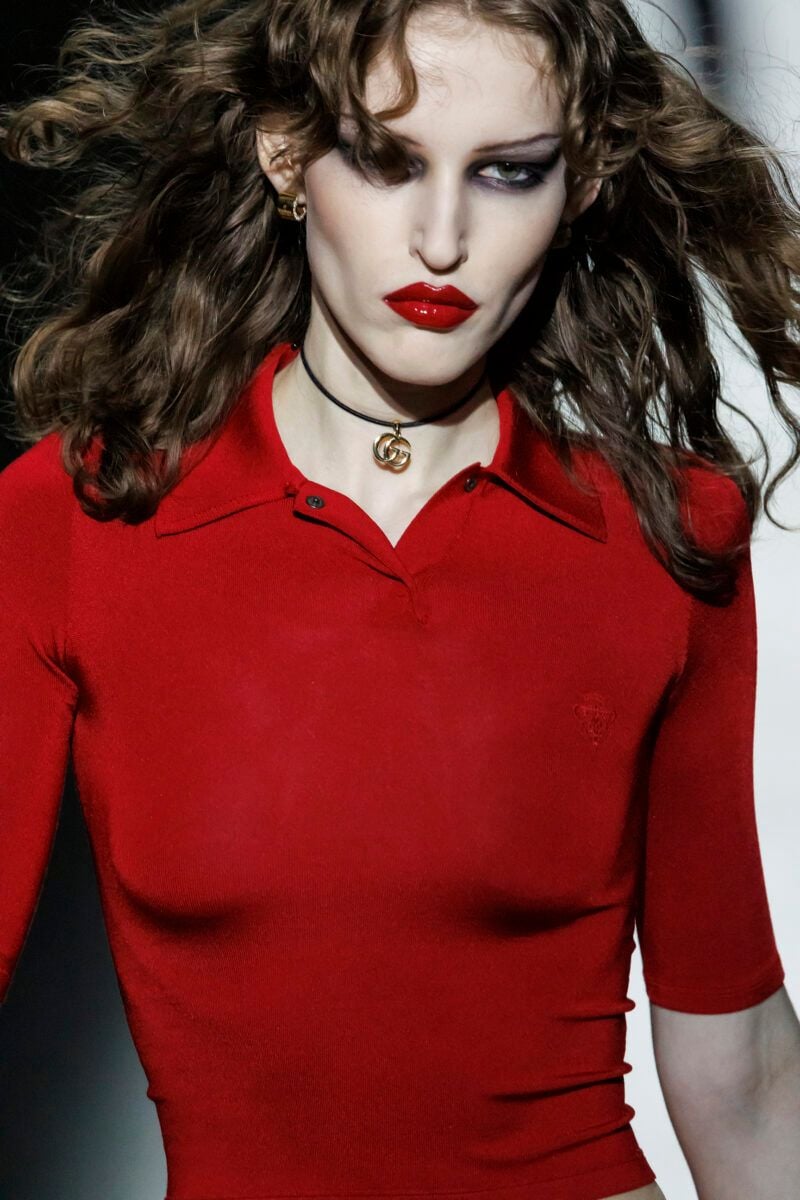
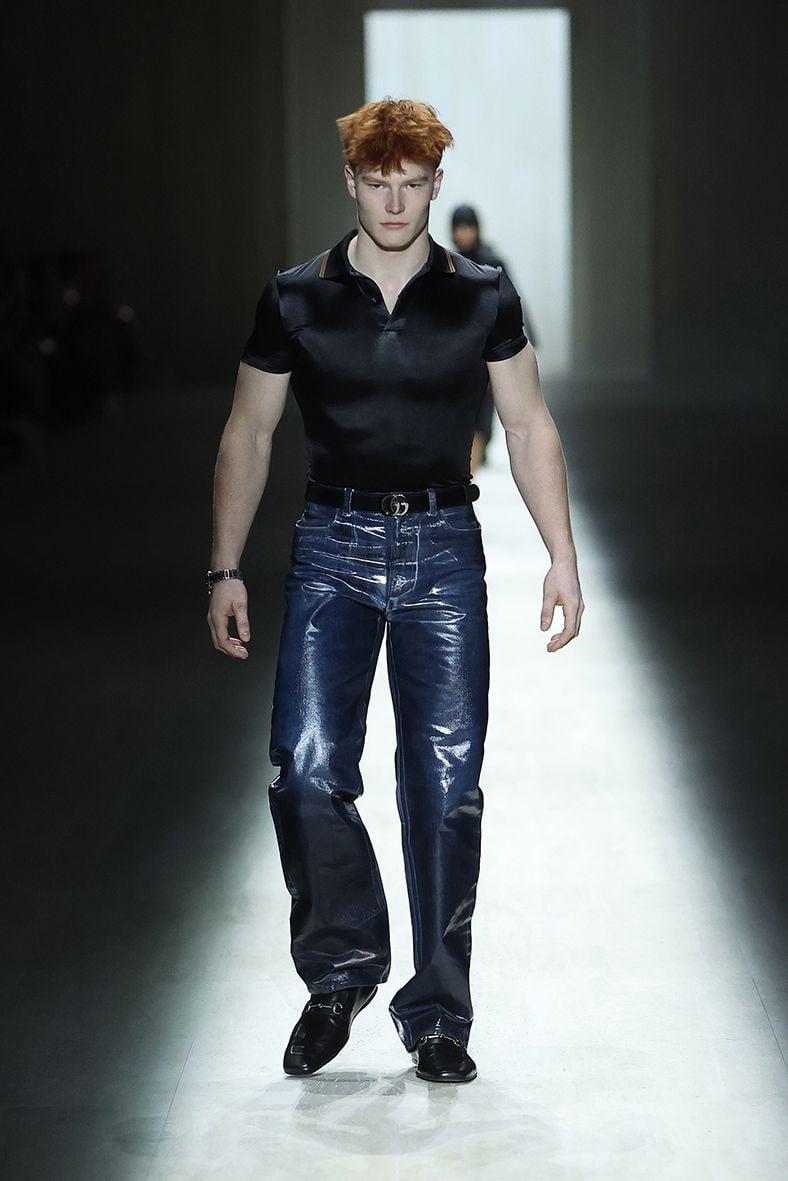
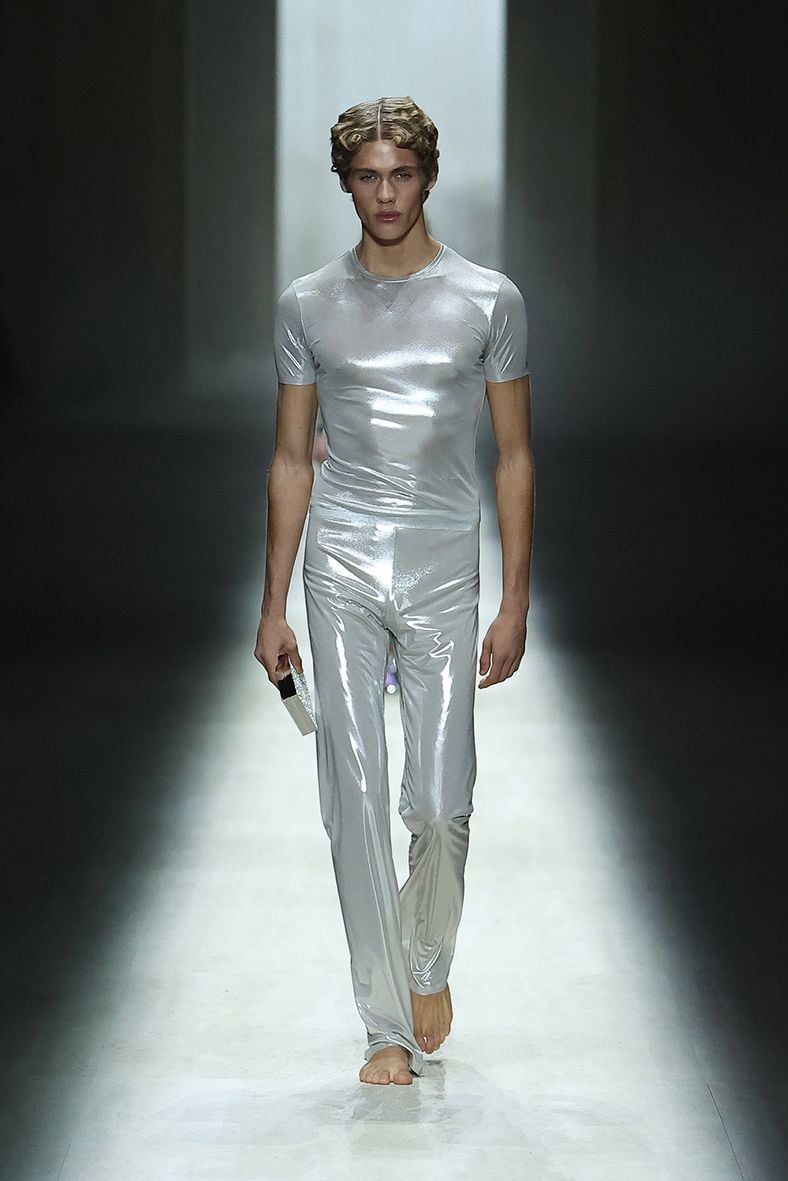
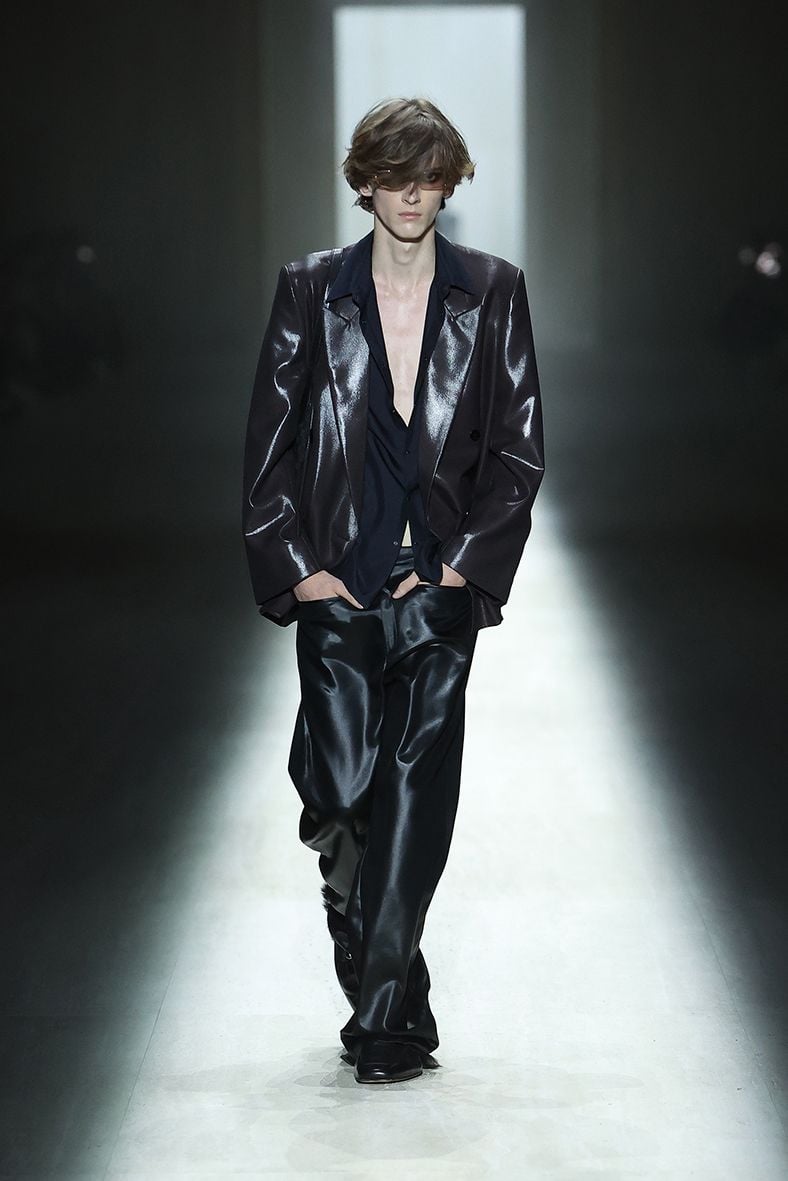
The cynical read is that this is a purely financial decision – that a Kering-instructed Demna mined the archive, recreated what was already selling from third parties, and draped it on famous figures to guarantee hype. The internet wanted Tom Ford’s Gucci back, and sourcing that one black silk shirt in a size M has become too hard. Demna gave them Tom Ford’s Gucci as seen through a screen, worn by the idols the internet currently worships, priced for people who can afford to buy the piece rather than just "Save Search" it.
As a debut show, it's a good stock-take on what made Gucci so desirable. Ford's Gucci endures as an artefact of legacy. Demna's Gucci is engineered to do much the same. Whether that's genius or its own kind of limitation – financially, Kering doesn't seem too bothered either way.