

The sun is Australia’s double-edged sword. We live for it, while it indiscriminately takes lives at the same time. There’s no rhetoric behind the “national cancer” declaration – the threat is real, and it’s growing.
“She’ll be right" doesn’t cut it anymore for Scott Maggs, founder of Skin Check Champions. That mentality died over a decade ago, along with his mate Wes, who was 26, fit, in the prime of his life, and, like many Aussie blokes, seemingly bulletproof – until a melanoma proved he wasn't.
“That loss stripped away any tolerance I have for bureaucracy, excuses, or slow-moving systems,” Maggs says poignantly when asked about the state of play of skin cancer in Australia.
The Australian government has dragged its feet on skin cancer prevention for too long, with little official progress in the pipeline. Initiatives like Skin Check Champions are cutting through the red tape to take the fight to the source.
“We exist for one reason only – to find skin cancers early and save lives. Not someday. Not next year. Now.”
Scott Maggs, founder of Skin Check Champions
Maggs' no-bullshit mission is to bring preventable deaths from melanoma as close to zero as possible, by increasing early-detection probabilities, particularly for demographics at a statistically higher risk.
Until now, they've just needed the right tools for the job, which all changed last month when the mission was turbo-charged by a massive global endorsement.

Skin Check Champions has just taken home the APAC prize of the inaugural Defender Awards, selected from a global shortlist of 56 projects. A tactical mission overhaul designed to springboard Skin Check Champion’s life-or-death operations. The kit-out? A $200,000 bursary, expert mentorship, and a slick new Land Rover Defender 110.
The Defender Awards were designed to support "heroes who embrace the impossible every day", and in regional Australia, where Scott has identified the most at-risk communities, "the impossible" involves dragging a fully-equipped mobile clinic across corrugated dirt roads and into remote locations.
For Maggs, this vehicle, which actually replaces an original Defender 110 he’s owned and operated for the past few years, is both practical infrastructure and a natural fit.
"The Defender 110 isn’t a prop," he continues. "With it, we’re getting out there and getting it done. Beaches. Farms. Festivals. Construction sites. Remote towns in the bush. Wherever the risk is highest, that’s where we’ll go. It also means we can haul our 'Silver Bullet' mobile clinic into remote communities safely, confidently, and repeatedly. It’s built for the harshest continent on Earth, which is exactly what we’re up against."
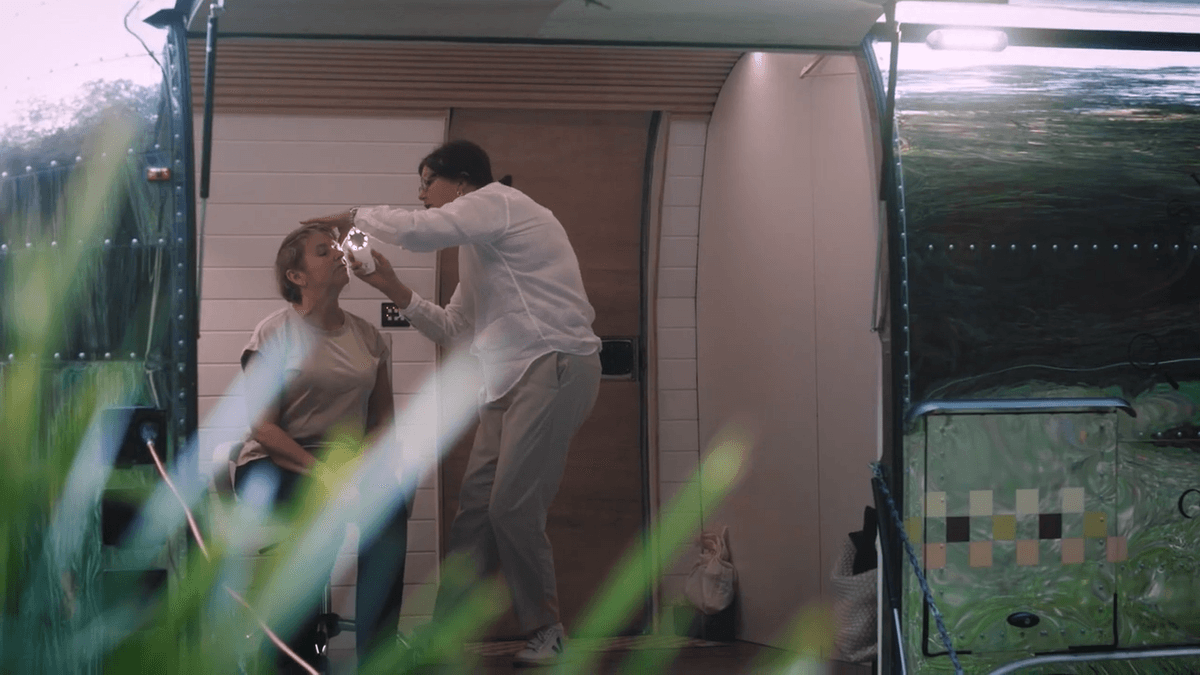
The task massive, but abundantly clear: scale up screening in a country with the highest skin cancer rates in the world. To get there, the team is leaning into AI-assisted screening to help regional clinic nurses detect skin cancers early.
“This isn’t about replacing clinicians, it’s about amplifying them,” says Maggs. “AI gives us reach, efficiency, and consistency at scale. It’s how we move from thousands of checks a year to hundreds of thousands without burning out the workforce - and how we make early detection easy, not a chore.”
A start-up mentality is being applied here to a clear and nuanced health crisis. The tech, now being snowballed by the funds from the Defender Awards, allows for more checks with better triage. It’s already identified more than 600 potential melanomas and 1,800 non-melanoma skin cancers since rollout.
“Finding a suspicious spot is only half the job. Making sure someone actually gets treatment, that’s where lives are saved,” he says.
“We’re practical, scalable, and unapologetically focused on outcomes. Since our inception, we've already provided skin checks for well over 36,000 Aussies, and inspired hundreds of thousands more to visit their local GP or skin check clinic. Saving the healthcare system well over $56 million through early intervention. That’s not theory, it's bankable proof.”
For Skin Check Champions, winning a $200,000 bursary is a game-changer, but Maggs is explicit on where the money goes; it’s about closing the loop with expert guidance, which is also part of the award.
“Getting guidance from people who’ve built exceptional global platforms, not just local programs, is a serious advantage at this stage. Defender can unlock a network of ultruistic high-performers on the world stage we've yet to tap into."
“The bursary then lets us strengthen the systems behind the scenes: patient tracking, follow-up staff, data integrity, and clear clinical pathways to the best professionals. That’s a big focus. If we close the loop properly, with a patient-first philosophy, we don’t just find cancers - we stop people dying from them. That’s our vision. To leverage partnerships, people and opportunities - to make skin cancer history.”
Thankfully, the vast majority of cases can be successfully treated if they are detected early.
With a new Defender hitting the road and a $200k war chest, Skin Check Champions is making sure that "getting it checked" is just part of the deal of living in the lucky country.