

Editor’s Note: This story originally appeared in Volume 6 of B.H. Magazine, pre-order your copy of Volume 7 now.
You're stuck in traffic, peering through the windscreen, squinting at the unfamiliar badge on the rump of the car ahead. What’s Xpeng? Who is Geely? Omoda? And wait – didn’t MG used to make fun little convertibles in British Racing Green, not these generic-looking SUVs?
The Luddites must’ve noticed by now: Chinese cars are everywhere on Australian roads. Even those who really know cars are struggling to keep pace with the flood of new badges landing on our shores almost weekly. Not all of them are Chinese. But most are.
It happened fast. But it wasn’t inevitable. The shift from trickle to torrent of Chinese metal on Australian roads was no accident – it’s the result of a 20-year plan to steal the initiative from dozy Western car manufacturers, who’ve only just been jolted awake. The real fightback hasn’t even begun.
Ironically, it was Volkswagen that first cracked the door open for China’s entry into Australia back in 2004. With spare capacity at a Shanghai plant it co-owned with SAIC (now MG’s parent company), VW shipped over a batch of right-hand-drive Polo sedans – forgettable four-doors that, in hindsight, feel more like a Trojan horse.
A native Chinese brand didn’t arrive until 2009, when local distributor Ateco tapped into post-GFC hunger for value by importing Great Wall’s dirt-cheap – and not exactly cheerful – utes and 4WDs. It marked the tail end of the bad old days of Chinese carmaking: poor quality and dismal ANCAP crash scores eventually forced the brand to retreat.
Then Xi Jinping became president, and China’s automotive malaise came to a screeching halt. Sweeping policy reforms turbocharged the country’s ability to develop export-ready cars with respectable quality, while hardcore emissions rules pushed carmakers to ditch rough petrol engines and get a head start on EVs and hybrids.
Meanwhile, Australia was too busy mourning the loss of Ford and Holden to really notice – so when Great Wall returned in 2016, rebadged as GWM, with far better quality, sharper styling, and still low prices, the shock was real. Since then, the brand has sold over 200,000 cars to Australians.
“China has been able to launch and evolve generations of vehicles into the marketplace and constantly refine them,” GWM’s Chief Operating Officer, John Kett, tells B.H. “They’re already iterations ahead of most other companies.”
GWM and chief rival MG are both gunning for top-five status in the market. They currently sit seventh and tenth, respectively, and climbing the ranks means knocking big names like Mitsubishi and Hyundai aside.
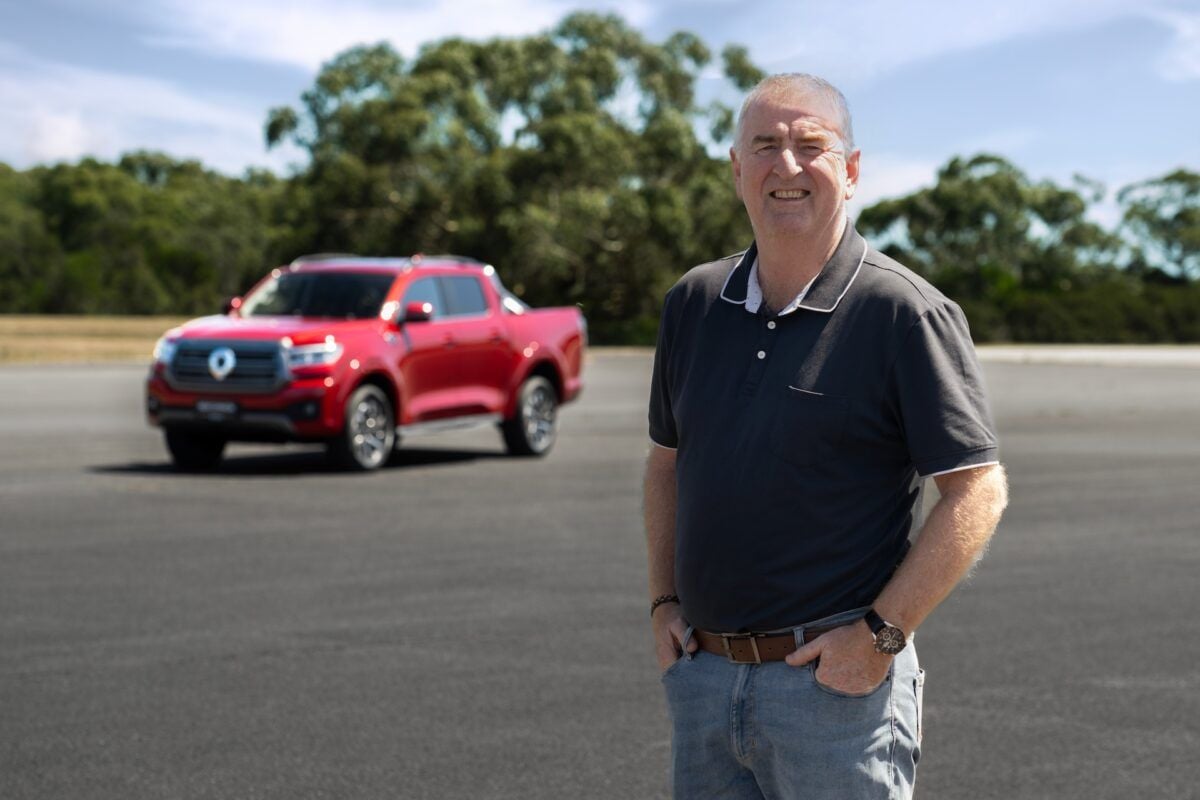
“Something has to break,” says Kett. “While that’s happening, brands like ours need to run fast and firmly establish a stake in this marketplace that delivers real scale.”
Last year, more than 176,000 Chinese-made cars were sold in Australia. Most were from native Chinese brands, but foreign marques – especially Tesla, along with BMW, Hyundai, Kia, and others – also manufacture some models there, capitalising on low (yet high-quality) production costs and shipping advantages for export markets like Australia.
With naked aspirations to displace familiar brands laid bare, Chinese manufacturers’ plans to upend the Australian car market create a fascinating strategic challenge for current leaders – including Toyota, which has held the top-selling spot here since 2003. But even Toyota’s market share is slipping from a peak of 21 per cent.
“Toyota acknowledges the intensifying competition, especially right now from Chinese [brands]… Years ago, we were the new brand in Australia, and after us, it was the Koreans,” says Sean Hanley, Toyota Australia’s vice president of sales and marketing.
“Our market share, despite all of these new entrants, is still sitting above 19 per cent – sometimes above 20 per cent,” adds Hanley. “We have to respect our competitors, but we shouldn’t fear them.”
Korea and India followed Japan into the Australian market, but there’s something different about China’s push – not least because of backing from the Chinese state, which has helped manufacturers secure impressive supply chain integration and scale, delivering massive price advantages.
And most people naturally associate Chinese cars with low prices. Value was the opening act, but the second act is about striking at the jealously guarded prizes of Western manufacturers – their luxury divisions.
In June, MG’s luxury sub-brand IM arrived locally with a large EV sedan priced at $61,000 – roughly $30,000 less than a petrol BMW 3 Series.
BYD (makers of the Shark ute – the best-selling plug-in hybrid (PHEV) in Australia) already will bring Denza to Australia with PHEV-powered rivals to the LandCruiser, and in a bold flourish, has touted the Yangwang U9 supercar – clocking 496 km/h, the world’s fastest car, and a two-door that can leap potholes via active suspension. The spectacle matters less than the message: China isn’t stopping at entry-level price points.
This playbook is familiar from consumer technology: establish trust with well-specified, aggressively priced mainstream products (many affordable Chinese cars now earning five-star ANCAP ratings), then climb the ladder into pricier models with higher margins.
Chinese brands say they intend to keep the boot on the price advantage, even as they pivot toward the premium segment – turning the screws on European and Japanese incumbents like Volkswagen Group, Stellantis, and Hyundai, all of whom are adopting ‘eastern’ platform strategies to cut costs and speed up development.
“With Chinese manufacturers entering the market, the price point has shifted,” Audi Australia’s Brand Director, Jeff Mannering, tells B.H. “Three or four years ago, Tesla pushed the average EV price to about $70,000. Now, it’s probably closer to $40,000. Some Chinese brands are even talking about an even lower entry price.”
Premium brand leaders know help is on the way. All the major Western carmakers are preparing to roll out multi-vehicle architectures that better integrate software, advanced batteries, and powerful motors – matching the vertical integration Chinese manufacturers have now normalised. But these platforms won’t come online until 2026 and beyond.
“We can see down the pipeline what’s coming in terms of technology, and we’re confident that demand for PHEVs and EVs is going to grow,” says Audi Australia’s Head of Product, Matt Dale.
While familiar brands wait for the market launch of their ‘next-gen’ products, Chinese brands are poised to feast in the meantime. In Australia, they’re being boosted by the New Vehicle Efficiency Standard (NVES), which penalises sales of high-CO2 models and rewards brands that steer buyers towards PHEVs and EVs.
NVES, introduced by the re-elected Albanese government, is now in effect. Sell too many diesel or petrol cars, and carmakers face penalties based on how far they exceed the target – multiplied by total sales volume – while EVs and PHEVs generate credits that can be traded in a secondary market. The math is unforgiving, especially for brands reliant on diesel utes and 4WDs.
Some Western brands are panicking, but Chinese executives like Kett see opportunity in NVES. The lessons from China’s earlier, stricter version are front of mind.
“The reality is that 10 to 15 years ago, China faced the same regulations Australia is dealing with now. They had to respond with broad-based technology solutions – starting with hybrids, then PHEVs and EVs – to meet regulations that were being enforced rapidly,” explains Kett.
“We feel incredibly well-positioned. We can sustain our penetration across ICE and hybrid. Today, we’re number three or four in hybrid. Within 12 to 18 months, we’ll have a PHEV or EV story in every segment, from small cars through to body-on-frame SUVs and pickups.
“And when we introduce our premium Wey brand, it will likely focus on large SUVs. We believe we’ll have the portfolio covered across Australia and be ready to adapt to whichever way consumers lean – or where regulations push us.”
Australia’s laws have catapulted the humble PHEV back into the spotlight. Once dismissed as a half-measure, PHEVs have made a strong comeback as vital transition technology – offering around 100 kilometres of electric range for commuting, plus a petrol or diesel engine for touring or towing.
Under the rules, PHEVs are treated far more favourably than petrol or diesel vehicles – and even more so than ‘plugless’ hybrids, which have been a staple for Toyota for 20 years. There’s a huge regulatory tailwind for carmakers with credible PHEVs already ready to launch; that means the Chinese.
While Toyota and Nissan appear to be years away from launching low-CO2 versions of staples like the LandCruiser and Patrol, GWM is set to launch a plug-in version of its Tank 500 4WD – a Prado rival – that will earn NVES credits while delivering around 100 kilometres of electric range, 800 kilometres of combined range, 300kW of power, and roughly three tonnes of towing capacity.
It’s also expected to cost around $80,000 – the same price as a diesel-powered Toyota Prado GXL with 150kW of power, and a vehicle that will start incurring NVES fines from next year.
“When it comes to pricing, I don’t think Western brands will outprice the Chinese anytime soon, and we have no intention of giving up our price base either,” says Kett. “We can live on thinner margins, and we’re happy to accept that to gain the scale and market share we need.”
The pressure on Western incumbents is clear. Ford has a solution underway, having released a compliant PHEV version of its Ranger ute, but the most popular 4WDs on sale in Australia will exceed NVES limits from 2026 – unless their makers can offset emissions with significant hybrid and EV sales.
“PHEVs will accelerate. EVs will grow steadily. I think sometime between 2030 and 2035, they’ll represent about 30 per cent of the market – that’s where I see it going,” says Toyota Sales Chief, Sean Hanley. “We have a RAV4 PHEV coming, and I suspect that within the next year and a half, we’ll probably have three EVs. We will have to develop more hybrids, PHEVs and EVs, no doubt.”
Hyundai, Australia’s second-largest hybrid seller (at about 15 per cent of Toyota’s hybrid volume), is more focused on full EVs than PHEVs – but executives at the Korean firm acknowledge the Chinese challenge is serious. They plan to counter it with new technology.
“We’re going to see batteries with much longer range and significantly shorter charging times, along with extended-range EVs launching in some global markets by 2027. These vehicles will offer over 950 kilometres of range and small generators to keep the battery charged,” says Hyundai Australia’s Senior Manager of Future Mobility, Scott Nargar.
“It’s tough because the Chinese are doing a great job with a wide range of vehicles at sharp pricing,” acknowledges Nargar. “But I think what we pride ourselves on are our vehicle warranties, nationwide support, and really well-specified cars.”
Toyota sees its key advantage as its reputation for quality – backed by the country’s most extensive sales and service network. According to Hanley, Toyota owners value the confidence of knowing they can find parts within 300 to 400 kilometres, even in remote areas.
“People can bring things to market quickly, but I don’t know how those cars will stack up in five or eight years – I’ve got no idea,” says Hanley. “But I do know how Toyotas will stack up, because I know the quality, durability, and reliability we build into everything we sell.
“We won’t do anything that compromises that DNA. You have to be able to service and repair a car – and for that, you need parts. You can’t build that overnight. It took us 50 years to establish that capability in this country.”
New brands scaling up fast in Australia typically struggle to lock in the sophisticated logistics needed to efficiently service or repair vehicles. These processes depend on complex integration between the carmaker’s factories, local warehousing, parts distribution, and fitment centres.
“Durability will be tested over time – and I think it’ll also be tested through serviceability and response times. We’re quick on both,” says GWM’s Kett.
Beyond price, specification, and service, Australian buyers care – perhaps more than most – about how a car drives. Our vast distances pose a unique challenge, and local tastes lean more European than Chinese. Australians typically prefer firmer, more controlled suspension, sharp steering, and confident high-speed composure.
While Chinese manufacturers come armed with NVES-compliant powertrains and the benefits of tightly integrated production, meeting Australian expectations for vehicle dynamics may prove to be their toughest frontier.
“We do charge more than Chinese manufacturers for our cars, but there’s a reason for that,” says Audi’s Mannering. “It’s an Audi. The development that goes into the steering, suspension, and overall driving comfort matters.
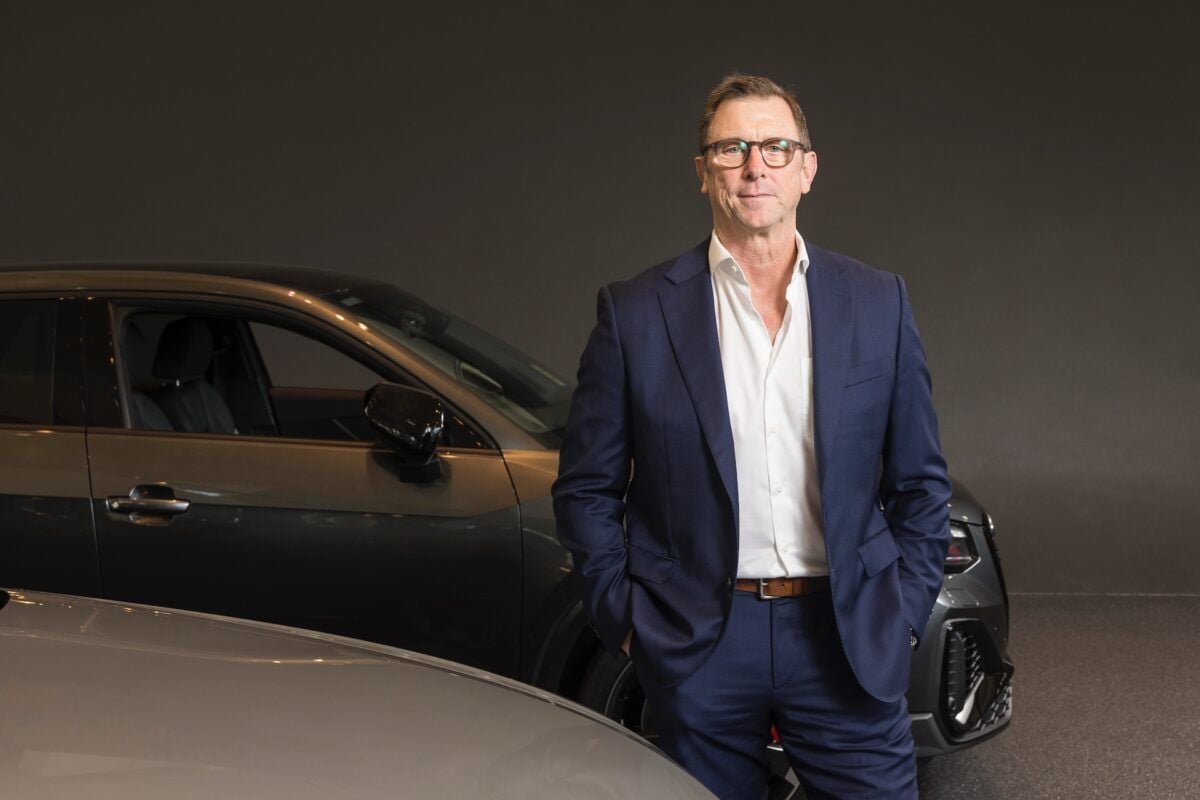
Product boss Matt Dale continues: “It comes down to the things customers can’t see, but they can feel. It’s aluminium subframes, suspension architecture, the right bushings to bring feel back into the steering – so it feels like an Audi. That’s the point of difference.”
Some Chinese brands have recognised the dynamic shortfall and are responding in various ways. Fully European-calibrated Chinese cars are starting to emerge, led by the polished MG4 electric hatch, tuned entirely in Spain to impressive effect. GWM is splitting the difference, with an extensive local retuning program now underway in Australia.
“The opportunity to build confidence in our brand lies in showing that, while our vehicles are made in China, they’re refined for ride, drive, and handling on Aussie roads. By the end of 2026, the majority of our products will be retuned specifically for Australian conditions,” says Kett.
It’s an investment that highlights Australia’s surprising – and enduring – leverage in vehicle development, a valuable advantage that Western brands will need to maintain to hold market share.
“Driving in Australia requires a completely different mindset,” says Audi’s Mannering. “The conditions here are just different.”
While the Chinese continue to dominate in scale and speed, expect the Western fightback to focus on more than just technical upgrades. Look for an unprecedented push fuelled by nostalgic, feelgood advertising that reminds people of the trust they’ve known before. It’s no accident that Volkswagen now refers to itself as the “Love Brand”.
It’s the trust factor that Chinese carmakers recognise can’t be engineered overnight. But just as China seized the engineering initiative, that trust can be chipped away if challengers keep arriving with better products, making unfamiliar new badges a regular part of the Australian landscape.
In other words: strap in. With American and European governments raising trade barriers to keep the China threat at bay, Aussies will be front-row spectators as motoring’s old and new worlds duke it out.