

Editor’s Note: This story originally appeared in Volume 6 of B.H. Magazine.
One day, you’re wandering through the popcorn-scented aisles of Blockbuster with your whole life ahead of you. Then, in the blink of an eye, you’re scrolling aimlessly through five different streaming services, without any real desire to hit play, nagged by the sinking feeling that things used to be better.
It isn’t your imagination, either.
If you’d spent Christmas Day at the cinemas all the way back in 2001, you would’ve been spoiled for choice. Which of the three acclaimed classics did you choose: Harry Potter and the Philosopher’s Stone, The Lord of the Rings: The Fellowship of the Ring, or Ocean’s Eleven?
Now compare that to what’s screening this Christmas. Aside from James Cameron’s monied Avatar threequel – which itself is edging toward the end of its cultural shelf life – it’s hard to imagine anyone rushing to the cinema for an Anaconda reboot, another SpongeBob movie, or even Josh Safdie’s critically acclaimed Marty Supreme starring Timothée Chalamet.
Even harder to imagine? Anyone revisiting these releases after their 12-month churn cycle.
“The quantity of movies that are made today globally… most of it is sh*t,” said the Academy Award-nominated Sir Ridley Scott during a live talk at London’s BFI Southbank in October.
“We’re drowning in mediocrity. And so what I do – it’s a horrible thing – I’ve started watching my own movies. And actually, they’re pretty good! Also, they don’t age.”
So what happened?
It’s not just the sterility of modern cinematography or the prosaic nature of buzz-based marketing – it’s the way films feel.
Most of what we’re fed now is flatter, safer, more obvious. Arcs are predictable, story textures thinner. Everyday cinema seems to have lost both its soul and its nerve, long before the dailies even hit the cutting room floor.
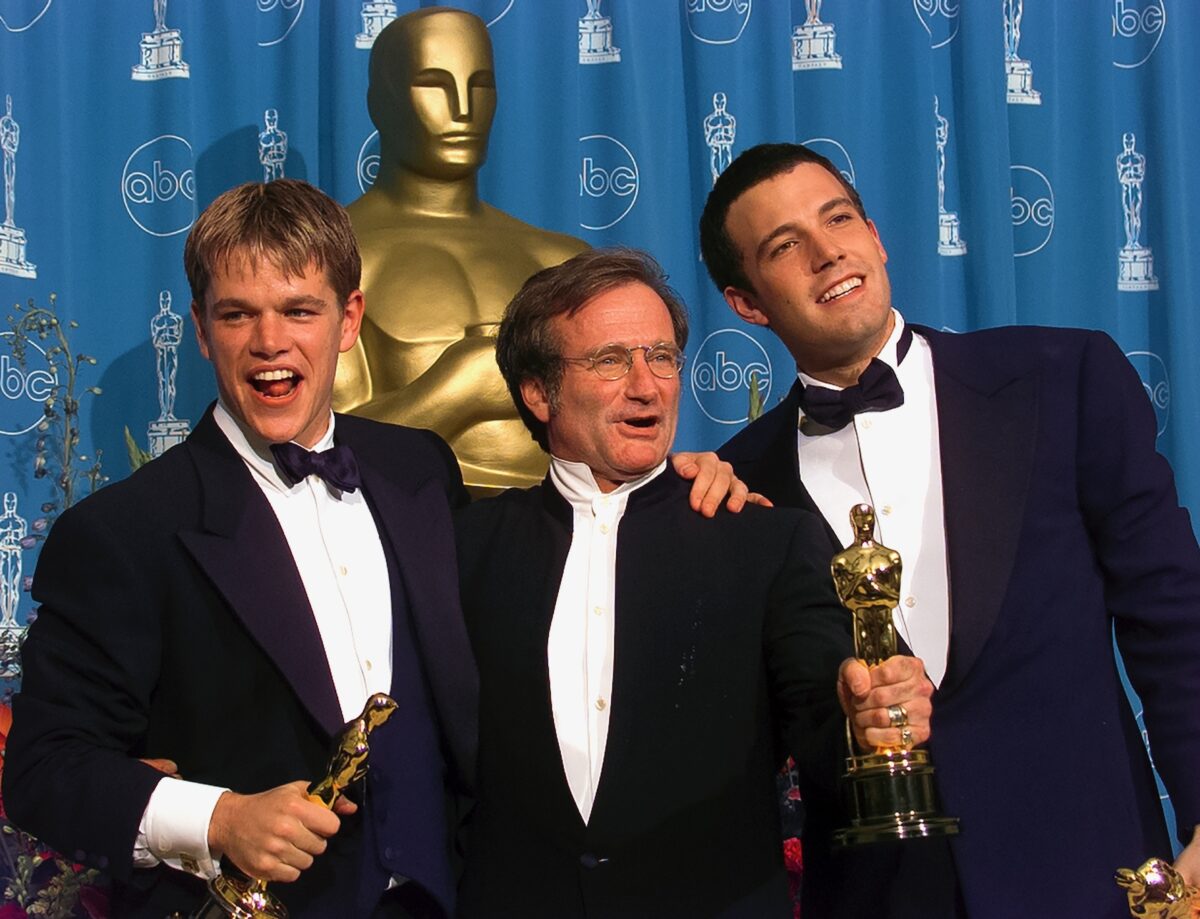
In an interview with Sean Evans on Hot Ones, Matt Damon traced a key turning point in Hollywood’s creative ethos to the death of DVDs.
“The DVD was a huge part of our business – of our revenue stream – and technology has just made that obsolete,” explained the Hollywood star.
“You could afford to not make all your money when it played in the theatre because you knew you had the DVD coming. It would be like reopening the movie (almost). When that went away, that changed the type of movies that we could make,” Damon added.
Last year, DVD, Blu-ray, and UHD disc revenues in the US fell below US$1 billion – down over 94 per cent from their 2006 peak of US$16.6 billion. According to the Digital Entertainment Group, the decline began around 2008 – about a year after Netflix launched streaming.
With one less financial backstop for marginal films, pictures now have to break even – or ideally profit – on theatrical performance, lopsided streaming deals, or ancillary licensing alone.
The economics of this drying wellspring limit the kind of risks that producers and creatives once took – on quieter stories, experimental tones, or subjects without instant mass appeal – resulting in a more homogenised output.
Damon continued: “The idea of making $100 million on a story about a love affair between these two people [in Steven Soderbergh’s Behind the Candelabra]… that’s suddenly a massive gamble in a way that it wasn’t in the ’90s – the kind of movies that were my bread and butter.”
For decades, films could take artistic risks within an accepted commercial range; not quite tentpoles, not true micro-indies. But that middle ground is shrinking fast.
As the cost of failure snowballs, “let’s try it and see” has become a harsh binary: blockbuster or write-off. Anything that doesn’t qualify as near-guaranteed spectacle or a low-budget punt is now considered a risk.
Perhaps the clearest sign of these shifting market conditions is the evolution of Paul Thomas Anderson – one of the preeminent writer-directors of his generation, with perennial “Best of the 21st Century” staples like Boogie Nights, Magnolia, and There Will Be Blood.
The universally celebrated Anderson has long thrived in the US$15–40 million range. But in 2025, not even an auteur of his calibre can afford to play the mid-budget game.
For his tenth feature-length film, One Battle After Another, it simply wasn’t enough to be the man who coaxed two career-defining performances from Daniel Day-Lewis. Anderson was forced to stack his own deck.
After enlisting a trio of bankable Academy Award winners in Leonardo DiCaprio, Sean Penn, and Benicio del Toro, Anderson pared down a postmodern Thomas Pynchon novel into a more conventional, crowd-friendly action thriller (his least metaphorical screenplay to date). Then he had to engage in a gimmicky TikTok marketing campaign.
Only after jumping through all those hoops did Warner Bros greenlight a career-high budget – reportedly up to US$175 million – finally allowing Anderson to realise his big-screen adaptation of Pynchon’s Vineland.
Despite being hailed as the best film of the decade by nearly every critic who’s seen it, One Battle After Another still carries an air of tension over whether it will “perform” – even after crossing US$100 million (none of Anderson’s previous films ever topped US$76 million at the box office).
“It’s tough for him to do a film,” Josh Brolin, who worked with Paul Thomas Anderson on Inherent Vice, told Variety in 2023. “He knows these kinds of movies – US$20–45 million – just aren’t getting made much anymore.
“Would No Country For Old Men get made today? Would True Grit get made today? Would Sicario get made today?” asked Brolin.
As The New Yorker’s Namwali Serpell notes, from Gladiator II to Best Picture recipient Anora, a new literalism plagues today’s biggest movies. Once a writer’s worst sin, exposition is now employed defensively.
This stems from two modern pressures: 1) the “second-screen” assumption that viewers are distracted by phones, prompting blunt, unambiguous dialogue; and 2) streaming-friendly story structures that push for early clarity, reveal conflict early, and avoid slow builds to hook viewers sooner.
In some cases, the motivation is even clearer: stories crafted by marketing committees under the laughable guise of narrative legibility, approachability, and “democratising art”.
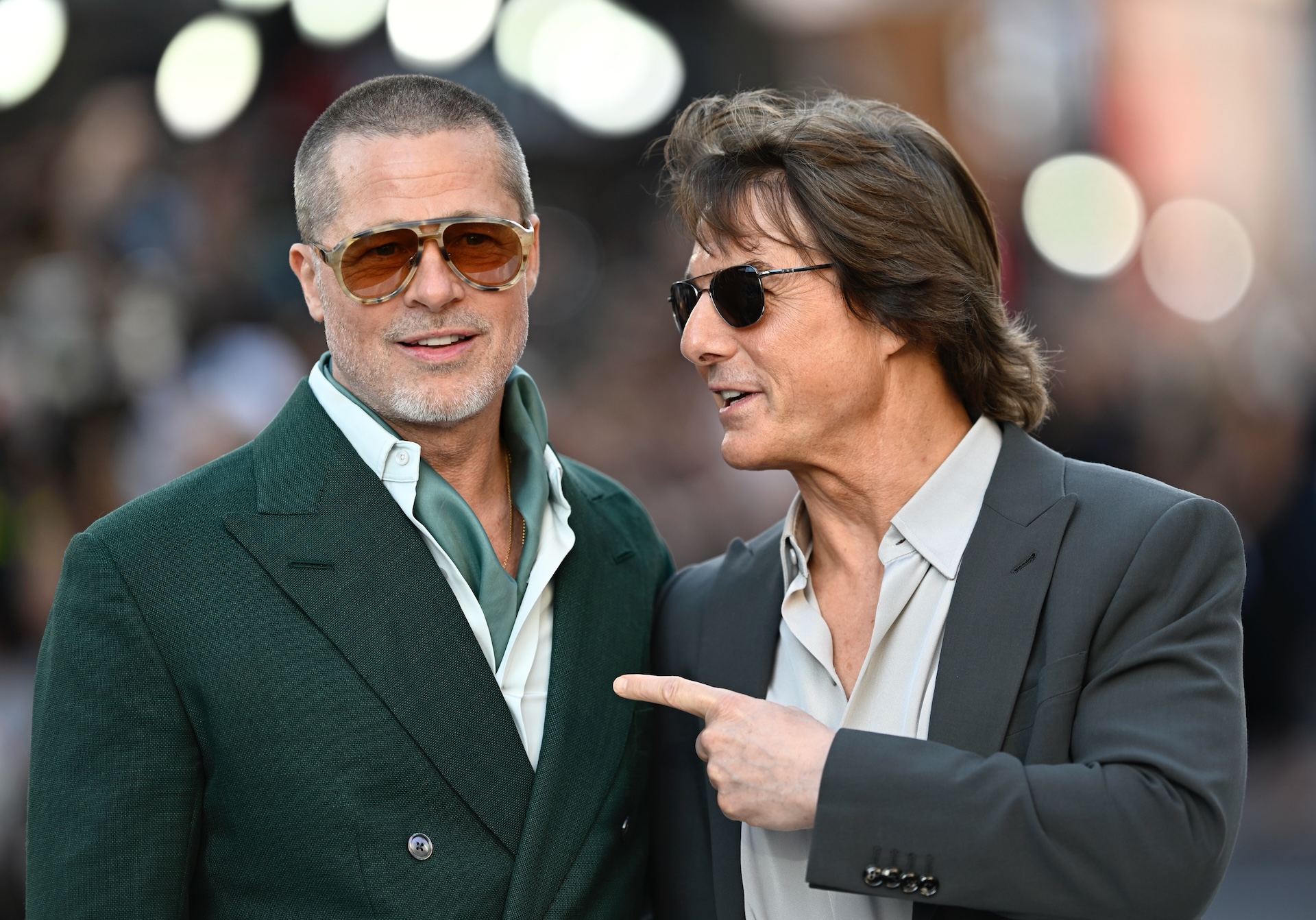
Over the past five years, Formula 1 has proven to be something of a golden goose, reaching previously untapped demographics (Americans, Gen Z) thanks to Netflix’s soapy Drive to Survive series. It was only a matter of time before the organisation teamed up with a nascent studio like Apple for what’s essentially a splashy US$200–300 million ad – Brad Pitt on the poster, Top Gun: Maverick director Joseph Kosinski behind the camera.
One would assume that, given the motorsport’s resurgent global popularity, most viewers would grasp how the sport works. But as an insurance policy for the uninitiated, the film delivers some eye-roll-worthy dialogue – never said in reality – through real-life commentators Martin Brundle and David Croft, just to placate the masses.
Granted, this was still far less heavy-handed than Kosinski’s Top Gun sequel, which featured a scene where Tom Cruise’s character spelled out what aerial G-forces feel like to elite fighter pilots, for dramatic effect.
It might be time we gatekeep art a little. If concepts as basic as a sporting rule set observed (and understood) by tens of millions, or the most fundamental physics involved with piloting an F-16, feel so hermetically sealed that they hinder enjoyment, perhaps crayons and a colouring book are more your speed.
It’s tempting – as critics like me often do – to lament, “They don’t make films like they used to”. But that hides a deeper truth: films do keep being made, they’re simply made under a different logic, guided by compressed financial windows, data-fuelled predictions, retention metrics, along with attention economics.
If the shape of film is changing, then perhaps so must our expectations. Tonal diversity won’t return on its own; it’ll require new models – crowdfunding, niche distribution, hybrid release strategies – that restore breathing room for risk.
The burden, however, rests with each and every one of us to demand higher standards, and to carve out a space for them to flourish within our rapidly evolving culture. Because until that happens, what we’re left with is safe cinema; and safe cinema is as good as dead.








![[INTERVIEW] 'F1' Director Joseph Kosinski On The Upside Of Streaming & Sequels Starring Tom Cruise](https://www.bosshunting.com.au/wp-content/uploads/2025/12/INTERVIEW-F1-Director-Joseph-Kosinski-On-The-Upside-Of-Streaming-Sequels-Starring-Tom-Cruise-300x169.webp)