
Editor’s Note: This story originally appeared in Volume 6 of B.H. Magazine, pre-order your copy of Volume 7 now.
We all share an instinctive ability to judge the quality of something the moment we touch it. Jony Ive, the legendary designer handpicked by Steve Jobs, understood this better than most. “Packaging can be theatre, it can create a story,” Ive told Jobs’ biographer around 2010. And anyone who’s ever unboxed an Apple product knows exactly how central that idea has been to the brand’s success.
Today, the Cupertino-based tech giant employs not only teams of product designers, but also haptic specialists called Human Interface Designers.
In 1977, Apple’s first investor and chairman, Mike Markkula, penned a one-page memo titled The Apple Marketing Philosophy. It ended with a striking observation: “People do judge a book by its cover. We may have the best product, the highest quality, the most useful software, etc.; if we present them in a slipshod manner, they will be perceived as slipshod. If we present them in a creative, professional manner, we will impute the desired qualities.”
It was a vision Steve Jobs carried forward, saying, “When you open the box of an iPhone or iPad, we want that tactile experience to set the tone for how you perceive the product. Mike taught me that.”

From the gentle tug of a self-adjusting Mercedes seatbelt, to the perfectly calibrated click of a Rolex bezel, or the borderline sensual glide of a Blum soft-close drawer – the process behind creating a truly elevated tactile experience is equal parts art and science.
Joshua Ackerman, an Associate Professor of Marketing at MIT, ran a series of experiments exploring how our sense of touch can influence the way we think. In one study, participants holding a résumé on a heavier clipboard rated the candidate’s qualifications more highly. In another, people negotiating the price of a used car while seated in soft chairs tended to offer more than those in hard chairs.

Tactility – and how people interact with objects – is something industrial designer and creative director David Caon has spent countless hours thinking about. After studying industrial design in his hometown of Adelaide, Caon began his career at a Milan- based studio, where he met one of Australia’s most renowned designers, Marc Newson. He went on to work closely with Newson for several years, contributing to projects for clients including LVMH, Nike, and Qantas.
“When something is engineered to a really high grade, you can tell. You can feel it,” says Caon. “Even if you can’t quite put your finger on how you know – when something is made really well, you just know it is.”
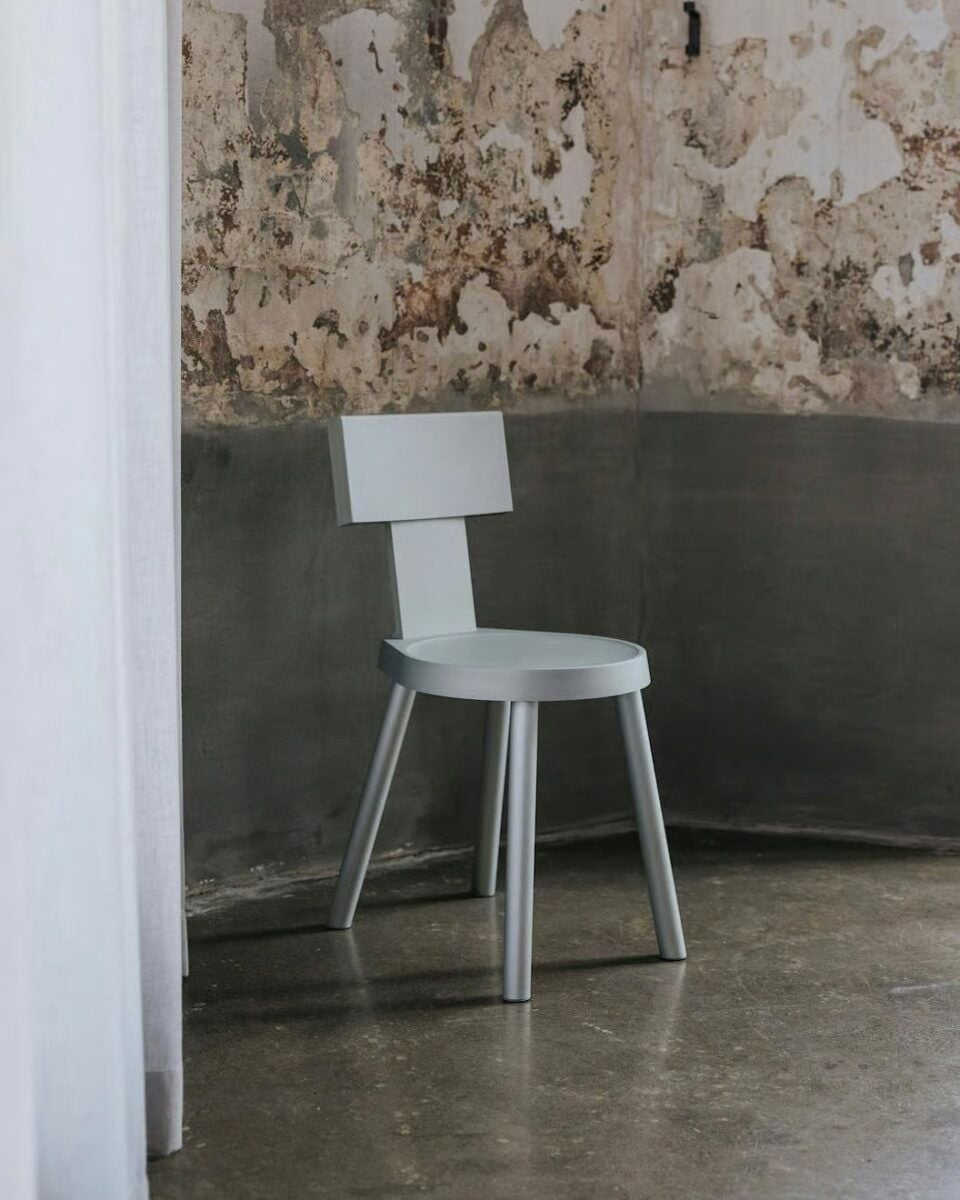
Making something well is rarely easy – a lesson Caon learned firsthand during the development of the Alpine chair, designed in collaboration with his business partner Henry Wilson for Laker. The original version was crafted in timber, but they later decided to recreate it in aluminium: one with a mirror polish, the other with a sandblasted finish. The mirror-polished version was an instant success, eventually exhibited in galleries around the world. The sandblasted version, however, didn’t land the same way.
“[With a sandblasted finish] it was horrible,” laughs Caon. “It felt like sandpaper, and it absorbed every little bit of oil in your fingertips, so we decided to anodise one – and it was perfect. It looked like a MacBook and felt, weirdly, almost soft to the touch.”
Great tactility rarely happens by chance – it’s the product of countless iterations, trial and error. This gradual evolution doesn’t just enhance a single product; for some companies, it transforms them into household names, shedding deadweight from their catalogues as they sharpen their focus and clarify their mission.
“It’s systems or products that have evolved and been tweaked over time that become the most celebrated,” Caon explains. “Take, for example, the Vitsœ modular shelf system or the USM modular furniture system. Vitsœ only makes one or two things, and USM only really makes one thing, but they’re the best at what they do."
Caon says he has a deep respect for products that have been around for six or seven decades, as it shows the company has maintained a clear, focused commitment to continuous improvement. “Good brands are never trying to find ways to make something cheaper. They’re trying to find ways to make it better,” he adds.
The evolution of a product’s design isn’t necessarily straightforward. It’s a delicate balance between the constraints of material properties and manufacturing capabilities, and the designer’s creative vision.
“It’s a symbiotic relationship,” explains Caon. “You’re not going to have an excellent tactile experience with shitty engineering, so everything has to be at a certain level to achieve a good user experience. All of these things reveal themselves eventually, but you don’t get there by cutting corners on craftsmanship or materials and hoping to find the right balance.”
Caon’s everyday watch choice perfectly reflects his taste, quality, and restraint – a deceptively simple, neo-vintage Rolex Explorer II with a white dial. It’s no surprise, either, that he’s been spotted wearing another iconic timepiece: the Jaeger- LeCoultre Reverso, itself a masterclass in tactile design.
To get a true sense of what goes into a design like the Reverso, I spoke with its current custodian, Lionel Favre, Jaeger-LeCoultre’s Product Design Director. Originally created for polo players who needed to protect their watch dials from stray mallets, the Reverso features a reversible case that flips over – making it both highly functional and deeply satisfying to handle.
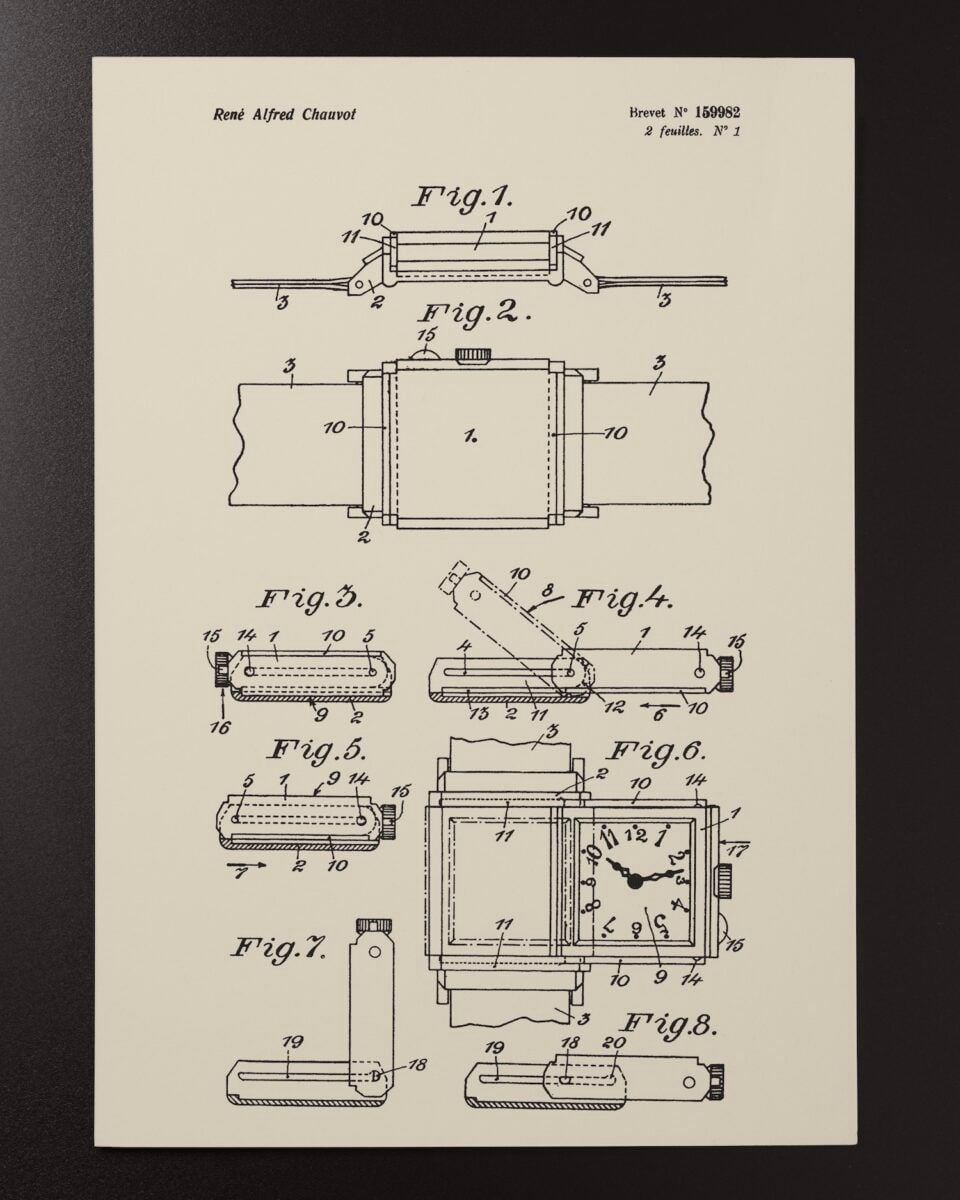
“I have a vivid memory of the first time I held a Reverso,” Favre recalls. “I fell under the spell of this watch with its geometric design, the strength of its lines, the very sharp reflections of light on the case, the magic it gives off when you handle it to turn it over, but mostly the characteristic ‘click’ of locking it.”
Jaeger-LeCoultre’s watchmakers have spent decades refining the Reverso’s swivelling case, perfecting the smoothness of its movement and the precision of its ball-bearing catch – all crafted to manufacturing tolerances more commonly seen in aerospace engineering.
“Every physical interaction is considered in our design process – the winding tension of the crown, the smooth motion of the hands when setting the time, and the resistance of chronograph pushers are all carefully calibrated,” explains Favre.
“We evaluate them not only from a mechanical perspective, ensuring optimal torque and component longevity, but also from a human perspective – how the watch feels in the wearer’s hand,” he adds. “Even small haptic sensations, such as the subtle resistance of a pusher or the clean click of a crown, enhance the perceived quality and intimacy of the watch.”
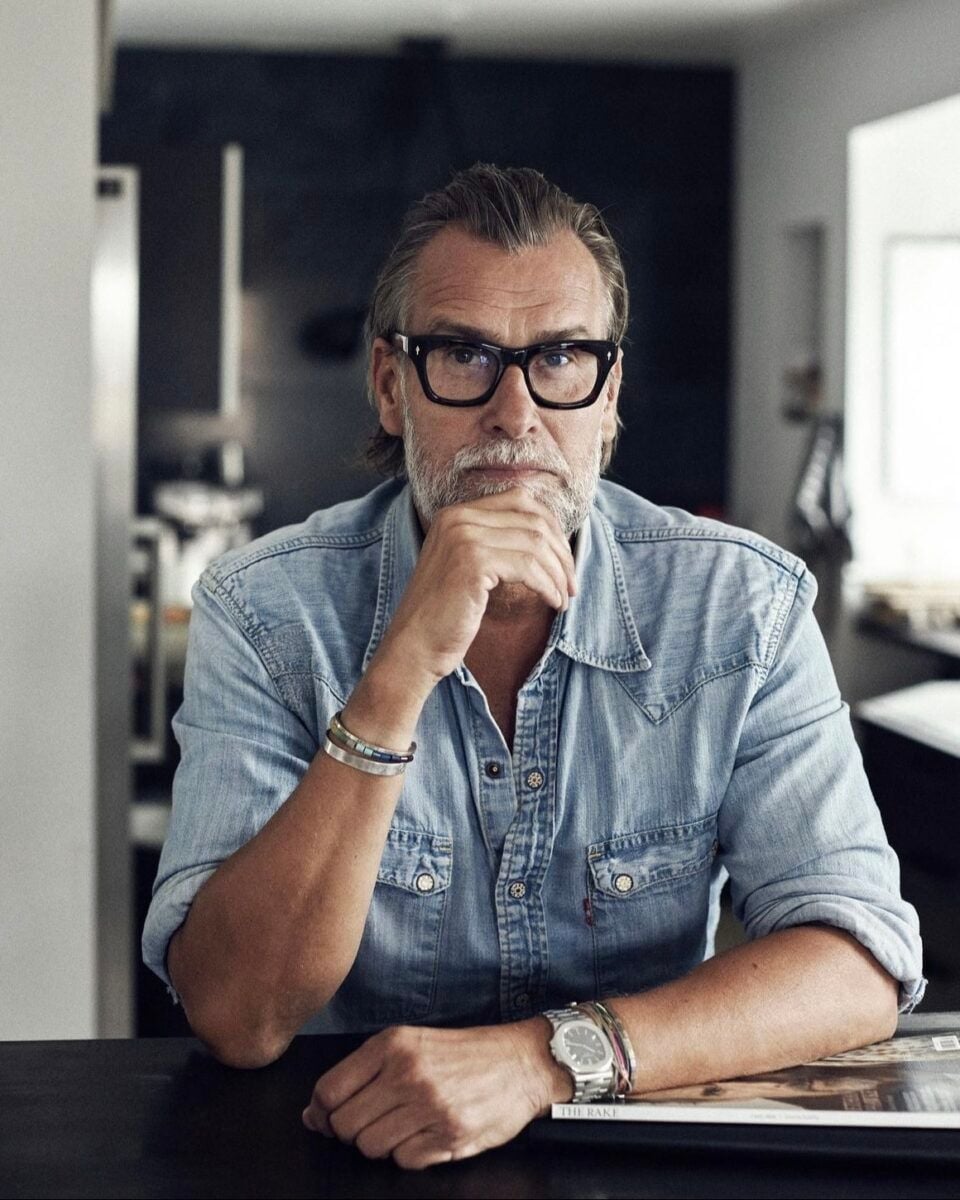
Such moments of intimacy are what writer and watch collector Kristian Haagen contemplates deeply. While he cherishes vintage watches and the incomparable feeling that comes with using something created decades ago, he also appreciates modern timepieces that blend effortlessly into their owner’s lifestyle.
As an ambassador for Leica cameras and a Land Rover enthusiast, Haagen is familiar with the subtle distinctions between finely made objects and their lesser counterparts.
“When a watch feels as if you’re not wearing it, you’ve found the perfect watch,” says Haagen – which, for him, is the Laurent Ferrier Sport Auto, an independently made timepiece that exemplifies tactile excellence in watch design.
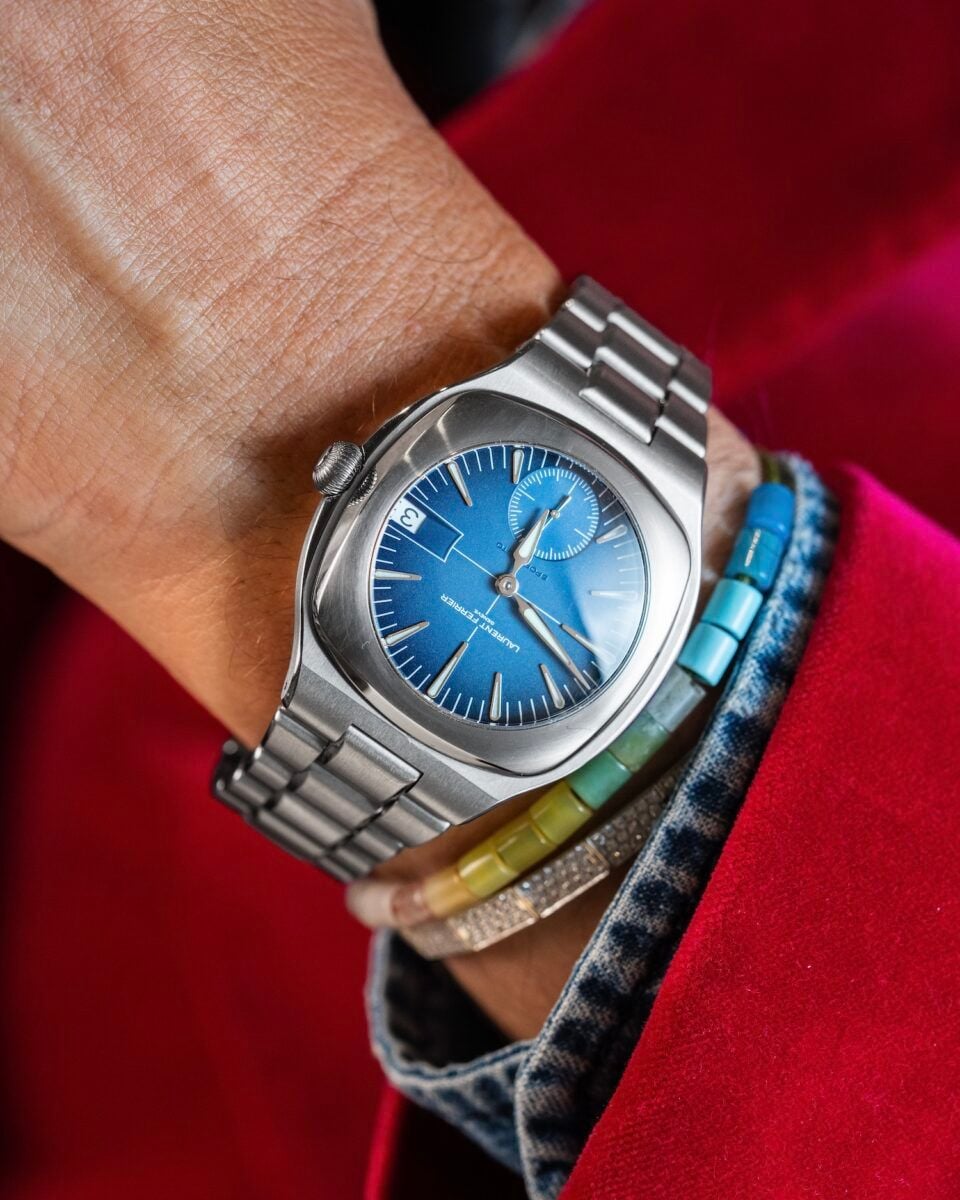
“It doesn’t shout with weight or industrial heft – it hums with harmony,” he explains. “Tactility is not brute force, it’s refined persuasion. It’s what happens when you design not just for the hand, but through the hand.
“Ever since I added it [Laurent Ferrier Sport Auto] to my collection, most of my other watches now feel clumsy, uncomfortable, and somehow... out of place.”
Quality is an amorphous concept. Beyond centuries-old craftsmanship, rare materials, or a hefty price tag, true quality reveals itself in the execution and the intention.
The difference between a good product and a great one is often found in the moment of connection – between you and the designer. That split-second when you touch it and sense, instantly, how deeply the item was considered and how painstaking its creation must have been.