
The widespread assumption is that decline only occurs in sweeping declarations, with tanks and foot soldiers who storm the capital overnight to topple monuments and hoist flags. The insidious truth, however, is that it generally occurs in the background. At most, you’ll receive a heads-up in the promotions folder of your inbox.
Now more than ever, history is dictated within the footnotes of financial ledgers and margins of P&L statements. Once the ink dries, then come the subtle (yet meaningful) deviations from everything we’ve come to accept as the baseline standard. Day by day, concession by concession. Until one morning, you awaken to realise how long the dominoes have been falling. You no longer recognise the world you inhabit. And there’s no way back.
RELATED: How Netflix Rewrote The Economics Of Hosting A Formula 1 Grand Prix
The proposed acquisition of Warner Bros. Discovery by Netflix for an enterprise value of US$82.7 billion, along with Paramount Skydance’s competing hostile bid of US$108.4 billion bankrolled by a trio of Gulf sovereign wealth funds, are by no means the first domino to fall. Though should either come into fruition, it may prove to be the most consequential for both entertainment and what’s shaping up to be our culturally nutritionless future.
This is how cinema dies: not amidst shouts of protests, but in the din of a windowless office, where Excel spreadsheets are filled with the dull clatter of ergonomic keys – condemning us to endure that sonorous “Tu-Dum” every time we hit play.
[NOTE: Due to the rapidly developing nature of this deal, the following article has been rewritten thrice – some facts may alter depending on when it finds you.]
Never Trust A Salesman
Real-world wisdom can be gleaned from fiction. Take the treasure trove that is Mad Men’s Don Draper, for instance, who posited that people often tell you who they are from the beginning – we simply choose to ignore it because we want them to be somebody else.
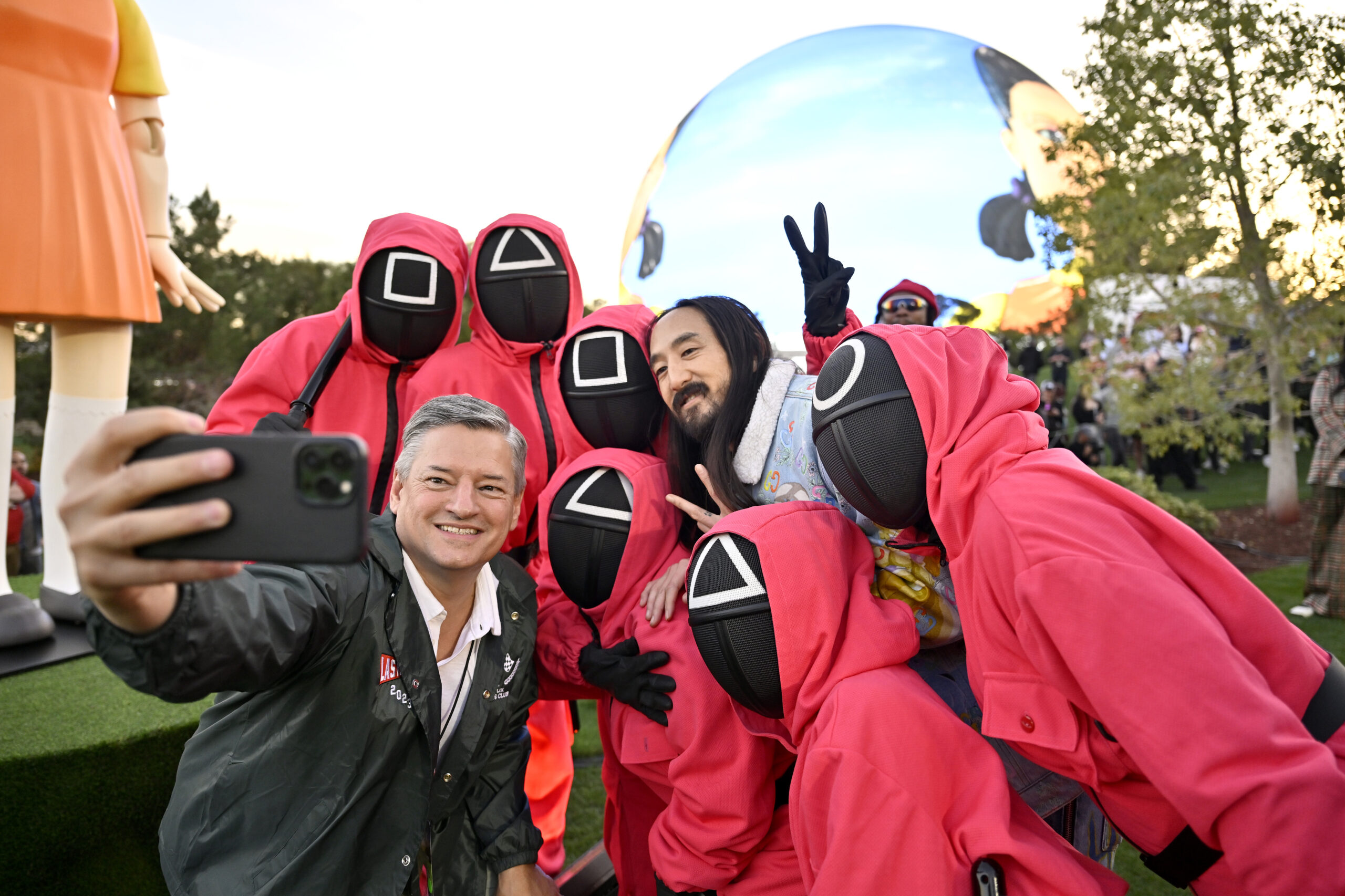
As a key architect behind the streaming revolution, we wanted to believe Netflix Co-CEO Ted Sarandos was a modern, Medici-esque patron of popular culture; a monied and influential powerbroker through whom the screen arts could be democratised for auteurs and audiences alike.
And for a while, we had little reason to believe otherwise.
Under his and co-founder/chairman Reed Hastings’ regime, David Fincher, Martin Scorsese, and Alfonso Cuarón were offered carte blanche to create at will. Shows with cult followings like Black Mirror were plucked from regional markets and amplified globally. And up until recently, you could access a considerable library for the monthly price of a single cinema ticket.
But many are now awakening to the truth: Sarandos had quietly been sharpening his knives to kill the theatrical experience this entire time.
Anyone who has paid even a single iota of attention will be well aware of how wincingly unhelpful Sarandos has been to the big screen’s survival.
At every opportunity, the exec has made it his personal mission to discount the importance of theatrical spectacle – because it poses an existential threat to the streaming model – from ridiculously suggesting a movie-going event like Barbenheimer would’ve had the exact same impact if Greta Gerwig’s Barbie and Christopher Nolan’s Oppenheimer were streaming-only; to conflating the impact of art with success metrics (more on this later).
“Both of those movies [Barbie and Oppenheimer] would be great for Netflix. They definitely would have enjoyed just as big an audience on Netflix. And so I don’t think there’s any reason to believe that certain kinds of movies do or don’t work,” Sarandos told The New York Times.
“There’s no reason to believe that the movie itself is better in any size of screen for all people. My son’s an editor. He is 28 years old, and he watched Lawrence of Arabia on his phone.”
At best, these are tone-deaf remarks. At its worst, they represent a concerning degree of indifference from an industry gatekeeper.
Cinema is – and always will be – a language of scale. Some films require size, silence, and others oxygen to patina. To suggest otherwise is to confuse accessibility with equivalence. And when someone of Sarandos’ calibre distils the totality of a film into whether someone clicks and stays for a minimum of two minutes per household, you realise patronage has been replaced by optimisation for daily active users.
Nothing more, nothing less.
Given the immediate tidal wave of backlash against Netflix and its designs, Sarandos and Co-CEO Greg Peters jumped on a Wall Street call to assuage fears Warner’s theatrical operation was on the chopping block: “We’re deeply committed to releasing those movies exactly the way they would release those movies today… All three of these new businesses, we want to keep operating largely as they are.”
“The theatrical business – we talked a lot about in the past about wanting to do it, because we’ve never been in that business. When this deal closes, we are in that business. And we’re going to do it.”
In the early days, Netflix and its boardroom suits also vowed it would never sell ads or oppose password sharing. Only to backflip on both spectacularly at the whiff of significant revenue growth.
Of course, Ted Sarandos isn’t the sole culprit in this grotesque tango. We would be remiss to gloss over the CEO & President of Warner Bros. Discovery, David Zaslav, who also told us who he was nice and early.
To his credit, the oft-cited enemy to the Writers Guild of America (particularly during the latter’s prolific strike) and veteran corporate raider is effective at his job – and by that we’re referring to gutting the Warner empire and producing low-rent “content” to maximise margins with zero regard for tarnishing the reputation that made his company what it is.
2025 was a landmark US$4 billion-plus year for Warner Bros. studio arm. They enjoyed the spoils of war for daring to greenlight a vintage mixture of originals and franchise tentpoles – from Paul Thomas Anderson’s One Battle After Another, Zach Cregger’s Weapons, Bong Joon Ho’s Mickey 17, and Ryan Coogler’s Sinners, to the undeniably zeitgeisty A Minecraft Movie and Superman.
We now know that, in typical fashion, Zaslav was simply fattening up the hog for the slaughterhouse. Interestingly enough, he’s poised to be minted as a billionaire once Warner Bros’ acquisition has been finalised due to some conveniently-timed contract negotiations.
Of Algorithms & Attention Farms
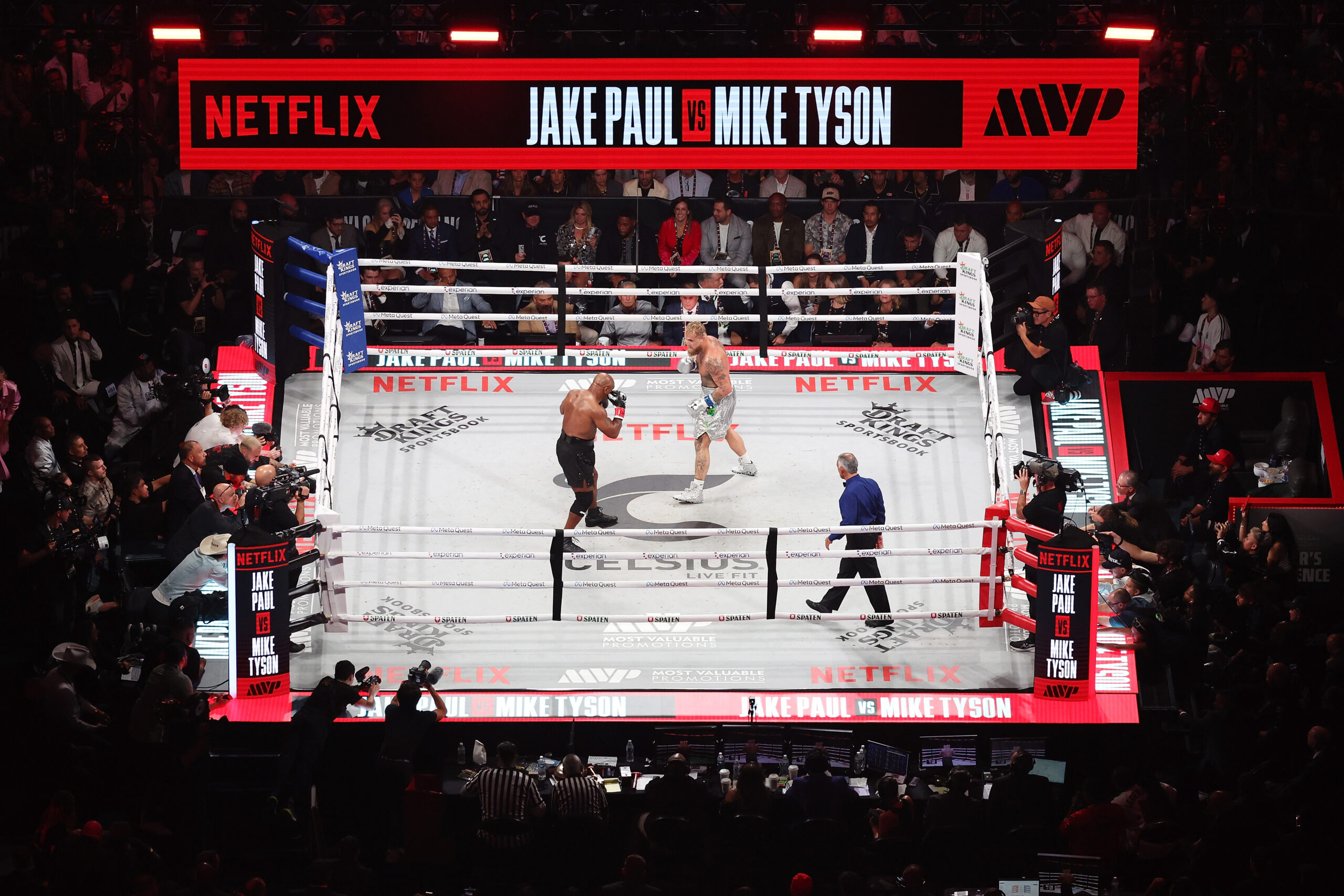
The issue doesn’t just lie with surface-level ideas of monopolies and the obvious antitrust violations that even someone as famously flexible on legalities as President Donald Trump has raised concerns (“It is a big market share… It could be a problem”). Nor does it lie with buying prestige with the shiniest catalogue up for grabs.
To paraphrase Reed Hastings, their biggest competition was never the Paramount, Disney, Amazon Prime Video, or even the new kid on the block, Apple TV. It was sleep. Though at this stage, pundits assert sleep alone doesn’t seem like it’ll be enough to satisfy the digital goliath’s ambitions.
“They are now competing with any time that you and I do not spend on Netflix,” countered Clive Dickens, CEO of The Meliora Company (via Mediaweek).
At its core, this is about the age-old conflict between art and commerce – art relies on commerce, whereas commerce inherently does not respect art. These competing philosophies essentially form the very foundation of Netflix’s business strategy.
While the candy wrapper may state otherwise, entertainment isn’t the ultimate objective. Entertainment might be a byproduct, though the true currency is attention (positive or negative) – and to achieve attention en masse, the streamer has been well-documented in its use of algorithmic content production.
There is an inherent structural cruelty to streaming “success.” Its metrics are digestible and corrosive: dwell time, retention, churn. With every passing day, it strays further and further away from a digital Blockbuster store and more closely resembles the infinite-scrolling, attention farm social applications of the 21st century. Brilliant and seductive if you’re a product manager or investor, sure. Catastrophic if it becomes the sole arbiter of taste.
When storytelling is warped to feed these metrics, the form mutates.
Writers who laboured to craft subtext now overseason scenes with exposition – Netflix itself has been known to provide creative notes to dumb down narratives to account for the “second-screen assumption,” so that anyone could feasibly follow along while on their phones.
Projects inevitably fall into a binary: make it so cheap it’s negligible or so expensive that people have no choice but to see it – forget about the middle ground where many of cinema’s most profound, experimental, and fascinating works used to thrive.
The result is a blandness disguised as abundance. The catalogue grows, the soul shrinks, and nobody is truly happy. Stand by the feeding trough and swallow the slop. It’s apparently what we deserve.
The inability or unwillingness to contend with a legacy studio’s quality is widely hypothesised to be the true motivation behind Netflix’s campaign to dismantle the theatrical model. Market share in the quickly diminishing economy of attention aside, within the traditional arena of the global box office, they may simply not stack up (hence the streamer’s proclivities towards limited releases and direct-to-streaming).
Lowering the barrier of entry by delivering titles from the comfort of a lounge room and at no additional cost to subscribers, on the other hand, means they can shift the goal posts and claim victory by virtue of reach.
There’s no telling whether the US$200 million Red Notice or the US$320 million The Electric State would’ve turned a profit/broken even at the very least on the merits of their quality (though we have a pretty decent idea). What you can claim, however, is that it reached X amount of households, and attracted enough eyeballs to make Netflix’s own self-governed Top 10 rankings.
The Economics of Making Art
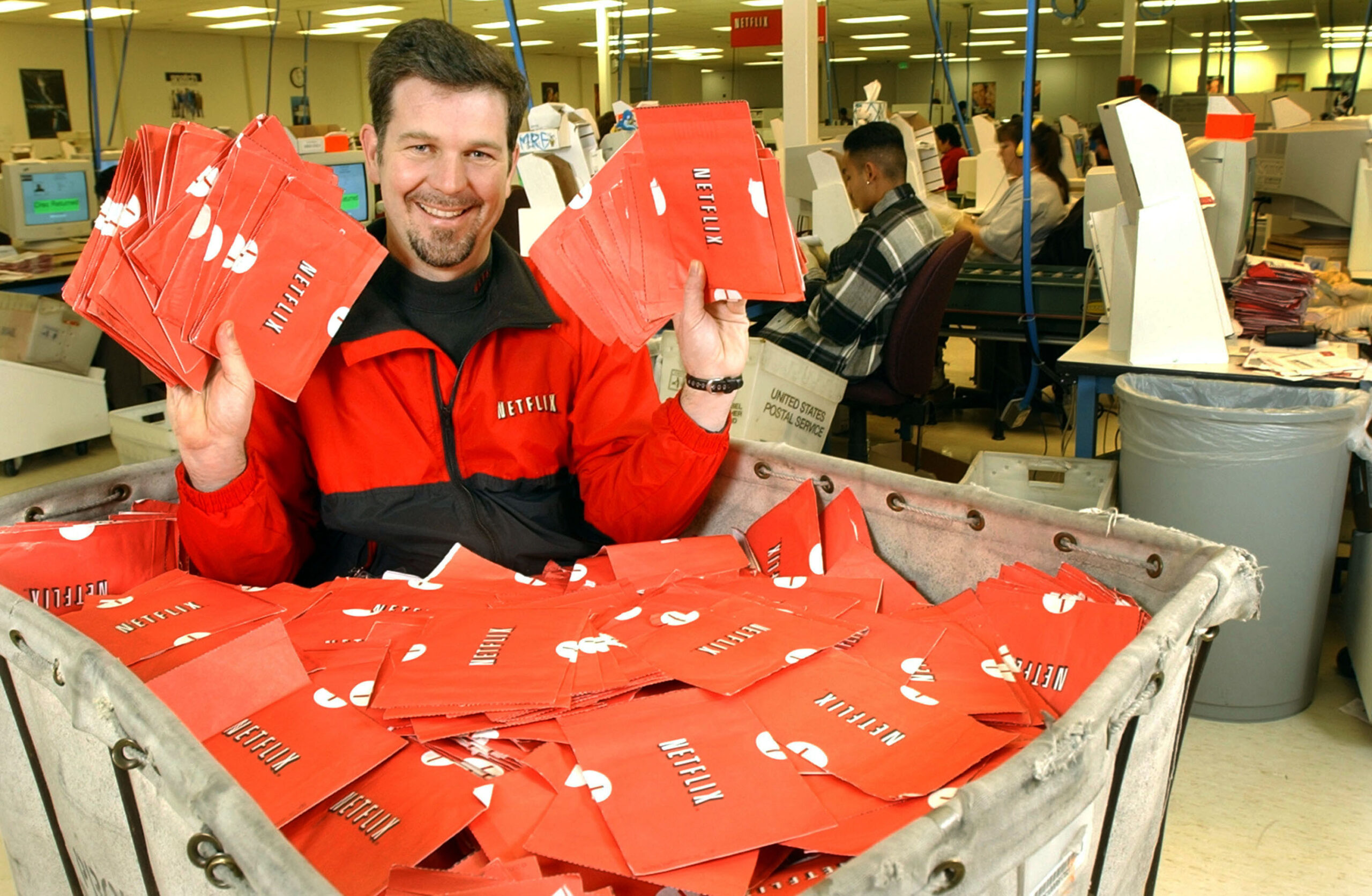
The road we’re hurtling down was paved a long time ago. To revisit an earlier metaphor, the first domino was the death of physical media.
It’s no coincidence that, according to Digital Entertainment Group’s annual report, the decline of DVD, Blu-ray, and UHD disc sales began in 2008 – roughly 12 months after Netflix launched its streaming platform. Last year, revenues from these categories in the United States fell below US$1 billion – down more than 94% from the medium’s 2006 peak of US$16.6 billion.
The drying of this financial wellspring limits the kind of risks that producers and creatives have previously been willing to take – on quieter stories, experimental tones, or subject matters that don’t promise immediate mass appeal. In other words, streaming has had a direct hand in homogenising our culture.
“The DVD was a huge part of our business – of our revenue stream – and technology has just made that obsolete,” explained Matt Damon, who traced a central inflection point in his industry’s creative ethos to the death of DVDs (via First We Feast’s Hot Ones).
“You could afford to not make all your money when it played in the theatre because you knew you had the DVD coming… It would be like reopening the movie (almost). When that went away, that changed the type of movies that we could make.”
Damon continued: “The idea of making $100 million on a story about a love affair between these two people [in Steven Soderbergh’s Behind the Candelabra]… that’s suddenly a massive gamble in a way that it wasn’t in the 1990s – the kind of movies that were my bread and butter.”
In lieu of this once-thriving middle ground, the same judgment that sanctioned over half a billion dollars for Red Notice and The Electric State will find a way to bastardise cinema’s greatest canons with needless prequels, sequels, spin-offs, and somehow, game show formats (the same treatment their own IP has been facing over the past decade or so).
Not because it’s compelling, but because the audience testing and favourability analytics suggest there’s a chance people will tune in.
RELATED: Gauche Is Good (Actual Taste Is Out)
Cultural Foreclosure (Fade To Black)
There’s a feeling I haven’t quite been able to shake. The same feeling that leaves me unmoved by peppy covers of Johnny Cash on American Idol and unsettled by soulless AI-generated imagery.
People nowadays seem entirely too content to accept uncanny approximations of art, rather than bothering with the real deal, in the misguided name of modernity. It isn’t progress. It’s atrophy.
As much as it may sound like it, do not mistake this for fist-shaking alarmism about how they “just don’t make ’em like they used to.” We stand to lose something every time we idly accept the avarice of artistically bankrupt institutions – more than the discrepancy between current and future subscription rates, and certainly more than the potential shareholder value they salivate over.
Ultimately, consolidation is about control. And an entity like Netflix that owns both content and the primary channels through which audiences discover content doesn’t just shape the grammar of storytelling, but the dissemination of ideas which, in turn, enforce our wider existence. Popular culture, after all, is at the frontline of effective propaganda. Why else would the Ellison empire behind Paramount simultaneously be vying to become TikTok’s US custodian?
It’ll begin with farewelling films that require thought and patience, then the erasure of surprise (even the mere possibility of it) when you sit down in a dark theatre to discover something you didn’t know you needed. It’ll end with the extinction of jobs and towns and ways of life.
Like that contestant hitting all their high notes for ‘Folsom Prison Blues,’ Netflix and Paramount have long ceased to remember what the song is really about, instead resigned to offer a somewhat familiar cadence. What’s even more disheartening is that they don’t seem to care.
To quote the tagline from Alien vs Predator: Whoever wins, we lose.