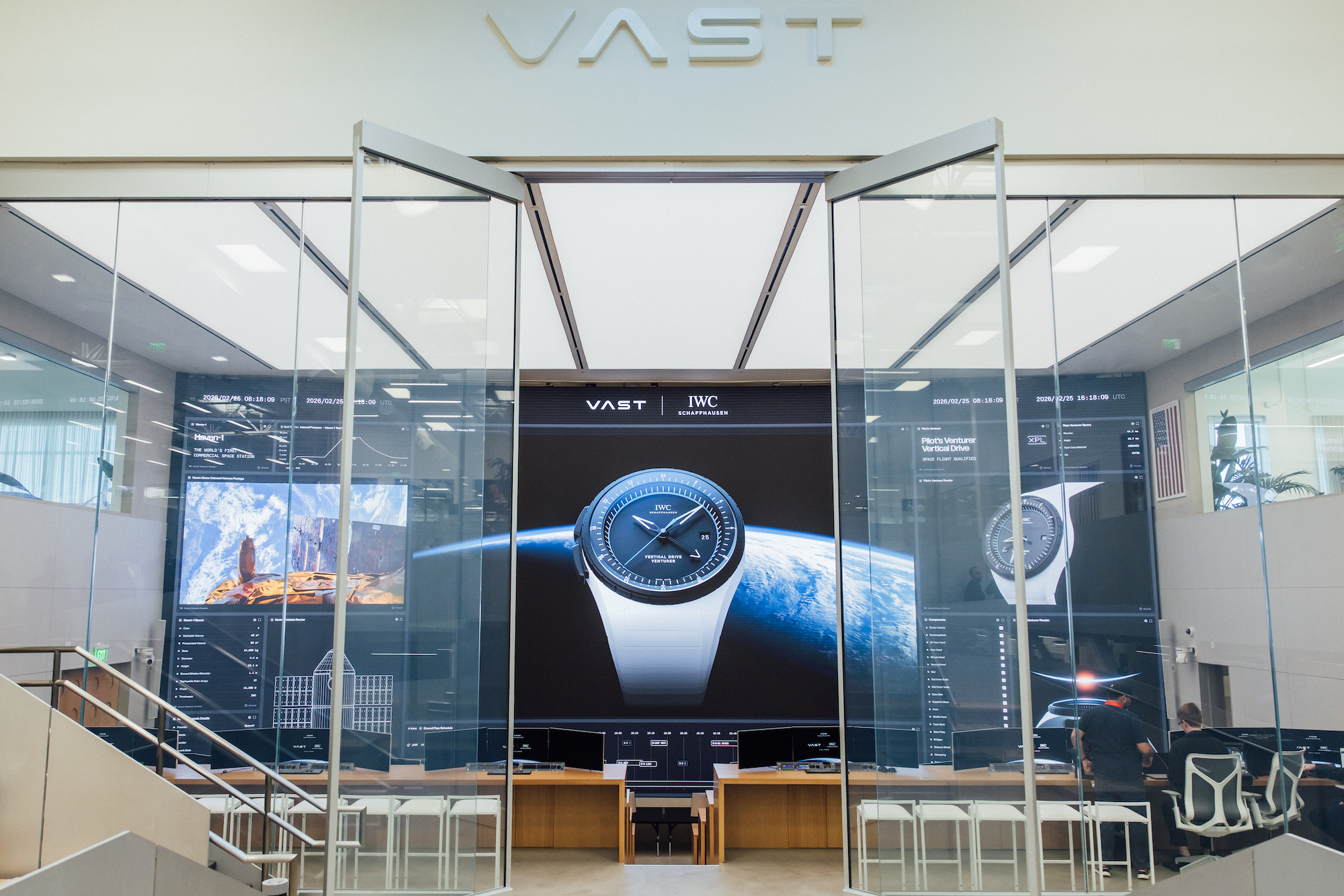

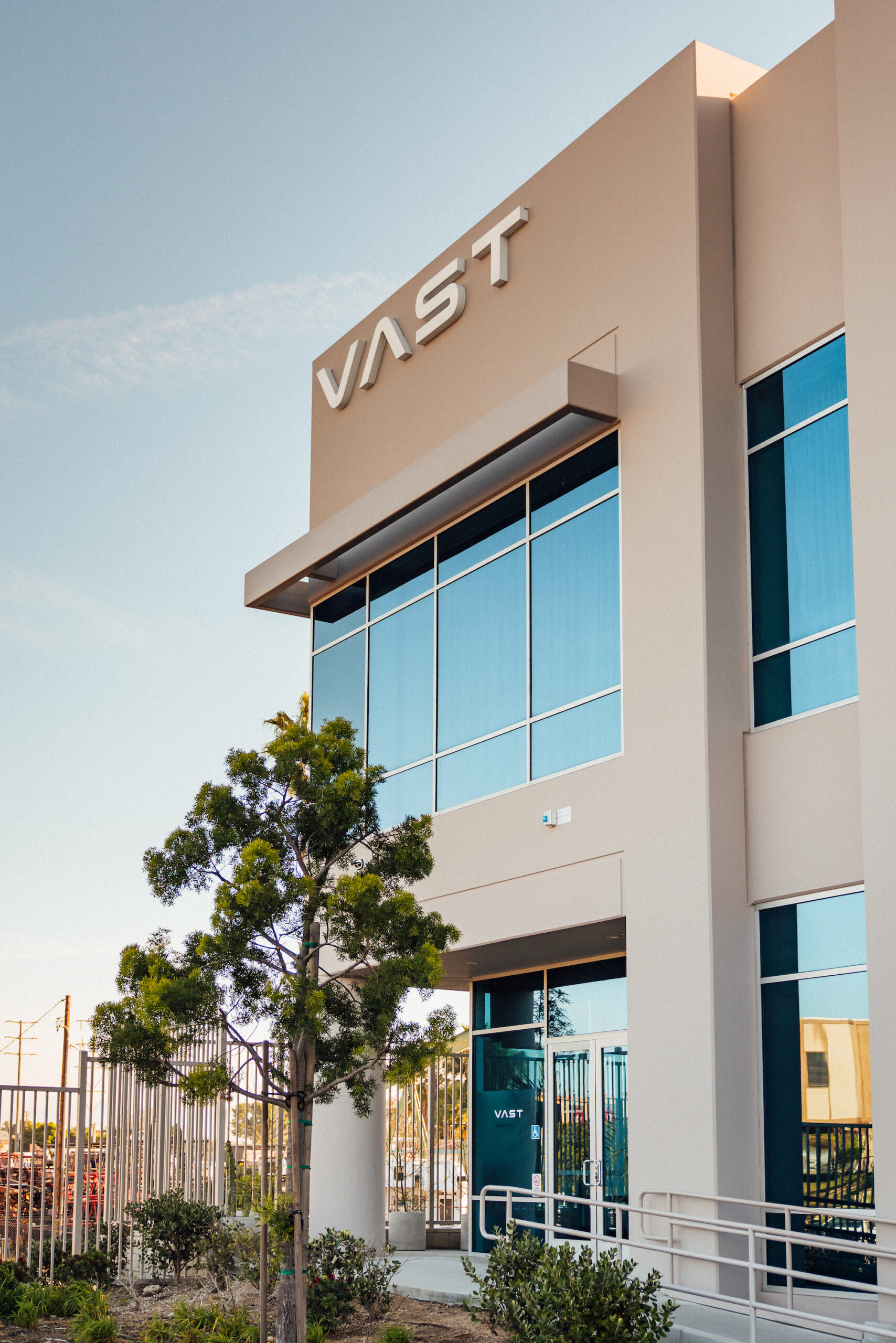
The corporate cloak-and-dagger at Vast’s headquarters in Long Beach, California, is the first tell that space and space watches are serious business. Phones must be kept in pockets. NDAs drown guests in the lobby before they’re even allowed to breathe the air inside. Escorts are required through corridors where certain doors require badges that certain people, like me, definitely do not possess.
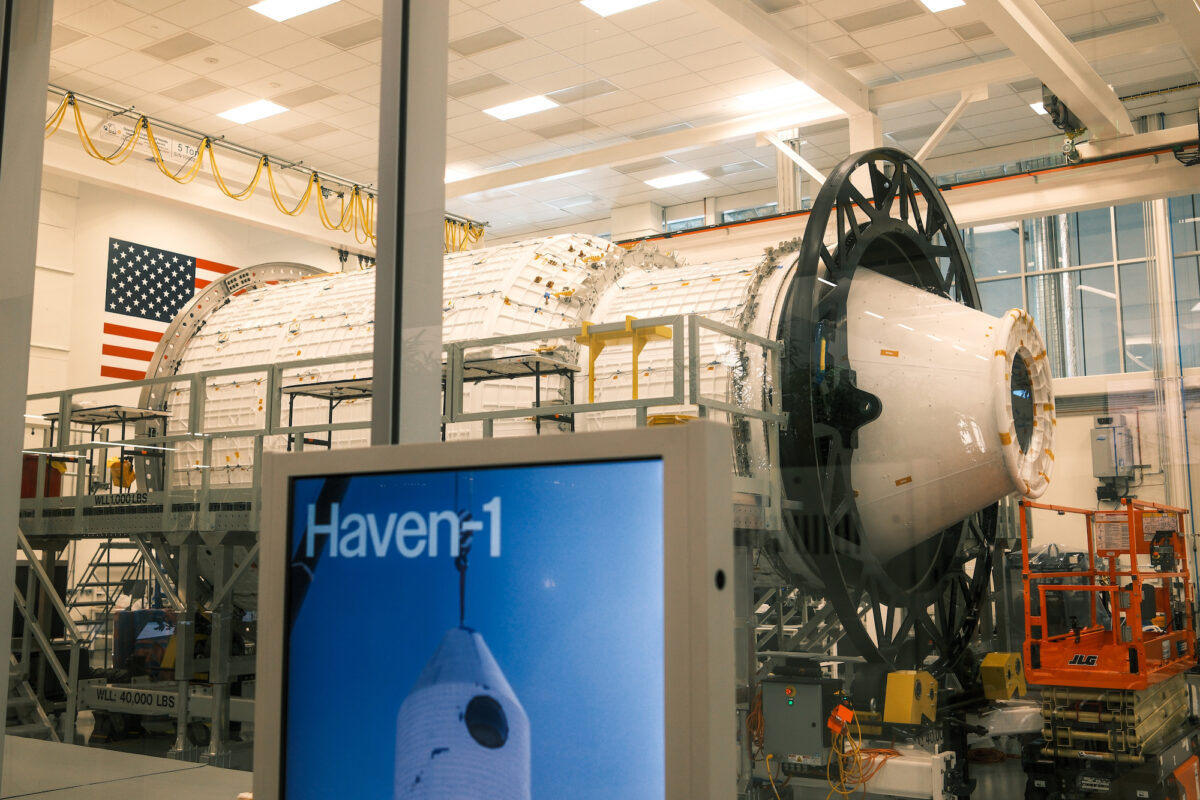
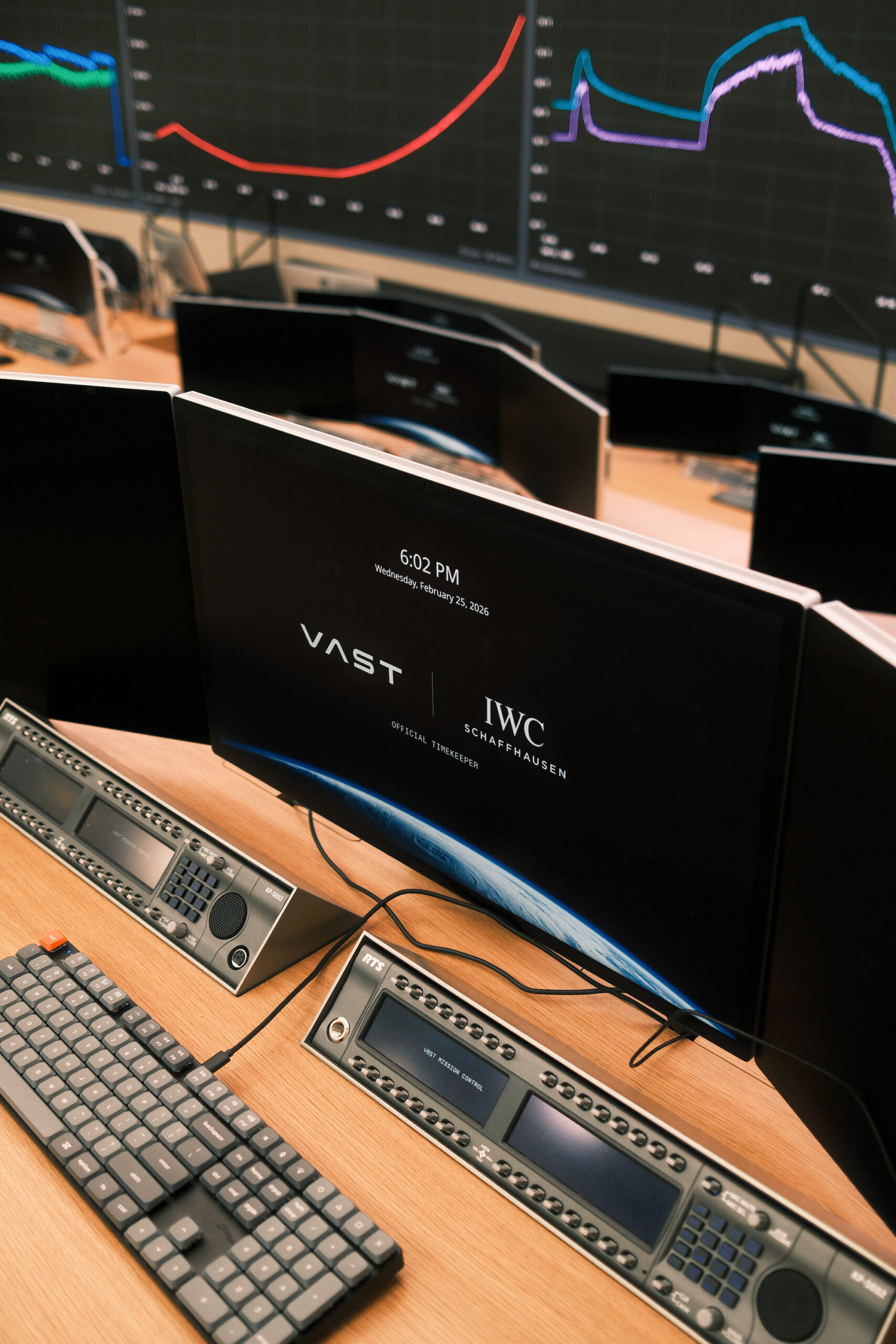
The space resembles a cross between Tony Stark’s R&D warehouse and a MAG-7 campus, with the same minimal aesthetic and engineered casualness. Here, the whiteboards are covered in telemetry calculations rather than ad-targeting algorithms, LEGO models of the Death Star sit on employees’ desks, and behind the multi-storey glass panel, the object under construction is not an Amazon delivery drone but a space station.
Haven One, the world’s first commercial space station being built by Vast, is targeted for launch in early 2027. It appears we have moved from an era of state secrets and superpower standoffs to one of corporate cap tables and privatised competition. The era of democratising space for all is now in its final pre-launch checks.
It’s clear the space race never ended; it simply changed uniforms. Inside a silver pelican case within a Fort Knox of unfathomable intelligence and ambition, catching the Southern Californian light through the facility’s large atrium, sits a watch.
The IWC Vertical Drive Venturer is, depending on whom I ask in the room, either a very radical timepiece or a very small spacecraft component. Technically, it’s both. The Venturer is the first watch to be “space-qualified” since NASA strapped an Omega Speedmaster to an astronaut’s wrist in 1964 – sixty years ago, back when astronauts had to squeeze into tin cans, and mission control relied on rotary phones and prayers. Plus, that timepiece was built with space as an afterthought.
This entirely new direction is the result of a four-year collaboration between IWC Schaffhausen – the Swiss timekeeper that has left its mark on powered flight, Formula 1, and even Maverick himself – and Vast, the aerospace company founded on the premise that humans should not merely survive space, but thrive there.
IWC’s CEO, Chris Grainger-Herr, addresses the crowd in front of a command-and-control centre so cinematic I expect Bruce Willis to join him on stage. Those in the room feel the gravity of what both companies are announcing: a big bet on a bold future most people haven’t priced in yet.
“The crown had to go,” explains Grainger-Herr.
In microgravity (the scientifically correct term for “zero gravity”), astronauts navigate using their hands and feet in three dimensions. The last thing they want on the leading edge of their wrist is a component that could catch on equipment or require the fine motor skills that a pressurised glove makes impossible.
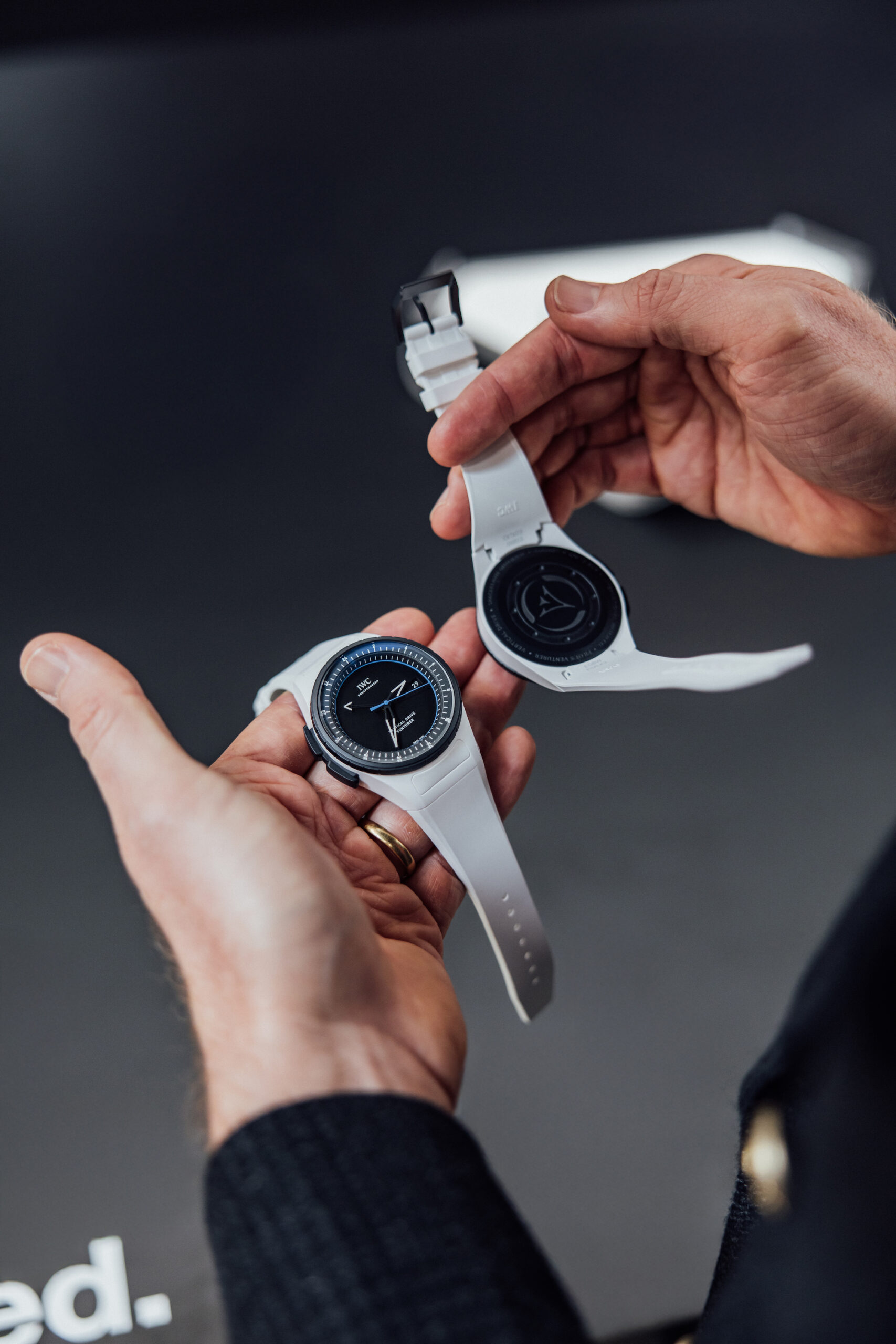
The Venturer addresses this with a fully crownless, integrated architecture. Every function – winding, time-setting, and GMT adjustment – runs through a rotating bezel and rocker switch connected to what IWC calls a “vertical drive clutch system”. If you need to operate the entire watch one-handed, in gloves, and in the dark, you can.
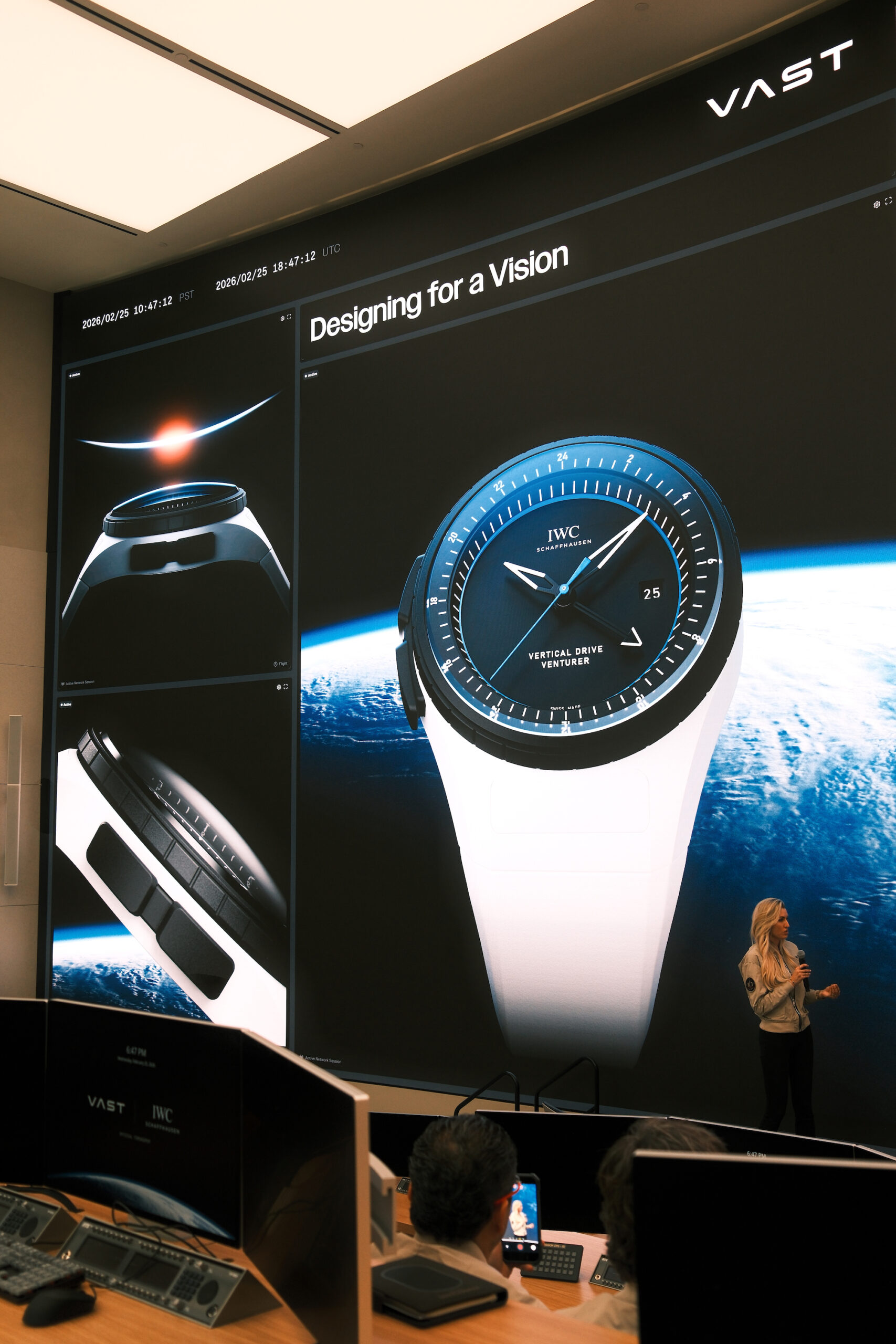
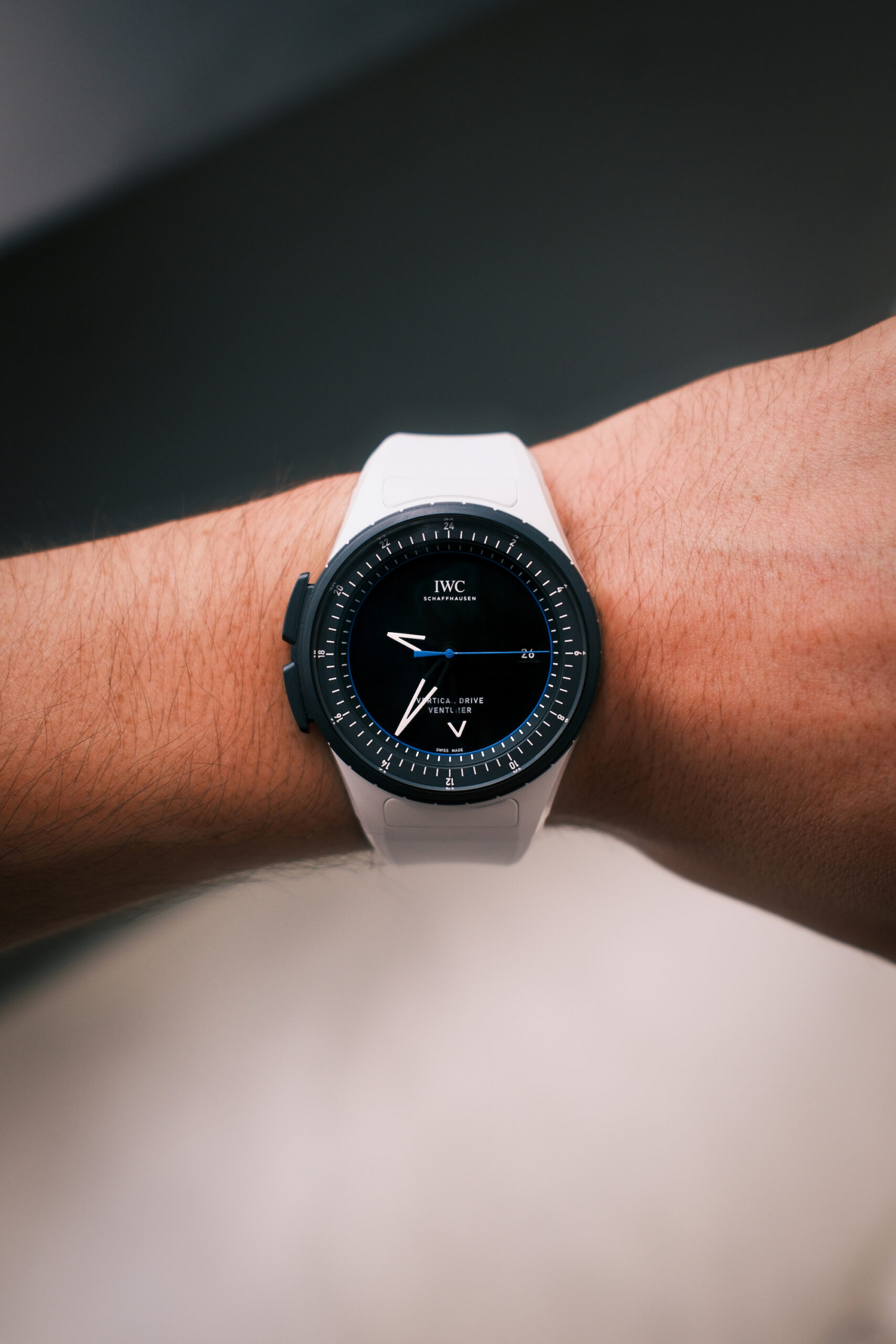
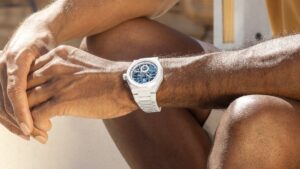
Visually, it’s striking. It’s so unique that you’ll be reaching for adjectives when you first see it in the metal – sorry, ceramic. Yet the timepiece is not overly complicated or busy. What is challenging is forming an opinion of a watch so independent of anything you’ve seen before, whether space-associated or not. It represents a clean departure from previous IWC Manufacture designs and, more broadly, from conventional timekeeping.
The white ceratanium ceramic case is thermally stable, resistant to off-gassing, and near impossible to scratch. There’s a deep matte-black dial (because unfiltered sunlight in Earth’s orbit will blind an operator if anything reflects off it), while a horizon-blue accent ring tracing the inner bezel evokes the hair-thin arc of atmosphere seen at sunrise from orbit – an image that’s famously reduced hardened astronauts to tears. It’s all miniaturised onto a wrist, under an emphatically domed sapphire crystal that mimics the curvature of the planet.
I speak with Stefan Ihnen, IWC’s Associate Director of Technics, who is genuinely delightful when he gets going about lubrication. He explains that the functional lower limit is around minus forty degrees — below that, the oils inside a mechanical movement thicken, and precision becomes a negotiation with physics. Shock resistance is not a primary concern: IWC already tests its calibres to 5,000 G, which makes the roughly 4 G of a Falcon 9 launch feel like a speed bump.
What actually intrigued the team was micro-vibration – the sustained, high-frequency tremors that occur during spacecraft ascent, unlike anything a watch experiences on Earth. Ihnen admits they had concerns at first, “But then at the end of that day, it was no longer a concern,” he says confidently.
The design language builds on the same revolution that saw SpaceX jettison the utilitarian look of government-era spacecraft: less clutter, more intention. The Venturer or Haven One would not look out of place in a Dieter Rams catalogue.
Hillary Coe, Vast’s Chief Marketing and Design Officer, came to aerospace – and to Vast after SpaceX – from Google, where her role was connecting emerging technology to human needs. She approaches Haven One through the lens of Maslow. The International Space Station, she explains, created the foundation, and after twenty-five years of learning how to keep people alive up there, the question now is what keeps them thriving.
For Coe, it’s the texture of a daily routine. That includes a sleep system that adjusts pressure to mirror the earth-like gravity of a heavy quilt, Starlink for astronauts to FaceTime their families without scheduling a satellite window, and a mechanical watch that shows the time in their home city – not because it is necessary in space in 2027, but because that instinctual glance is grounding. A psychological safety blanket on the wrist.
This is where the story arc gets bigger than a watch. In terms of relative chapters, IWC’s Venturer is The Phantom Menace. The next era of commercial spaceflight will not be defined by who arrives first; it will succeed or fail based on how well people live once they are there. Private stations require paying residents: researchers, government-sponsored experts, feel-good cultural icons, and wannabe astronauts who are well-heeled and expect a standard of living comparable to their life on Earth.
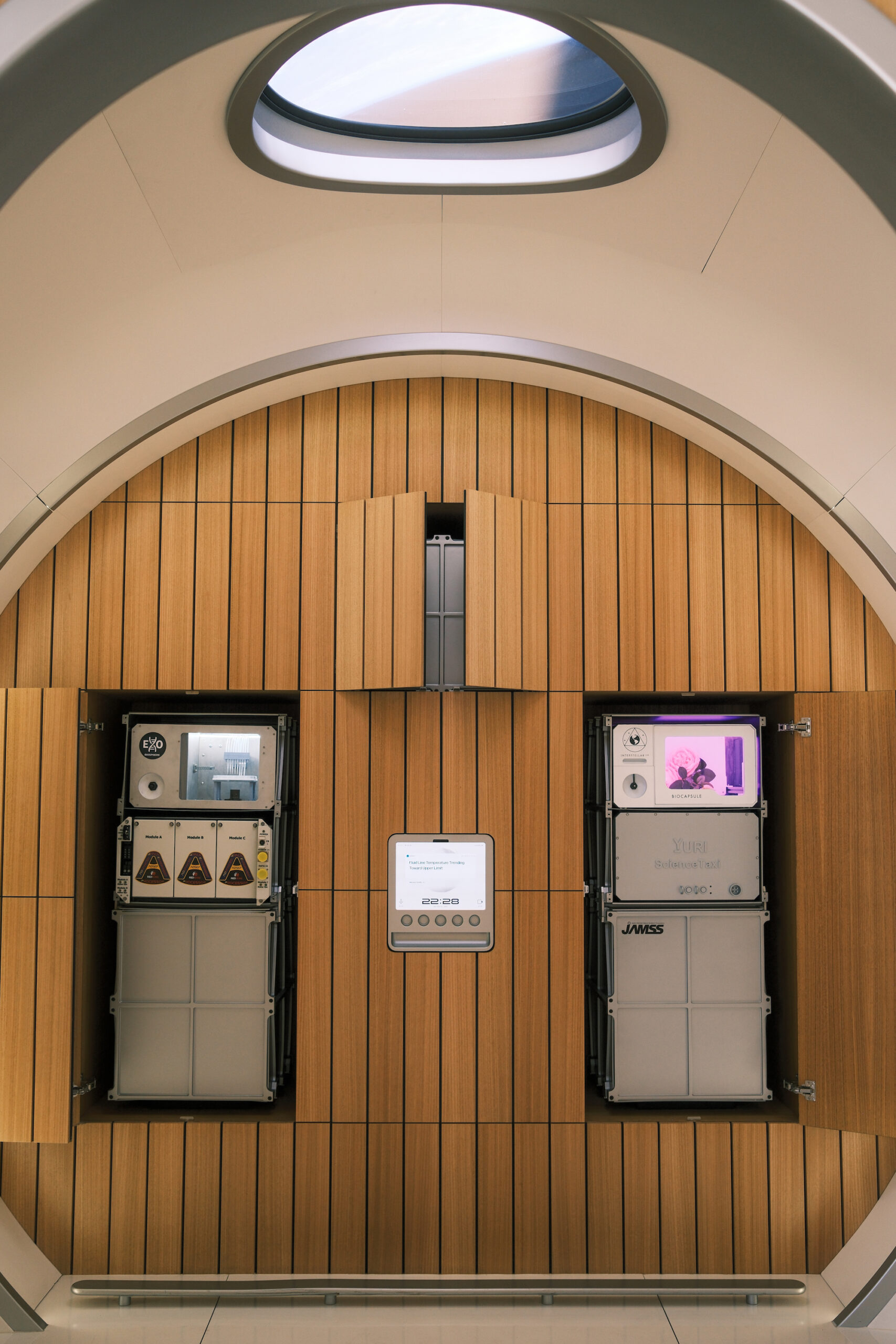
This paradigm shift changes everything. Suddenly, sleep becomes important, connectivity matters, and equally, the feel and function of the thing on your wrist are critical. The partnerships that make it both practical and sexy are not mere sponsorships for the sake of slapping a logo on something in space – they’re intentional engineering collaborations, even if you’re used to seeing their names in luxury retail precincts.
Prada is designing Axiom’s lunar EVA suit, and IWC has built a watch that’s been independently certified by an aerospace company. Now, luxury and aerospace intersect at the marketing layer because both have mastered the material layer. Craftsmanship is craftsmanship, whether applied to a hand-finished movement or a thermally resistant ceramic case. The goal is straightforward: to live in space as we do on Earth, and to bring the best materials we’ve made down here along for the journey.
Haven One will orbit at approximately 490 kilometres. Unlike the ISS, the entire station rotates to face the sun, giving astronauts a continuously shifting panorama of Earth, the stars, and sunrises through an observation dome nearly large enough to climb inside. Crew members travel aboard the latest Dragon capsules from SpaceX and, once at the station, rotate on 14-day mission windows to serve a variety of roles and sectors. The pace of it all is incredible.
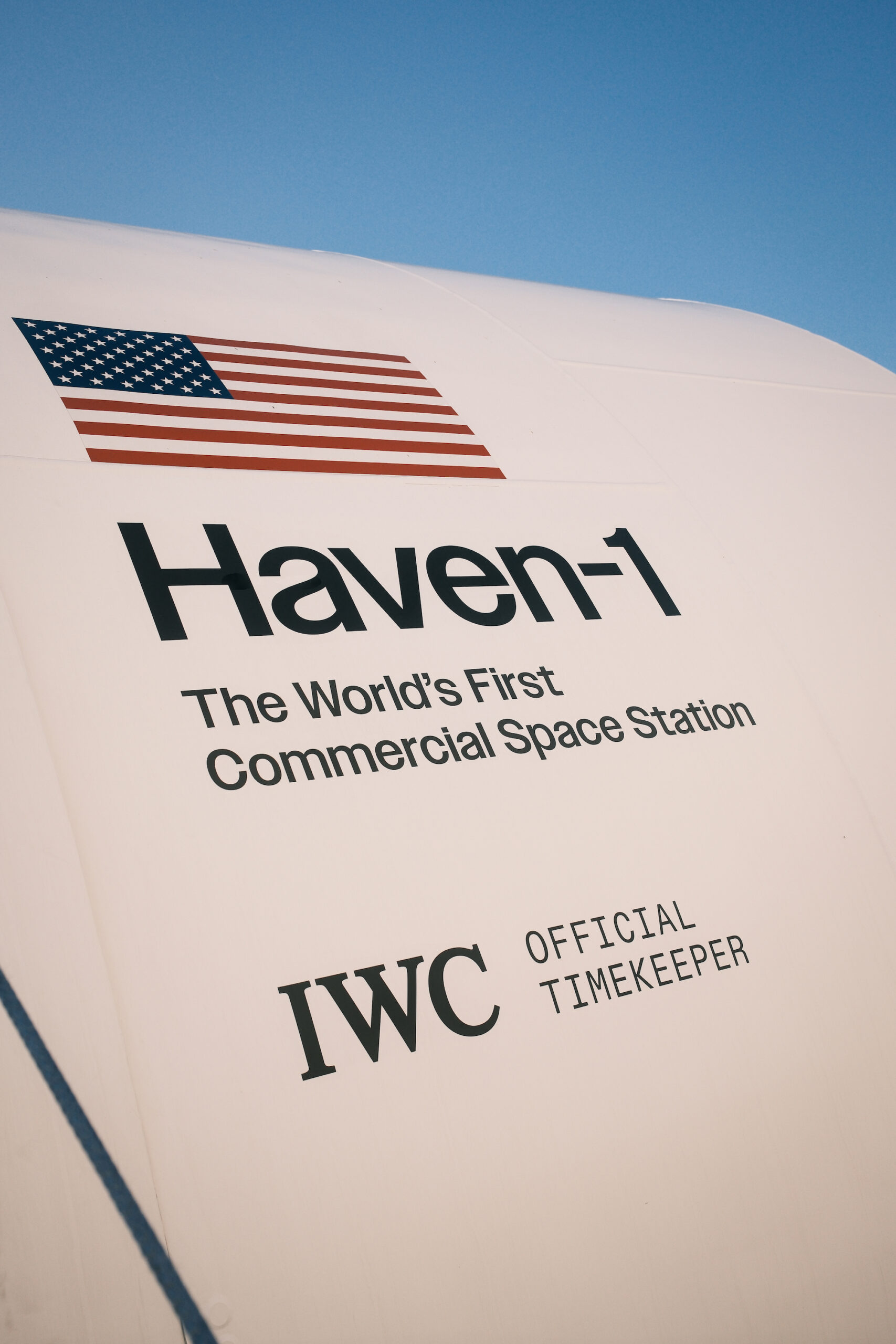
Subsequent stations, which Coe mentions almost in passing, will experiment with artificial gravity, as if generating gravity were just another design problem on the team’s whiteboard.
The ISS – humanity’s only permanent address in orbit for a quarter-century – is scheduled for retirement and deorbit by 2031, having more than earned its place in history. Vast intends to have Haven One operational before that chapter closes, ensuring a seamless continuation of human presence among the stars.
Whereas the ISS required 13 years and 27 shuttle flights to assemble, Haven One is being built with the streamlined confidence of a generation that grew up watching Thunderbird-style rockets land themselves.
Haven Two, which is being built concurrently with Haven One, will expand the astronauts’ real estate even further and enable the stations to dock together. Soon, a society of interconnected Havens will orbit Earth, with occupants living in a space-age reality that was once the stuff of fiction.
Amid all this frenetic innovation and development, IWC is playing its part in perfect concert as a day-one mission partner, long before the commercial bandwagon kicks into gear. A timekeeper that spent a century building for pilots, patriots, and pioneers, and is now calibrating, from scratch, for astronauts.
As you read this, somewhere inside Vast’s mega-operation, a team is tightening bolts on a habitat that, within months, will be sealed, launched, and placed proudly into orbit – carrying with it a small, exquisitely engineered object that does nothing more, and nothing less, than tell the time. To infinity, and beyond.
IWC’s Vertical Drive Venturer is available now for AU$45,400.
This article is presented in partnership with IWC Schaffhausen. Thank you for supporting the brands that support Boss Hunting.