

If you take a moment to think about it, IWC is on one hell of a run. 2023 saw the revival of the legendary Gerald Genta-designed Ingenieur collection, 2024 welcomed the Portugieser Eternal Calendar (with a moonphase accurate to 45 million years), and last year the Schaffhausen-based watchmaker took a trip to Hollywood, decking out A-listers in race-ready chronographs for the F1 film.
In 2026, there’s no sign of the brand slowing down, literally taking off with a new reference that’s unlike anything we’ve ever seen before, announcing the latest and most innovative evolution of Kurt Klaus’s legendary perpetual calendar movement, and celebrating two decades of watchmaking’s most whimsical literary partnership. Let’s get into it.
IWC Pilot’s Venturer Vertical Drive
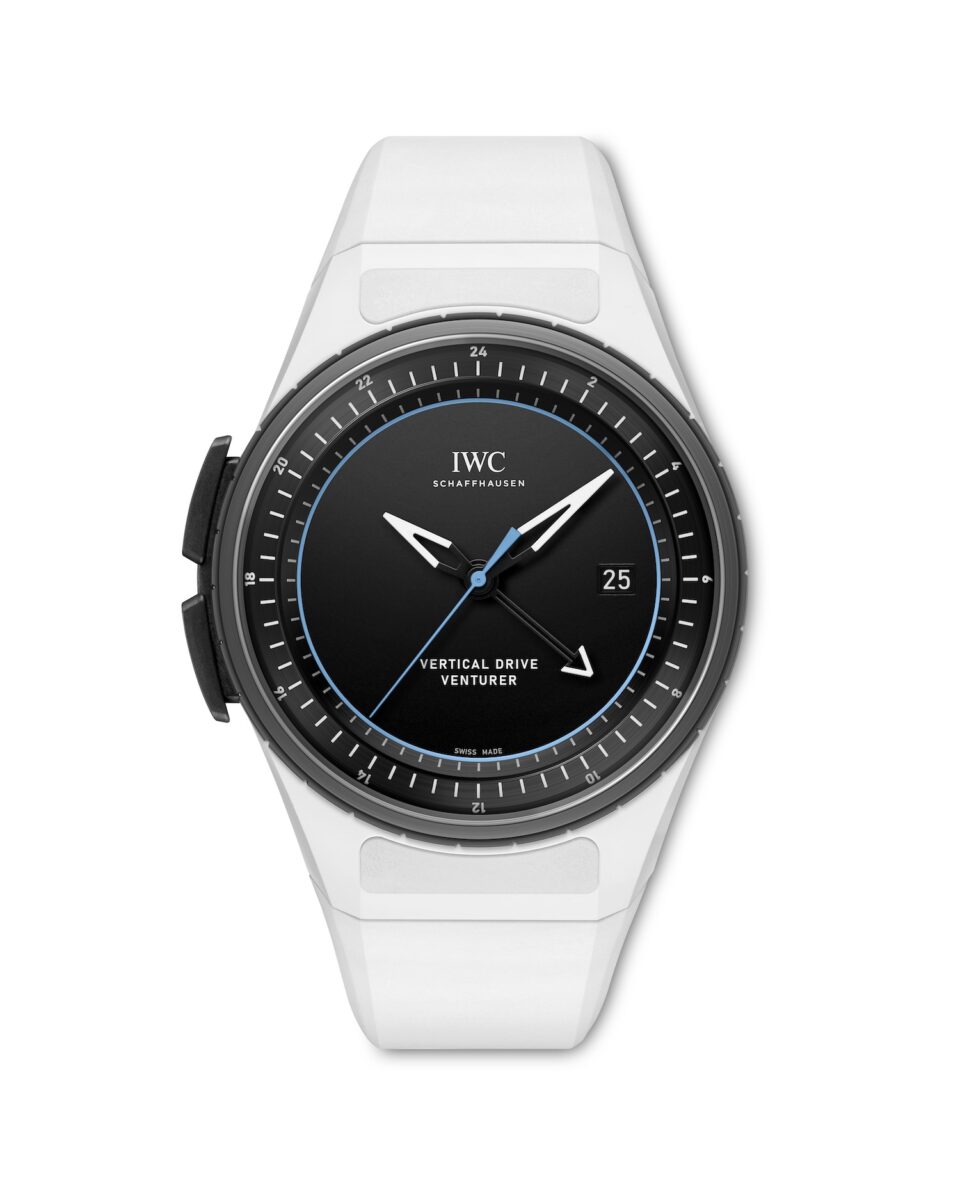
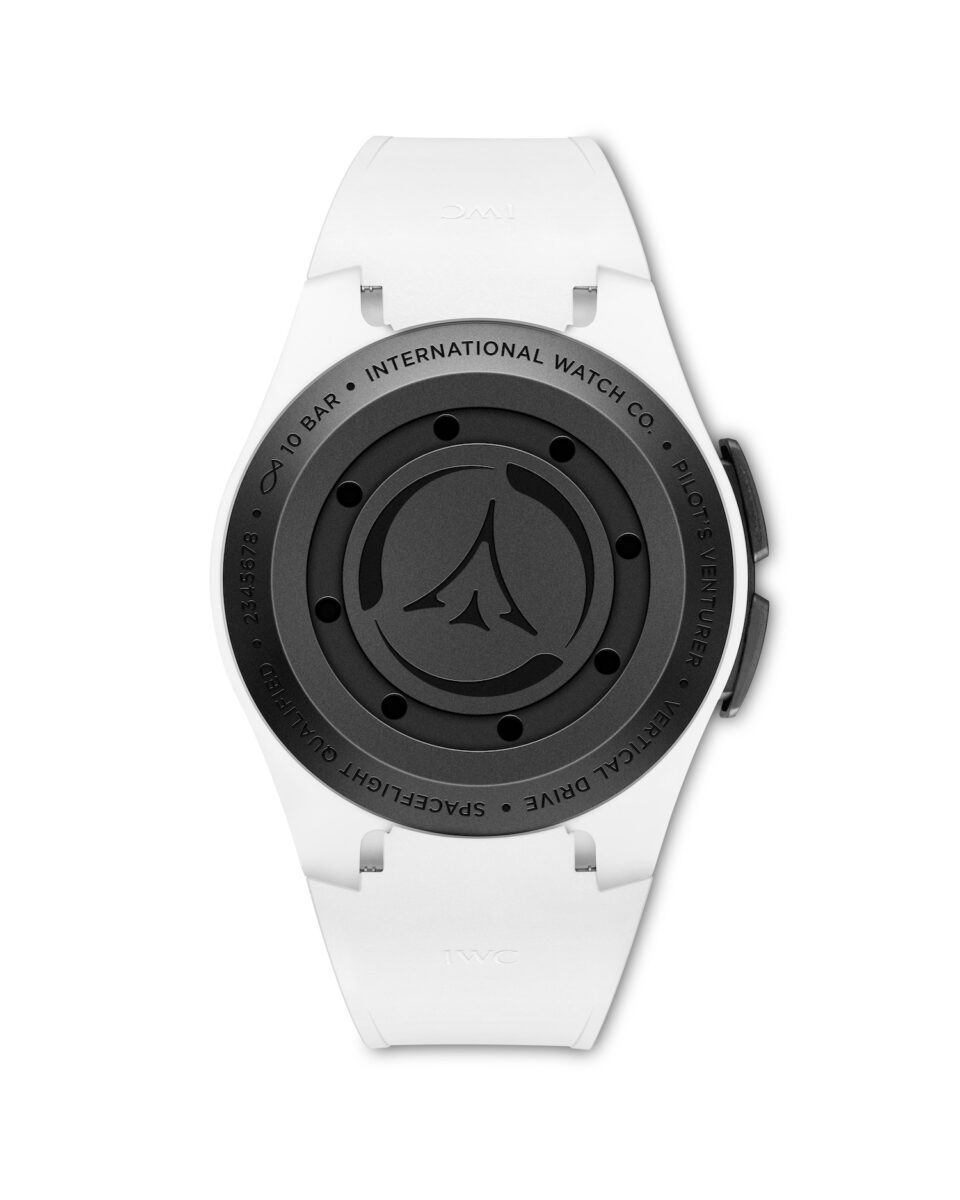
When I first heard about IWC’s new partnership with the commercial space organisation Vast, it immediately made sense. After all, the watchmaker had established priors working with companies looking to push the boundaries of transport and exploration.
What I didn’t expect to come out of the partnership was this remarkable Pilot’s Venturer Vertical Drive, which is the first watch to be certified for spaceflight in the last two decades and one that approaches mechanical watchmaking from a fresh angle. Fans of IWC will already know that it’s got the best part of a century of history in making purpose-built tool watches for aviators, but this latest release represents a totally different scale of ambition.
Crafted from a combination of both ceramic and IWC’s proprietary Ceratanium, the case measures 44.3mm in diameter and a sensible 16.7mm thick and is paired with a white FKM rubber strap (both thermally insulating and UV resistant). It’s powered by the bulletproof IWC-manufactured calibre 32722 with 120 hours of power reserve, and in a sensible move (though perhaps unnecessary for outerspace), it’s water resistant to 100m.
What might be less obvious at first glance is the fact that it doesn’t have a crown for winding or setting the movement. Instead, it’s got a rocker switch on the side of the case that allows you to select between setting and winding, both of which are done via the rotatable crown and allows for astronauts wearing thick gloves to be able to operate it with relative ease.
Perhaps the coolest feature is the fact that it’s also a GMT. Obviously, that’s not much of an achievement in and of itself, however, astronauts on a space station complete an orbit of earth about once every 90 minutes (up to 16 sunrises/sunsets in 24 hours), so having the ability to maintain some kind of rhythm with the natural 24-hour cycle of earth is acguably more important than when you’re on terra firma.
Simply put, this is one of the coolest watches we’ve ever seen from IWC. It’s cutting-edge from just about every angle and offers a design that speaks to the optimism of 21st-century space travel. If you ever get the chance to try a Pilot’s Venturer Vertical Drive on your wrist, take it.
IWC Big Pilot’s Watch Perpetual Calendar IWC-ProSet


Not content with creating the most sophisticated space watch of this century, this year, IWC also decided to change the game for perpetual calendars. It was back in 1985 when IWC last took a monumental leap forward in this realm of complicated watchmaking, when genius watchmaker Kurt Klaus invented a perpetual calendar movement that could be set entirely via the crown of the watch.
However, the main limitation of Klaus’s design was that the calendar could only be set forward, and if you accidentally went past your current date, the only solution was a visit to your local IWC boutique or simply to wait. Now, that problem is a thing of the past with the arrival of the ProSet system, which builds on Klaus’s original innovation and propels it forward.
ProSet perpetual calendar owners will be able to set the calendar both backwards and forwards without risk of damaging the movement, and perhaps most impressively, they’ll be able to do it from a single crown position and without needing to memorise complicated setting instructions. Beyond this setting innovation, the new mechanism also features LIGA-fabricated components, a moonphase that’s accurate to 1,044 years, and the renowned Pellaton winding system for ultra-efficient automatic winding.
This new calibre 82665 arrives in three different references: one in 18-carat 5N rose gold with a green dial, one in stainless steel with a blue dial and bracelet, and the last in white ceramic with a blue dial. All three references feature Big Pilot’s Watch cases, EasX-CHANGE strap switching mechanisms, and 100m of power reserve.
IWC Big Pilot’s Watch Perpetual Calendar Ceralume
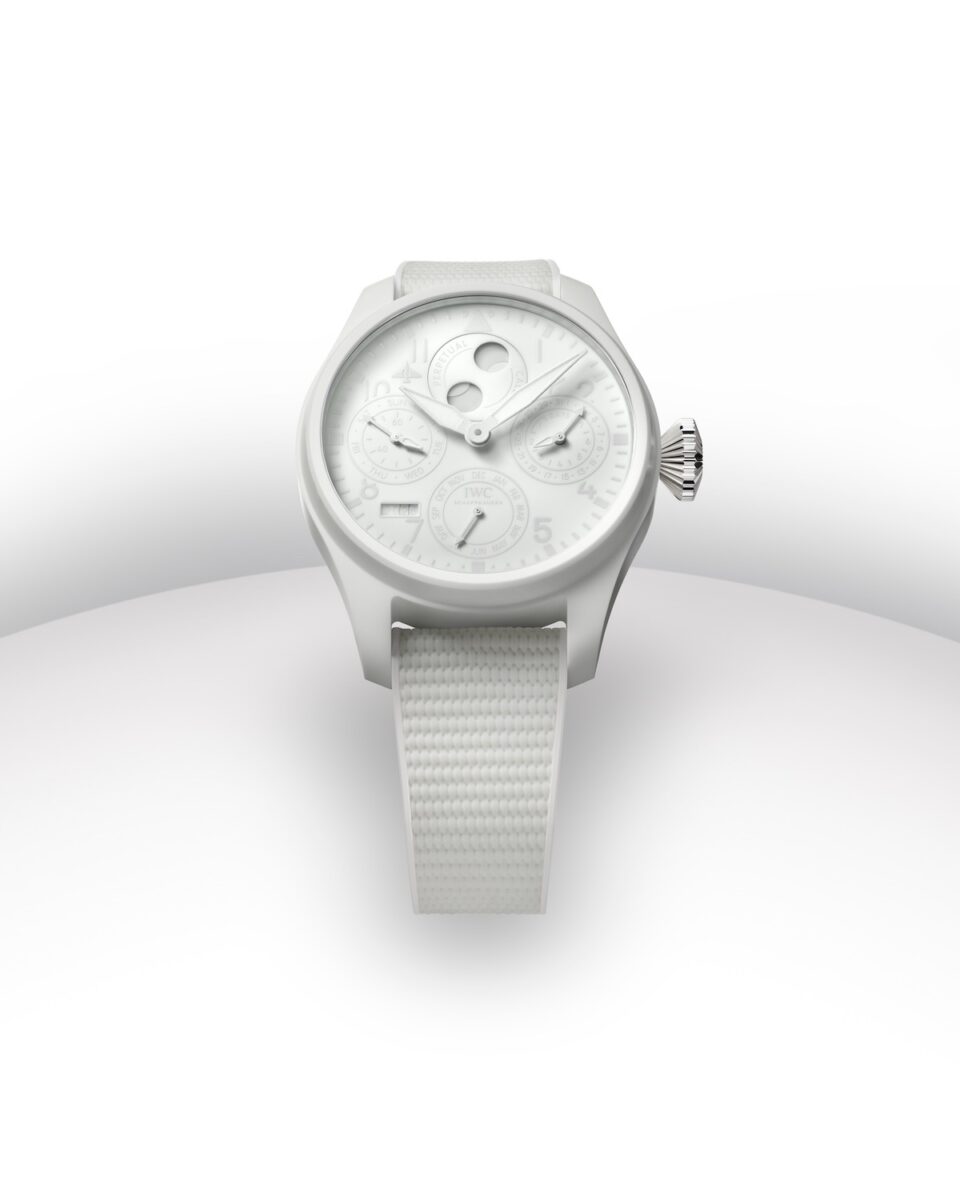
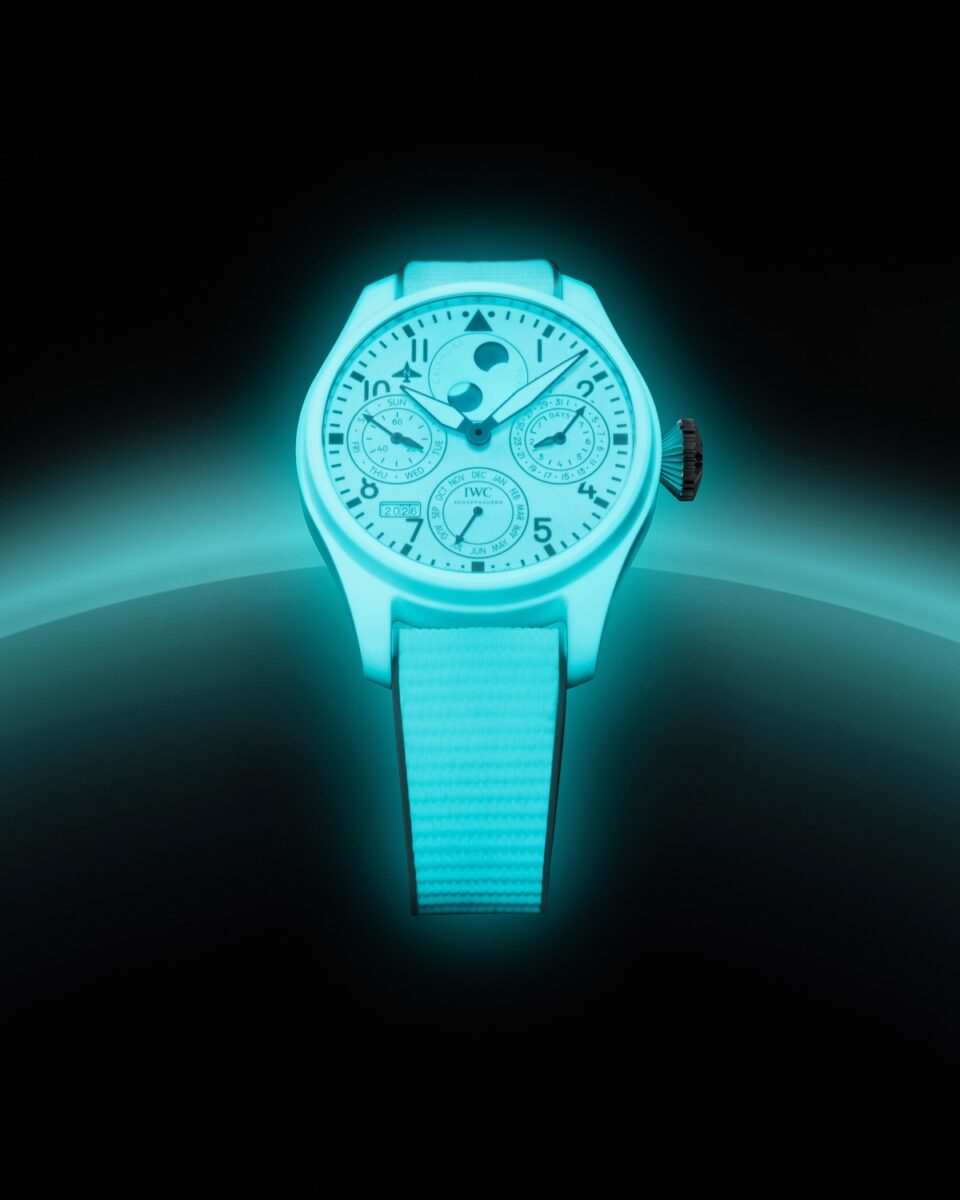
The IWC ProSet system innovation isn’t the only thing on the menu for perpetual calendar lovers, however, with the watchmaker also announcing the arrival of the Big Pilot’s Watch Perpetual Calendar Ceralume. In short, this thing glows like the sun on your wrist, with the entire case constructed from Ceralume® white luminous ceramic and an equally brightly glowing dial.
It measures 46.5mm in diameter, 15.9mm in thickness, and it’s powered by the calibre 52616 that we’ve previously seen in both Big Pilot’s Watch and Portugieser references (with 168 hours of power reserve). If you’re after a proper head-turner of a watch, this is it. Limited to 250 pieces.
IWC Ingenieur Automatic 42 Dark Olive Green Ceramic


For 2026, the Ingenieur collection remains firmly at the fore with the arrival of an all-new Automatic 42 reference, now executed in dark olive green ceramic. This is a follow-up to the murdered out all black example we saw released in 2025, but brings a touch of new warmth that sets it apart from the previous monochromatic model, now featuring an 18-carat 5N gold crown, 18-carat Armor Gold bezel screws, and gold-plated hands and hour markers.
IWC Ingenieur Tourbillon 5N Gold


The Ingenieur collection has also been expanded with the arrival of a tourbillon in 5N gold, marking the first new reference fitted with such a visually spectacular escapement in a decade. A new flagship model within the range, it measures 41.6mm in diameter and 12.1mm in thickness, and is powered by the automatic calibre 82905 that promises 80 hours of power reserve when fully wound.
A detail that’s hard to wrap your mind around is the flying minute tourbillon itself, which comprises no less than 56 components and weighs an incomprehensible 0.635g. Serious watchmaking that gets better the closer you look at it.
IWC Pilot’s Watch Chronograph 41 Le Petit Prince

The final hero of IWC’s Watches & Wonders 2026 releases is the celebration of 20 years of collaboration with the heirs of Antoine de Saint-Exupéry, the famed author of The Little Prince. To mark the occasion, we’ve got two new super wearable Pilot’s Watch Chronograph 41 Le Petit Prince references, one crafted from stainless steel and the other from clean white ceramic.
Both watches feature the iconic blue sunburst brushed dials that have long been associated with IWC’s Le Petit Prince references, EasX-CHANGE® system-equipped straps, 100m of water resistance, and power reserves of 46 hours. Two very different watches, both carrying the same whimsical message of adventure, curiosity, and discovery.
IWC Pilot’s Watch Mark XX Le Petit Prince

Finally, I wanted to shout out this all-new IWC Pilot’s Watch Mark XX Le Petit Prince as it’s one of a very small handful of non-Big Pilot, non-Chronograph IWC Pilot’s Watch examples crafted in solid gold. The only other example is a relatively rare IWC Mark XII from the mid-1990s measuring 36mm in diameter in yellow gold, while this measures 40mm and is cased in a warmer tone of 5N gold.
A future collectible in the making, that’s for sure.