

- Cartier began in 1847 as a modest Paris workshop and grew alongside a city on the brink of cultural and political change.
- A request from aviator Alberto Santos-Dumont led to the creation of the Santos, helping pioneer the modern wristwatch and cementing Cartier’s place in horological history.
- Across the 20th century and into today, designs like the Tank and Panthère have maintained Cartier’s relevance with timeless, gender-neutral appeal.
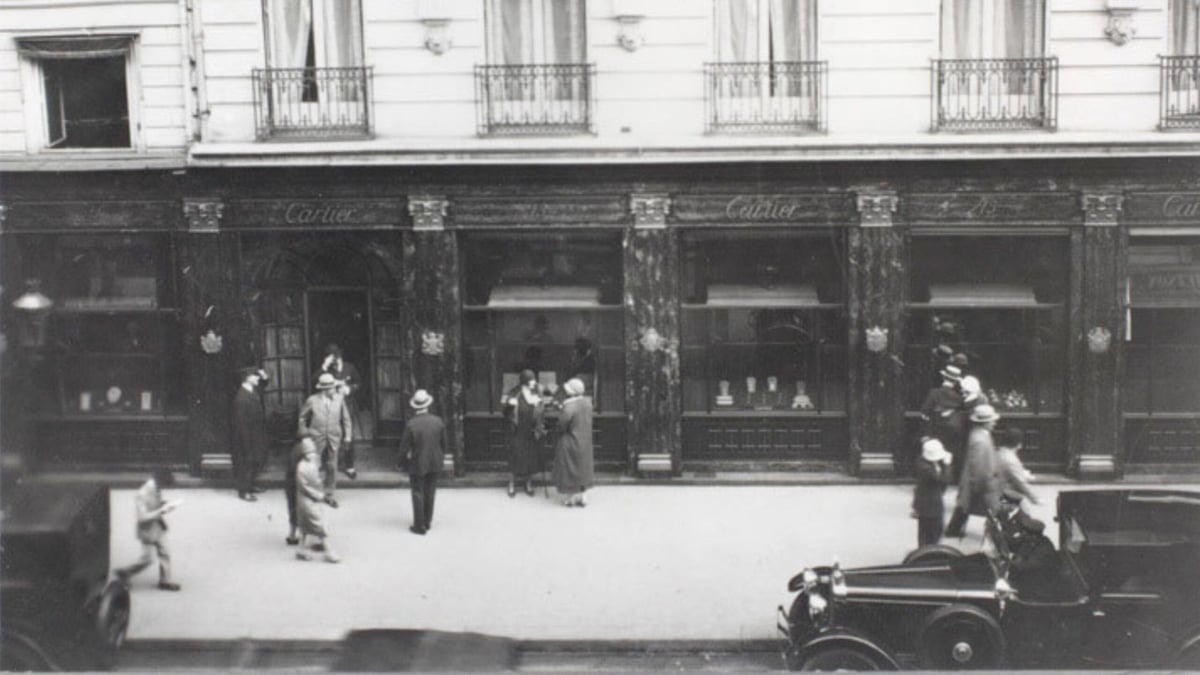
It may be a trivial exercise, but cast your mind back, if you can, to the streets of Paris through the 19th century. Specifically, 1847, at the start of Cartier’s long and celebrated history.
And before you assume we’ll start this tour at the facade of a gilded boutique, displaying exquisite timepieces in 18-carat gold with ruby cabochons, Cartier's story starts within a modest workshop on the Rue Montorgueil, tucked amongst the French capital's famous markets and vendors.
Louis Cartier was still only 28, after all. He had just completed a watchmaking apprenticeship under the watchful eye of Adolphe Picard before taking over his employer's store. A quiet inheritance. But these early, unglamorous days were the seed of what would become one of the most revered watch brands ever made.
RELATED: The Best Vintage Cartier Watches On The Market Today (If You Can Find Them)
When Cartier opened his first brick-and-mortar, Paris was not exactly the same luxury theme park that it is today. Fashion Week wasn’t the global behemoth it is today. The iconic Champs-Élysées didn’t boast the same ultra-premium facade that we’ve come to expect today. To misquote Sandi Thom, the French working classes were growing restless, largely sick of the ruling rich and the limited opportunities available to its citizens, and revolution was in the air.
By the time the 1848 uprising arrived, the market for diamonds was not, to put it gently, in its finest hour. So Cartier's first break would have to wait a decade, when Napoleon Bonaparte’s niece, Princess Mathilde, first discovered the brand's "imaginative" collections.
Though, as with all good stories, this was simply one side. Outside the city gates, Bohemians flooded Montmartre from outlying towns. You know the sort: impoverished writers, painters, and composers, all flocking to an emerging creative sanctuary where rent was cheap and French wine wasn't subject to taxes. This is the life, bo-bo, bo-bo-bo.
Together, this new collective, which counted Monet and van Gogh amongst its ranks, made the decision to reject bourgeois materialism in favour of art and absinthe.
A historically fine combination, it’s how we ended up with the Sagrada Familia, reportedly first designed on the back of a beer mat after a heavy absinthe session in Barcelona's El Raval, a dangerously inebriated watering hole that could count Picasso, Hemingway, Dalí, and Gaudí amongst its weak-kneed patrons. But I digress.
Back in Paris, the bohemians in Montmartre cafés were painting the very socialites who would become Cartier's clients. Toulouse-Lautrec's prints were plastered on the same walls where Cartier was quietly opening boutiques. The artists rejected the bourgeoisie; the bourgeoisie, in turn, bought the art (and the jewels). And Cartier understood how to stand at the centre of them.
RELATED: Cartier Has Finally Turned The Santos Into A Proper Sports Watch
It was only through a passing conversation with a friend, however, that Louis Cartier’s true legacy would surface. One that he likely would never have planned for himself. But born, like all good ideas, from necessity.
Pocket watches were still the default, yanked in and out of waistcoats on hand-polished chains by anyone who considered themselves someone. But Alberto Santos-Dumont, a Brazilian pilot with a particular allergy to inconvenience, was tired of fumbling for his watch mid-flight.
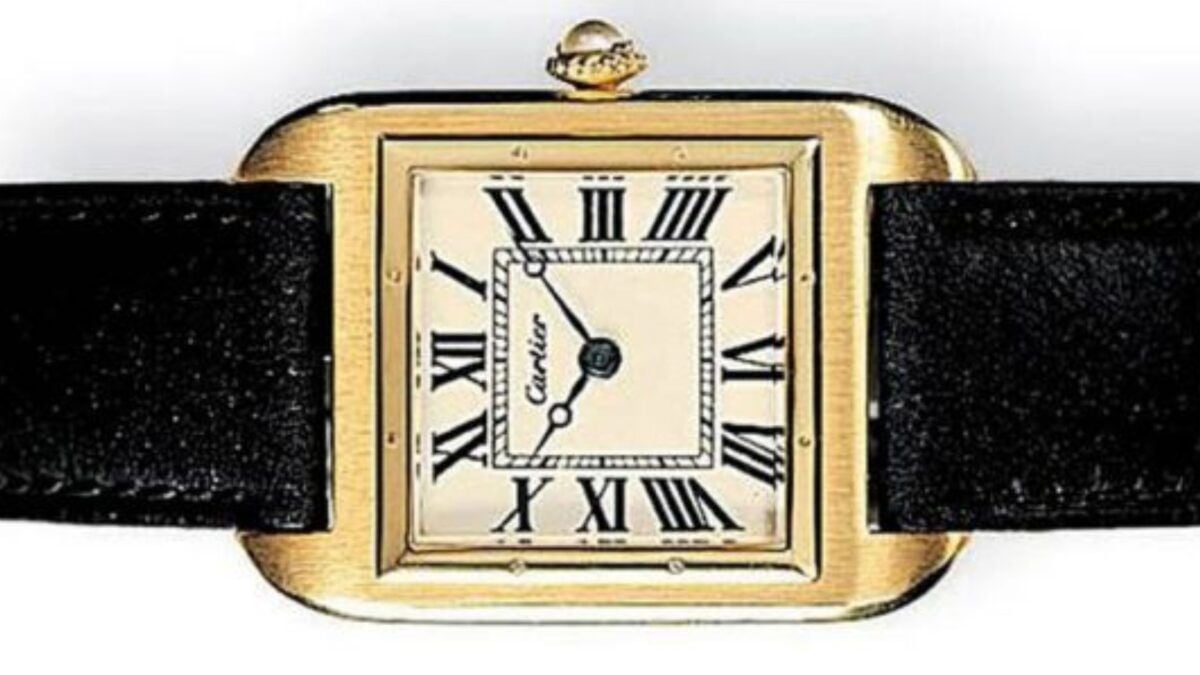
So Cartier seized the opportunity – and after a meeting with Edmond Jaeger (Yes, of Jaeger-LeCoultre), the first wristwatch was born: a square platinum case, a compact, slender design, exposed rivets setting a polished bezel, a white dial with Roman numerals, and the blue cabochon crown. The Santos de Cartier.
For seven years, Santos-Dumont was the only person in the world who wore one. Which almost feels like a marketing ploy. And if it was, it worked a treat. Santos-Dumont wore his namesake on every flight, through every public appearance that followed. He was said to never fly without it.
So when the French brand eventually decided to release the model to the world, the Santos de Cartier – the watch that had begun as a personal favour to a friend – became one of the most iconic watch references ever produced.
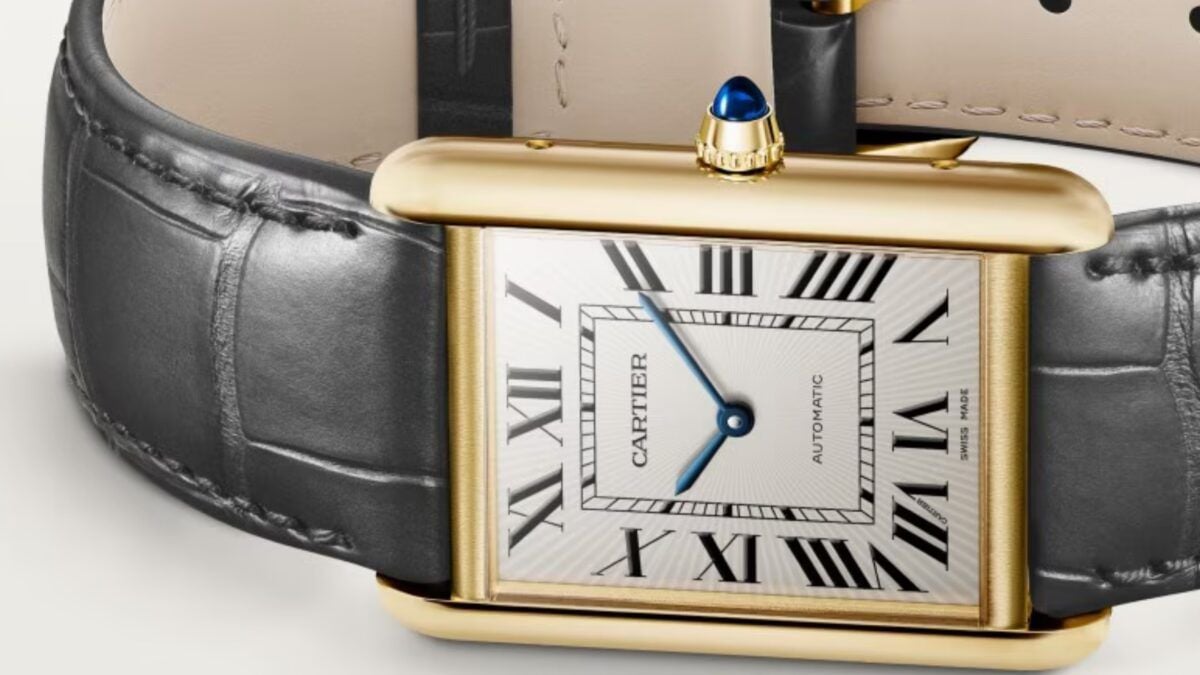
Over the next century, the watches that followed would keep Cartier at the top of the horological world, with stellar novelties like the Tank, which can count Jacob Elordi and the ever-stylish icon Jeff Goldblum amongst its many fans, the Crash, and the Panthère.
Three unique references that looked as good on the wrist of a 22-year-old art student as they would for a 65-year-old collector. Gender neutral, timeless, the French brand’s universal appeal would put Cartier on the map (and more importantly, on the wrists) of its most dedicated fans through the 20th century.
But something shifted in the early 2020s. The pandemic had sent the sports watch market into a speculative frenzy; it could have been the extra cash burning a hole in everyone’s pockets as we were all condemned to our front rooms to follow YouTube yoga videos while we burn yet another batch of banana bread.
On the aftermarket, modest steel watches were changing hands at absurd premiums. The younger generation of collectors, waiting in the wings, were, understandably, reluctant to play, seeking something else entirely that could be a timeless addition to their watch rotation.
Cartier's dressier pieces, particularly the vintage side, were moving quietly. The prices were, relatively speaking, still sane. And that made them interesting. A compelling entry point for a generation of young professionals who wanted something that meant something without the resale anxiety.
The right object on the right wrist at the right moment. Cartier had well and truly seized the cultural conversation for contemporary tastemakers. That's always been the story. It was true in Montmartre in 1848. It's true now. And it's what's turned a modest workshop on the Rue Montorgueil into one of the most quietly powerful watch brands in the world.