
The Pepsi is dead. Pour one out.
Rolex confirmed at Watches & Wonders 2026 what the rumour mill has been pricing in for months: the GMT-Master II ref. 126710BLR in steel and ref. 126719BLRO in white gold is gone, along with the white gold “Cookie Monster” Submariner.
The grief is understandable. The Pepsi’s story runs back to 1954, to Pan Am pilots and a Bakelite bezel built to read day from night across time zones. Seventy years later, its cultural weight was unmatched in the catalogue.
But the Pepsi’s departure isn’t the only story of this year’s show. It’s the prologue. Here’s what’s worth knowing about Rolex’s big releases at Watches & Wonders 2026.
Rolex Cosmograph Daytona
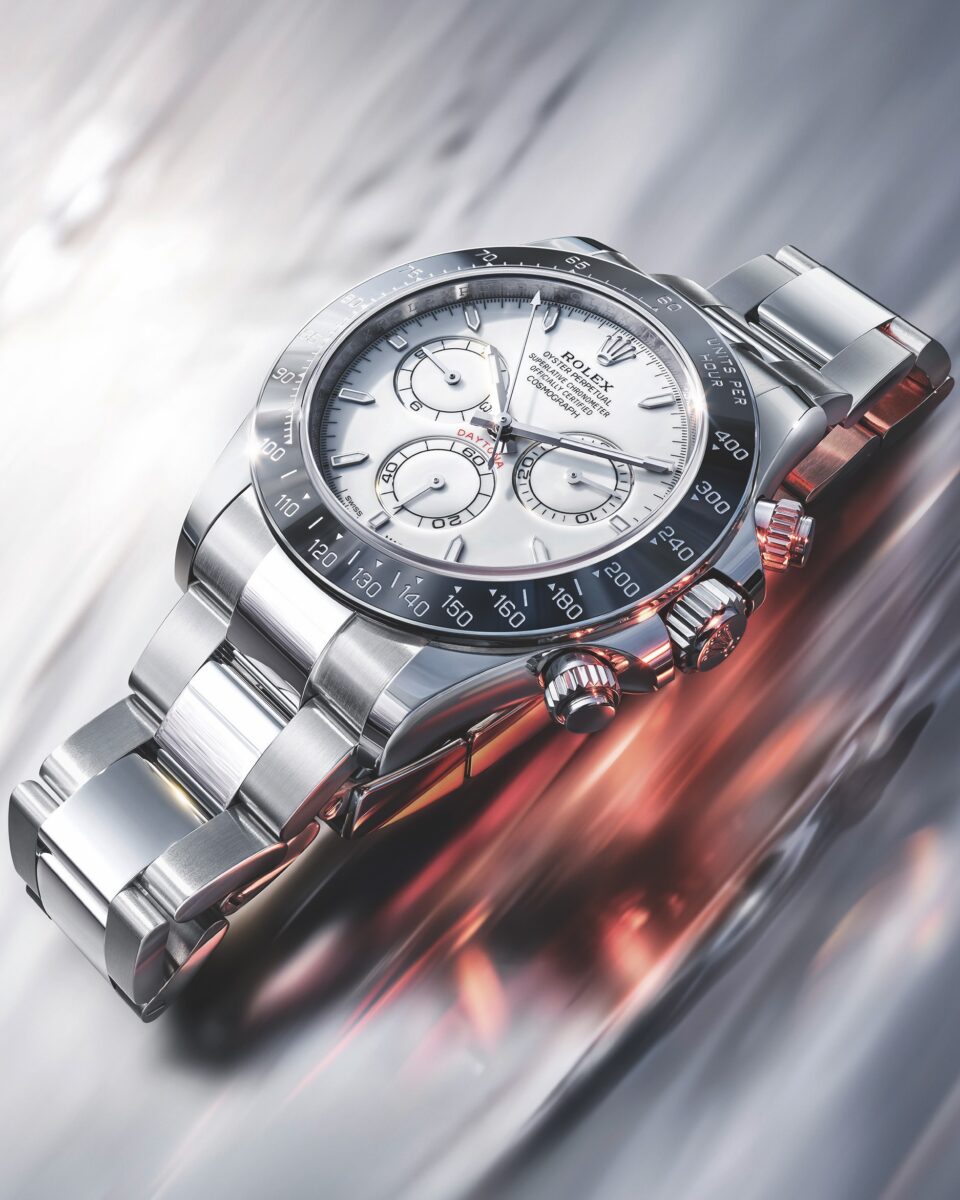
For most of its hundred-year history, Rolex has treated its movements the way Swiss banks treat their clients – with total, aggressive discretion. Chapter rings. Closed casebacks. A manufacture that would sooner redesign a watch than let you see what was powering it.
That is changing, and the 2026 Daytona is where the shift becomes undeniable. The most mythologically loaded reference Rolex produces now has a window into the soul of its movement.
The Cosmograph Daytona in Rolesium (Rolex’s steel and platinum combination) used first on the Yachtmaster in 1999 and appearing in the Daytona for the first time here, arrives with an open sapphire caseback framed in platinum.
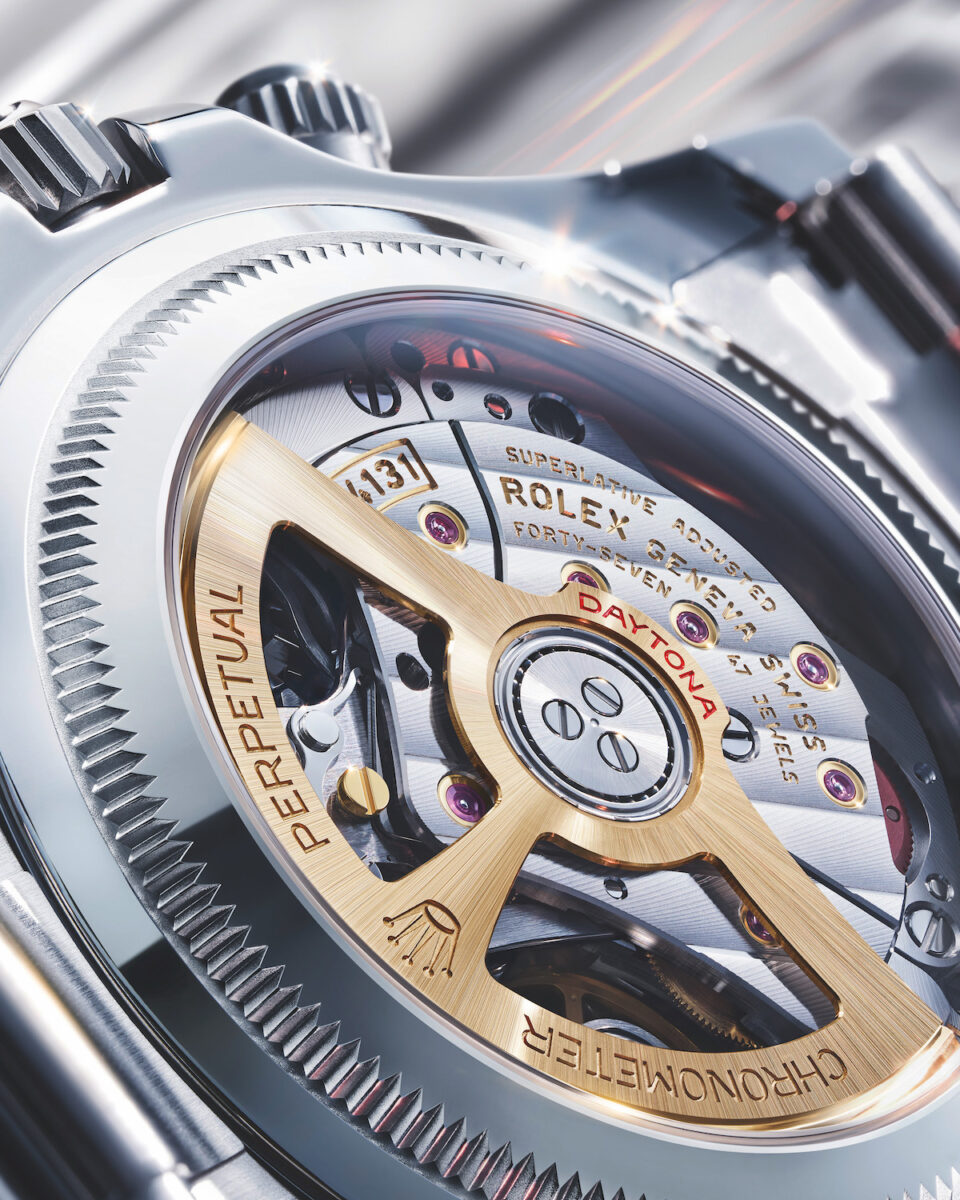
Cosmograph Daytona
This follows the 1908 dress models that first adopted the caseback display, and last year’s Land-Dweller that continued the trend. Three years running, across three different references, isn’t a coincidence.
The rest of the piece earns its keep – tachymeter numerals presented horizontally in a nod to the original Daytonas, an enamelled dial with a metallic effect, anthracite Cerachrom ringed in platinum. It’s an off-catalogue watch, which means it will be essentially impossible to obtain, but that was always going to be true of any Daytona.
The price? Unconfirmed for Australia, but around $100,000 given the USD pricing of $57,800.
Rolex Yacht-Master II

The Yachtmaster II disappeared from the Rolex catalogue roughly a year ago without ceremony. It came back at this show with something to say.
Calibre 4162 introduces countdown hands that run counterclockwise – the most intuitive way to read receding time, and a configuration Rolex had never managed in a mechanical watch before. Getting anything to run backwards inside a movement that is otherwise running forwards requires reverse-gear mechanisms of real complexity. Rolex engineered this, made the resulting watch thinner than its predecessor, and brought it back at $33,900 in steel and $96,700 in gold.
The Yacht-Master II has always been one of those watches that rewards the person who understands it and bemuses everyone else. The sailing countdown function, a programmable timer for nailing a race start, is a specific solution to a specific problem. Calibre 4162 will be discussed by movement enthusiasts for years. The rest of us can appreciate that Rolex brought back a complicated watch and made it meaningfully better.
Rolex Oyster Perpetual 41 “100 Years”

The Oyster Perpetual 41 “100 Years” is the quietest watch at the show and probably the most important one to buy.
It wears a Rolesor configuration that has never existed in modern Rolex production. Previous Rolesor models pair gold elements with a matching gold bracelet, or keep everything in steel. This combination is new, and it’s new specifically because it references early Oyster references from the centennial period this Rolex model line is celebrating. Below the 6 o’clock: “100 Years,” printed small. On the winding crown: “100.” Green touches on the logo and outer markers, Rolex’s anniversary colour, deployed with characteristic restraint.
At $16,150, this is a watch that reads as ordinary at arm’s length but will reveal itself over the years.
The Rest
The Oyster Perpetual 36 Jubilee Edition with its multicolour dial will move units and drive Instagram engagement, which is presumably the intention – whether or not it’s appealing to the eye is a different story.
The Datejust 41 green ombré is striking and almost certainly limited to this anniversary year, which makes it a timestamp worth owning.
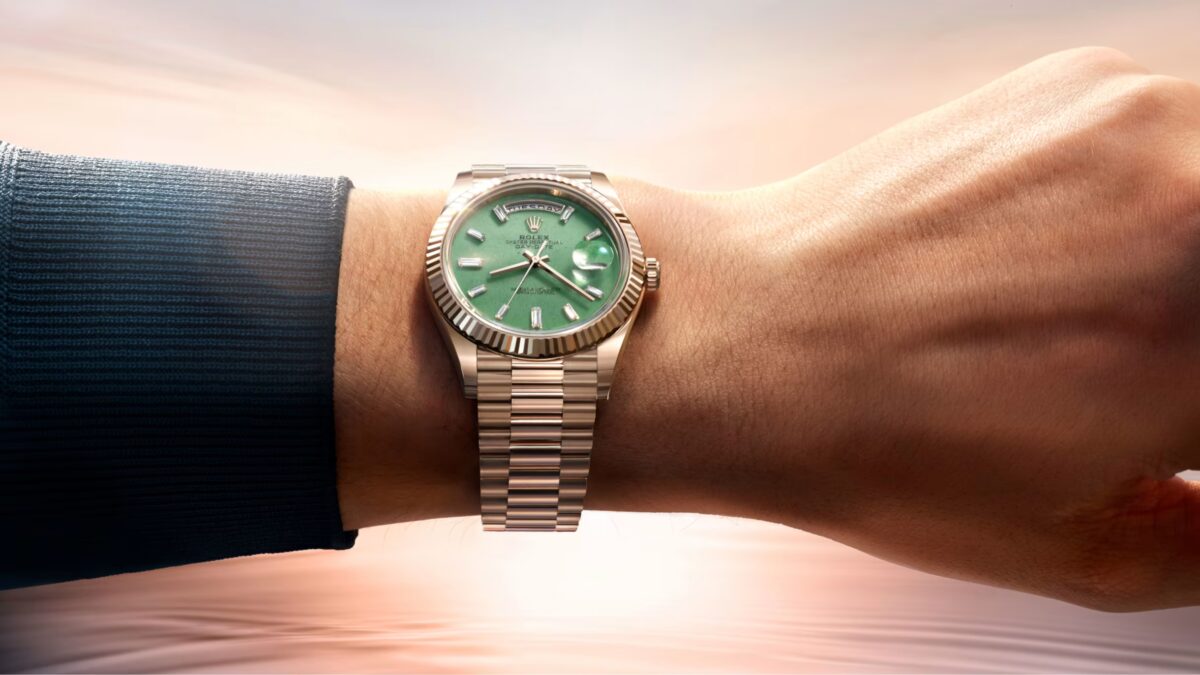
The Day-Date 40 in Jubilee Gold, the brand’s new alloy described as carrying tones of yellow, warm grey and soft pink, pairs with an Aventurine dial in a way that will make sense to auction houses in 2046.
The OP 28 and 34 in stone and gold round out a Watches & Wonders release catalogue that is coherent…if lacking much excitement.