

There is a version of this story where Piaget's Polo is simply a sport watch with a good origin; a 1970s icon that emerged from a defining era, gained a cult following, and found new life through a handful of well-timed revivals. Though for me, this misses the point entirely.
Since its launch in 1979, The Piaget Polo has always (naturally) been measured against its contemporaries. It was the decade for sports watches, stainless steel pieces with sleek design and integrated bracelets, that carved out its own unique section of the market with something almost industrial. Beautifully engineered, but brutalist in its design.
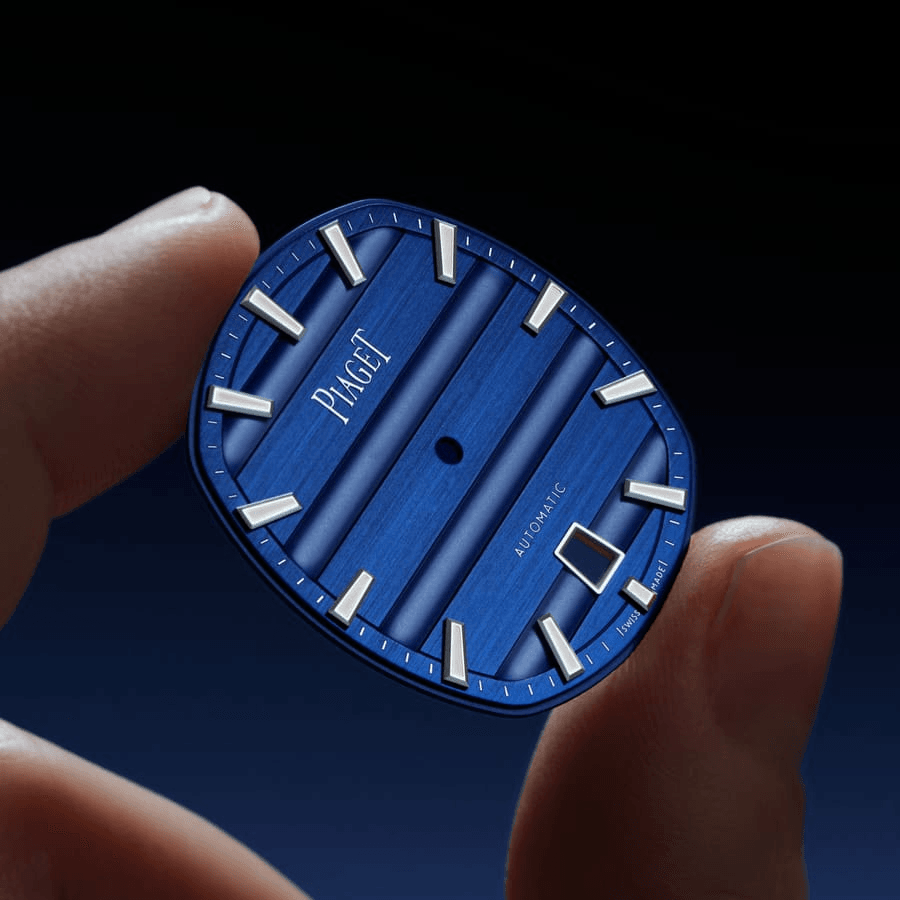
Piaget's interpretation of the luxury sports watch always felt closer to jewellery than to mechanics, as if the early Polos coming out of La Côte-aux-Fées occupied a different register to its friendly rivals entirely.
That's not say these aren't pieces that don't boast their own impressive mechanics. But for me, the Polo collection's appeal comes from its inherent beauty. It's exactly what continues to set this impressive collection apart.
At Watches & Wonders 2026, the brand leans well and truly into this cultural cachet with the all-new Polo Signature collection.
Arriving in a range of configurations that span steel to 18K pink gold, 36mm to 42mm, rubber to metal bracelet, (and at the top, a white gold Polo 79 with a sodalite dial), first look suggests yet another confident evolution of an iconic model that continues to excite watch enthusiasts almost 50 years after its launch.
Piaget Polo 79
The Polo 79 (ref. G0A51151) is the piece that anchors the collection, even if it isn't exactly the most accessible entry point.
At 38mm and just 7.45mm thick, it's built around the 1200P manufacture automatic calibre, an ultra-thin, self-winding movement that returns an impressive 44 hour power reserve within an exquisite Circular Côtes de Genève design.
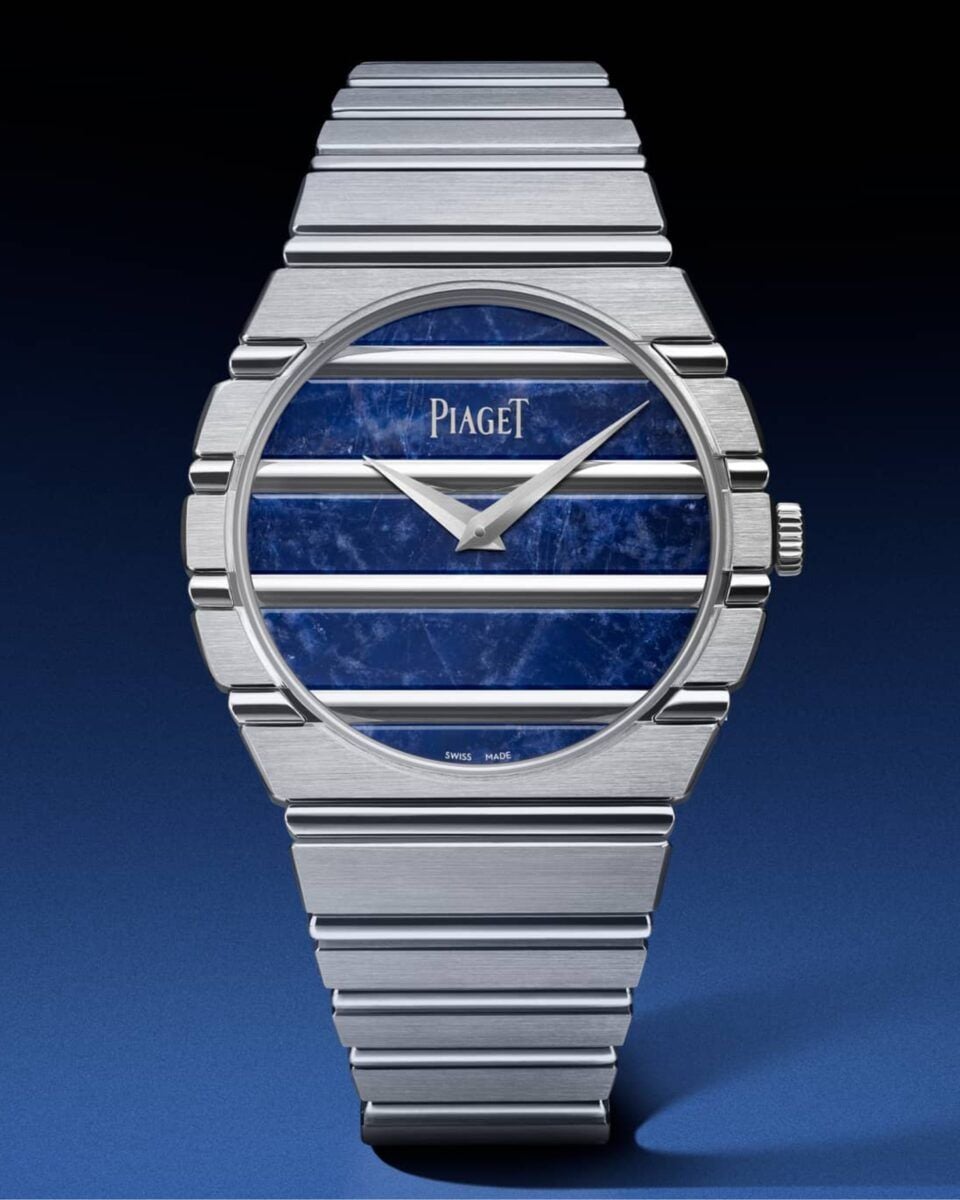
Though the real conversation rightly centres around this piece's design, its case, dial, and bracelet all built entirely with 18K white gold, with polished gadroons that sit across the dial for a further touch of flair. After seeing it in person this week at Watches & Wonders, I can confirm, it's an absolute stunner.
The irony is that the sodalite – that deep, almost cosmic blue flecked with white – presents a watch that has not interest in subtlety. Though its in these smaller details and nuance that this watch stands apart from the rest.
Piaget Polo Signature
Across the broader Polo Signature range, Piaget has released three 42mm steel models (G0A51012, G0A51031, G0A51032), the 31 and 32 carrying what the brand like to call Piaget Blue across its dial.
Under the hood, Piaget's 1110P manufacture movement beats at 28,800 vibrations per hour, the industry's trusted sweet spot. It's fast enough to give the seconds hand a fluid, almost gliding sweep, without the accelerated wear that comes with pushing frequencies higher.
The introduction of the self-interchangeable rubber strap in khaki green and blue is also smart move here, giving the wearer more choice for personalisation and more variety across a range of more relaxed, lifestyle-driven wear.
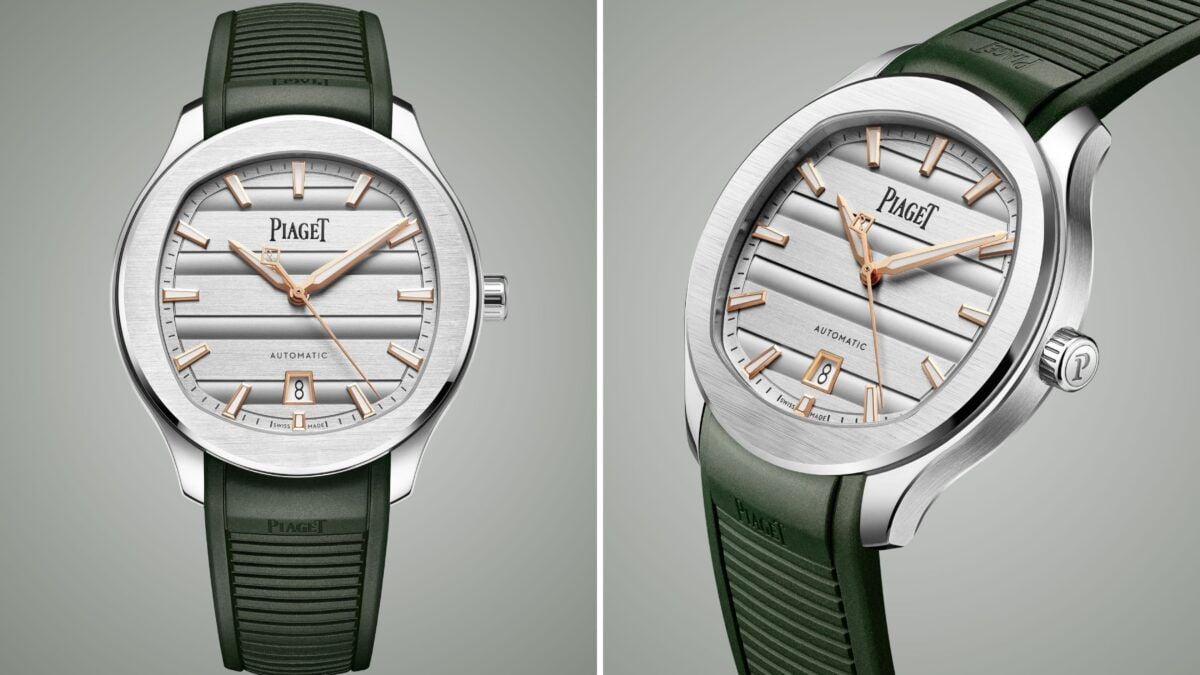
The 36mm models serve a slightly different purpose. A smaller profile, this piece feels like the exception that proves the rule, adorned with brilliant-cut diamonds across its bezel and indices for an unambiguously jewellery-led watch. Further still, the 500P1 movement arrives in steel, pink gold, or diamond-set configurations, within a dial that catches light in the particular way Piaget has spent decades perfecting.
For collectors who have followed the Polo S closely, the 36mm Signature variants feel like a natural evolution: the same DNA, though coming out of the same manufacture that has continued to produce some of the world's finest high jewellery.
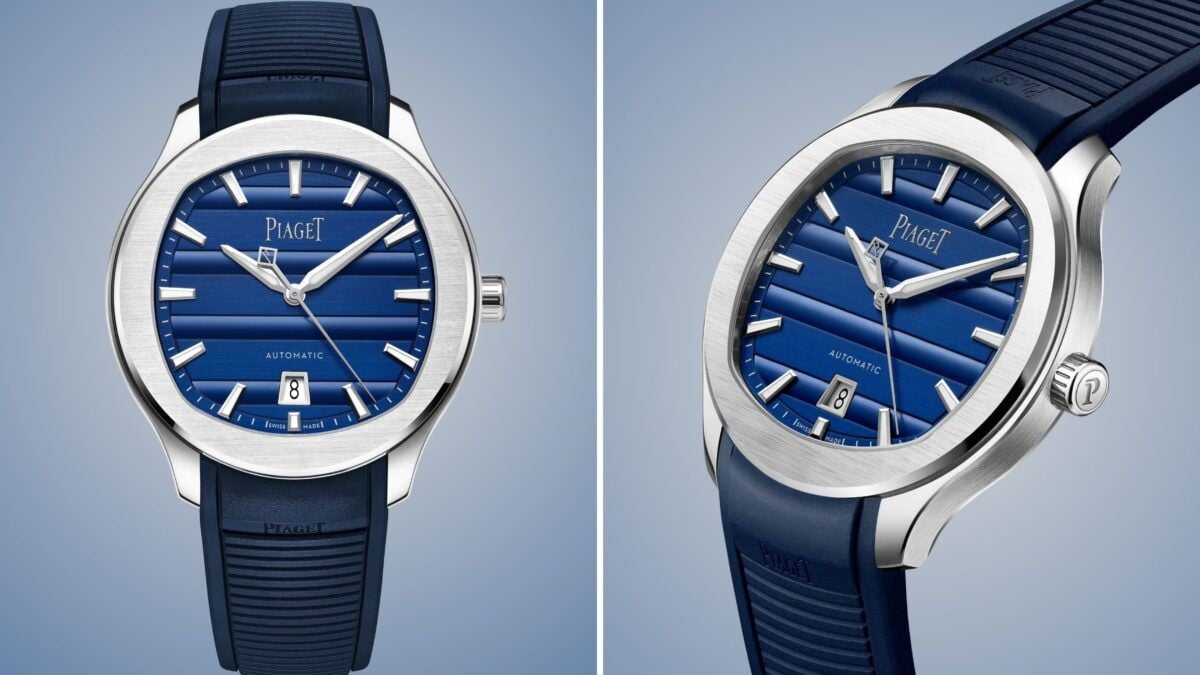
But what makes this collection coherent is that Piaget hasn't tried to be all things to all collectors. The Polo Signature doesn't compete directly with the Royal Oak on its own terms, because, well, I don't think it needs to.
The gadroon texture, the ultra-thin sensibility (even the chunkier 9.4mm pieces carry their thickness elegantly), the commitment to precious materials at every price tier; these all feel like the markers of a house that has its own design language and is increasingly confident speaking it.
The market has spent the better part of a decade fixated on the integrated bracelet triumvirate, but with the increasing collector attention on the Polo in recent years (largely accelerated by the Polo 79 release), we're seeing a broader reappraisal of what a sport watch can be. This latest Signature collection is offering a reminder that the genre was always much wider than that.